




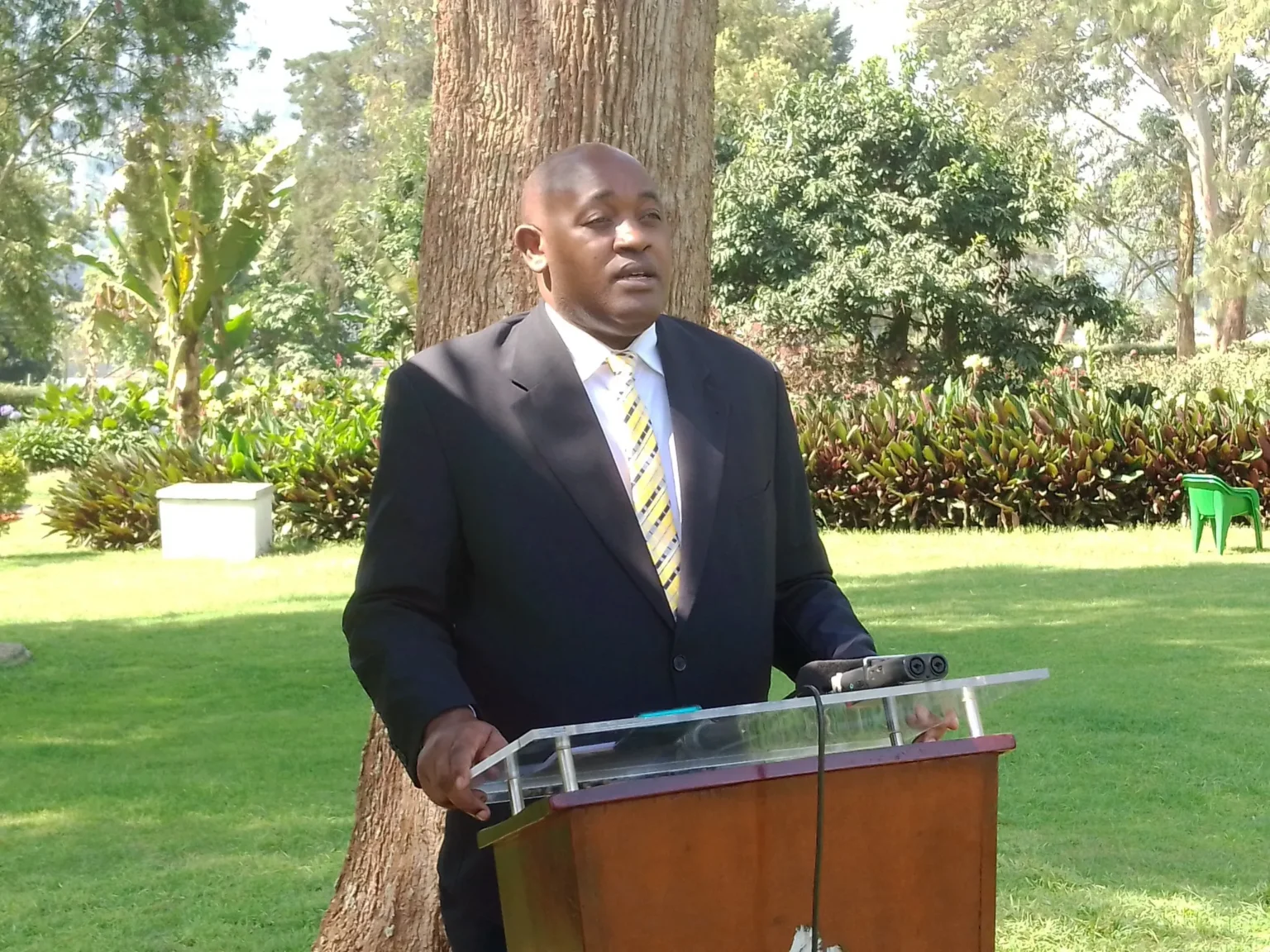
KAMPALA, Uganda — The Ugandan government is set to reconsider its controversial medical internship policy after Health Minister Dr. Chris Baryomunsi announced plans to seek Cabinet approval to review the decision, following mounting criticism from lawmakers, medical professionals and students.
Speaking during Tuesday’s parliamentary sitting, Baryomunsi said he was preparing a Cabinet paper to reopen discussions on the policy, stressing that while he acknowledged widespread concerns, he could not unilaterally reverse a decision that had already been approved by Cabinet.
“I am drafting a Cabinet paper to have this policy decision reviewed,” Baryomunsi told Parliament.
The announcement signals a possible policy shift just weeks before the next intake of medical interns is expected to begin, offering renewed hope to thousands of graduates awaiting clarity on government support.
The dispute stems from the National Education and Training for Health Policy, under which medical graduates sponsored by the government would continue receiving welfare support during their mandatory one-year internship, while privately sponsored graduates would be expected to meet their own accommodation, transport and living costs.
Government defended the proposal by arguing that the rapid expansion of medical schools has significantly increased the number of graduates entering internship programmes, making universal facilitation financially unsustainable.
Officials have also maintained that medical internship is primarily a professional training requirement leading to full registration, rather than formal employment.
The proposal has, however, drawn strong opposition from medical associations, students and legislators, who argue that interns play an essential role in delivering healthcare services in public hospitals.
Medical interns routinely work long shifts under supervision, providing emergency care, maternity services, surgical support and ward coverage in facilities that often face chronic staffing shortages.
Critics say requiring privately sponsored graduates to finance their own internship could discourage newly qualified doctors from completing mandatory training and deepen existing workforce shortages.
Several Members of Parliament have also questioned whether differentiating interns based on how they financed their university education is equitable when they perform identical clinical duties in the same hospitals.
Baryomunsi’s latest remarks represent a softer position than the government’s earlier defence of the policy.
Soon after assuming office as Minister of Health in June, he indicated that Cabinet had directed the ministry to assess the financial implications of extending support to privately sponsored interns, while maintaining facilitation for those sponsored by government.
His decision to formally seek a Cabinet review follows continued pressure from Parliament, professional bodies and medical students, who argue that the current policy could undermine healthcare service delivery if implemented without modification.
Also Read: US announces $2.3 billion package for Uganda health sector
The debate comes against the backdrop of growing pressure on Uganda’s public health system.
During a recent night visit to Mbarara Regional Referral Hospital, Baryomunsi observed overcrowding, heavy patient loads and mounting pressure on frontline health workers—conditions that medical professionals say underscore the importance of interns in maintaining essential services.
Medical internship remains a compulsory stage for doctors and other health professionals before they can obtain full practising licences from their respective professional councils.
The outcome of the Cabinet review is expected to determine whether the current policy is maintained, amended or replaced before the next cohort of interns begins placements later this year.