

NAIROBI, Kenya — Less than two years after dismantling the United States Agency for International Development (USAID), the administration of President Donald Trump is once again offering billions of dollars in health assistance to African countries. But unlike previous aid programmes, the new agreements come with conditions that have triggered concern among governments, health experts and civil society organisations across the continent.
At the centre of the debate is a new American strategy that replaces traditional donor-funded health programmes with bilateral agreements requiring recipient governments to contribute more funding, share responsibility for healthcare systems and, in some cases, provide access to health data and biological materials.
Supporters argue the approach promotes self-reliance and accountability. Critics say it risks turning public health into a geopolitical bargaining tool.
From USAID to bilateral deals
The policy shift follows one of the most dramatic changes in US foreign assistance in decades.
Shortly after returning to office, President Trump ordered the closure of USAID, accusing the agency of wasteful spending and inefficiency. The move disrupted numerous health programmes across Africa, particularly those focused on HIV/AIDS, maternal health, disease surveillance and emergency response.
In its place, the State Department has introduced a new model based on direct government-to-government agreements.
The strategy requires partner countries to increase domestic health spending while reducing long-term dependence on foreign aid.
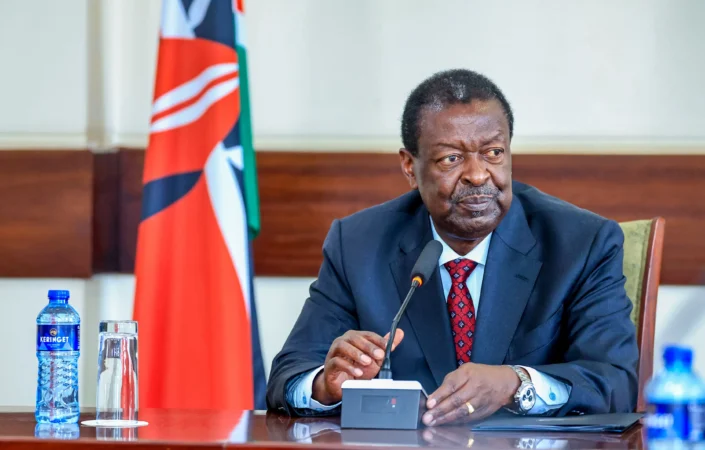
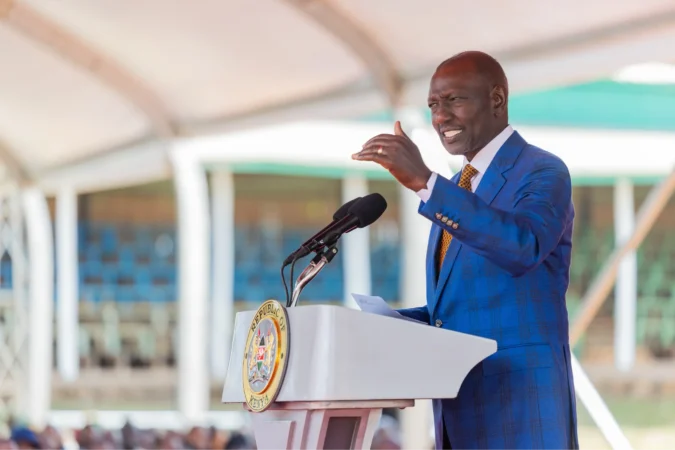
Kenya became the first African country to sign such an agreement after negotiations culminated in a health partnership valued at approximately $2.5 billion over five years.
Under the arrangement, the United States will contribute about $1.6 billion, while Kenya is expected to provide roughly $850 million.
At the signing ceremony, US Secretary of State Marco Rubio described Kenya as the first of what he hoped would become dozens of similar partnerships worldwide.
Aid tied to strategic interests
Unlike previous health assistance programmes, the new agreements explicitly link aid to broader American strategic and commercial priorities.
A State Department policy document describes health assistance as a mechanism to advance US interests abroad, while also encouraging the use of American pharmaceutical companies and medical technologies.
The administration argues that previous aid models channelled too much funding through international NGOs and created parallel systems that weakened local institutions.
Rubio has repeatedly defended the approach, saying future assistance should help countries build sustainable healthcare systems rather than remain dependent on external donors.
“We are helping them build the capacity and capability to do this for themselves,” Rubio told lawmakers during congressional testimony.
The policy reflects a broader “America First” doctrine that increasingly connects foreign assistance to economic and geopolitical objectives.
Resistance from African governments
Despite the promise of fresh funding, several African countries have expressed reservations.
Among the most vocal has been Zambia, where officials objected to what they described as attempts to connect healthcare financing with separate negotiations involving critical mineral resources.
Zambian Foreign Minister Mulambo Haimbe said his government preferred to negotiate health cooperation independently rather than as part of a broader package.
According to Haimbe, US officials sought provisions that would provide preferential access to strategic minerals important to American industries.
The State Department has denied formally linking health aid to mineral agreements but has emphasized that recipient countries should recognize US commercial and strategic interests.
Concerns over health data
One of the most contentious issues has been access to medical information and biological samples.
Several governments raised concerns about provisions requiring the sharing of health data, disease surveillance information and pathogen samples.
In Kenya, legal challenges temporarily delayed implementation of the health agreement after petitioners argued that patient privacy protections were inadequate.
Ghana’s Data Protection Commission also objected to aspects of the proposed arrangement.
Executive Director Arnold Kavaarpuo said officials were concerned that once data left national borders, governments would lose oversight over how it was stored, shared or used.
Zimbabwe similarly declined to sign the agreement, citing worries over the transfer of pathogen samples without clear guarantees that any resulting vaccines, medicines or treatments would be accessible to Zimbabweans.
The concerns echo frustrations that emerged during the Covid-19 pandemic, when African countries contributed data and participated in vaccine research but struggled to secure sufficient vaccine supplies once production began.
South Africa raises sovereignty concerns
South Africa has been among the strongest critics of the new approach.
Health Minister Dr Aaron Motsoaledi questioned why countries should provide sensitive health information and biological resources without clear assurances of reciprocal benefits.
His criticism comes amid worsening diplomatic tensions between Washington and Pretoria, including disagreements over land reform policies and allegations concerning the treatment of white South Africans.
The Trump administration recently announced it would withdraw funding from several HIV/AIDS programmes in South Africa, citing what officials described as inadequate progress on broader policy concerns.
The decision highlighted the extent to which health cooperation is increasingly being linked to political considerations.
Ebola outbreak exposes risks
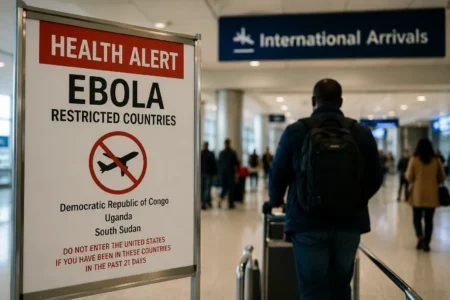
The debate has taken on renewed urgency following a recent Ebola outbreak in the Democratic Republic of Congo (DRC).
Although the DRC was among the first countries to embrace the new US health partnership model, humanitarian organisations argue that previous aid cuts weakened outbreak preparedness.
Several NGOs reported significant staffing reductions following the closure of USAID-funded programmes.
Amadou Bocoum, country director for humanitarian organisation CARE in the DRC, said cuts resulted in shortages of personnel responsible for disease surveillance, public education and emergency response.
According to aid agencies, delays in mobilising resources hampered the early response to the outbreak.
Former USAID and Centers for Disease Control and Prevention (CDC) officials have argued that dismantling established health networks reduced the speed at which emerging outbreaks could be detected and contained.
The US government disputes those claims and says it has committed approximately $270 million toward Ebola response efforts.
A test of a new global health model
The new strategy has divided global health experts.
Supporters argue that requiring governments to invest more in their own healthcare systems could encourage sustainability and accountability.
Critics counter that infectious diseases do not respect borders and therefore require strong international institutions and multilateral cooperation.
Dr Kevin DeCock, a former CDC official who spent years working on infectious disease control in Africa, warned that bilateral arrangements alone cannot address global health threats.
Also Read: US responds after Kenyan court blocks proposed Ebola facility
“Global health problems require global approaches, and no country can go it alone,” he said.
Others believe the new model deserves time to prove itself.
Analysts at the American Enterprise Institute argue that direct partnerships, performance-based funding and conditional engagement could offer an alternative to institutions that have faced criticism over effectiveness and governance.
Future uncertain
More than 30 countries worldwide have reportedly accepted the new agreements, including several in Africa. Tanzania recently became one of the latest governments to join the initiative.
Yet resistance from countries such as Ghana, Zambia and Zimbabwe underscores the challenges facing Washington as it attempts to reshape its role in global health.
For many African governments, the question is no longer whether foreign assistance is needed, but under what terms it should be accepted.
As negotiations continue, the future of US health diplomacy in Africa may depend on whether Washington can convince governments that the partnerships strengthen healthcare systems without compromising national sovereignty.