


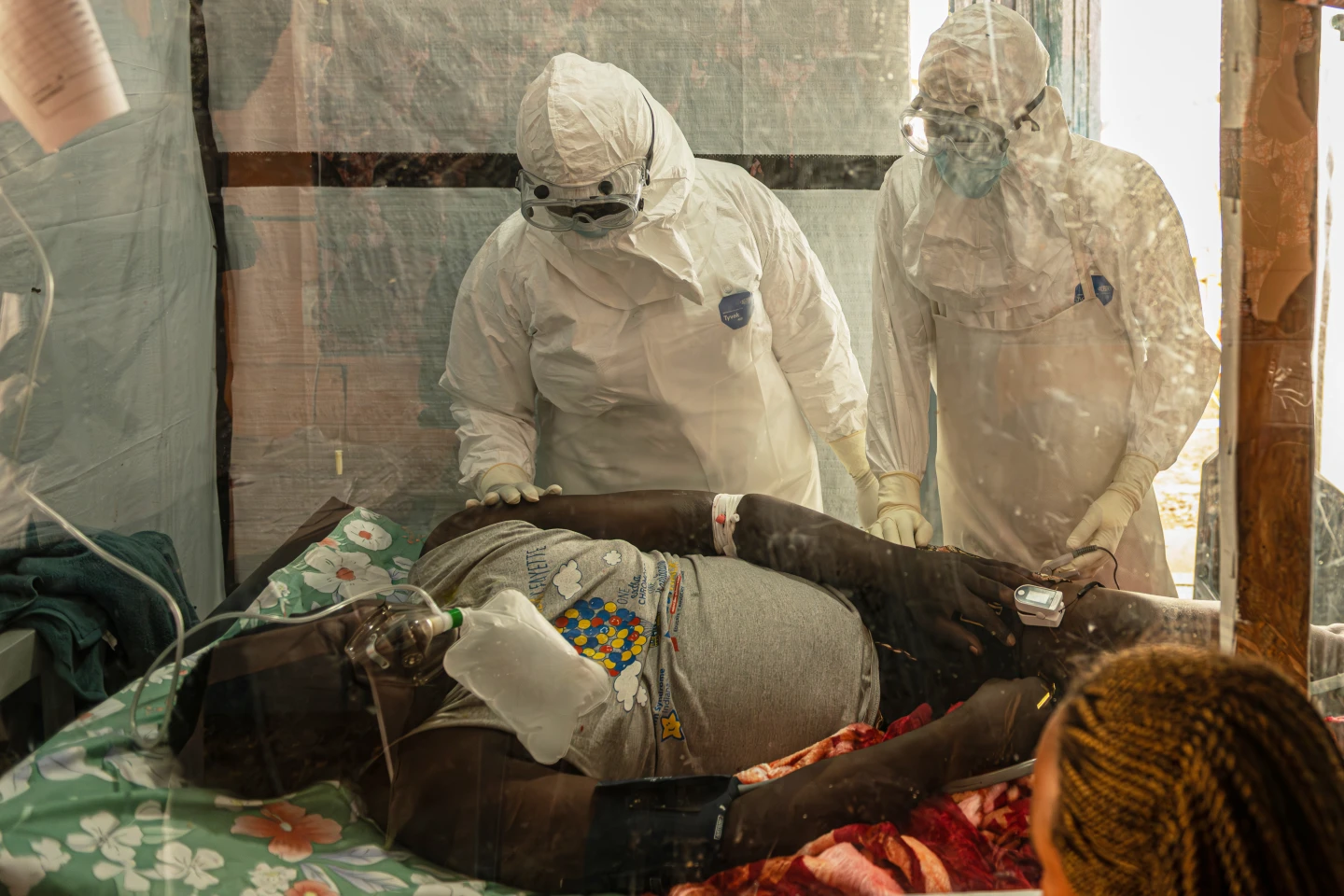
KAMPALA, Uganda — An Ebola outbreak in the Democratic Republic of Congo (DRC) and Uganda has killed more than 200 people within its first month, with health authorities warning it is the most severe early-stage outbreak recorded in recent years, according to the Africa Centres for Disease Control and Prevention (Africa CDC).
The agency said on Thursday 18, June 2026 that the outbreak has already produced 894 confirmed cases and is expanding rapidly, with transmission now recorded across 32 health zones in eastern Congo.
Africa CDC officials say the scale and speed of spread far exceeds previous outbreaks, including a major outbreak in Uganda in 2000, which recorded 281 cases at a comparable stage.
“This current outbreak is three times worse than the Uganda 2000 outbreak at the same point,” said Dr Wessam Mankoula, a medical epidemiologist at Africa CDC.
Delayed detection fuels rapid spread
Health officials say the outbreak, first confirmed on May 15, is believed to have begun weeks earlier, allowing the virus to circulate undetected and accelerating transmission across communities in eastern Congo.
Since last week alone, cases have increased by 38%, underscoring what health experts describe as a rapidly evolving public health emergency.
Bundibugyo strain complicates response
Unlike previous outbreaks in the region, the current crisis is being driven by the rare Bundibugyo Ebola virus strain, which has no approved vaccine or widely available treatment.
This has complicated response efforts, particularly in the early stages, when the virus was not initially tested for in routine screening protocols.
By contrast, the more common Zaire strain — responsible for most past Ebola outbreaks in Congo — has an approved vaccine, which has significantly improved containment efforts in previous epidemics.
Spread across borders and fragile health zones
Africa CDC reports that the outbreak is concentrated in Ituri province, which accounts for more than 90% of all confirmed cases. However, infections have also been detected in North Kivu and South Kivu, with cross-border transmission confirmed in Uganda.
Uganda has reported 19 confirmed cases and two deaths linked to the outbreak.
So far, 74 patients have recovered across both countries.
Contact tracing challenges in conflict zones
Health officials say efforts to contain the outbreak are being severely hampered by insecurity, displacement, and limited access to remote communities.
In Ituri, where decades of armed conflict have displaced nearly one million people, tracing contacts has proven particularly difficult.
“For those 800 confirmed cases, we should have between 17,000 and 35,000 contacts that should be followed up,” Dr Mankoula said. “Currently, only about 4,000 contacts are being tracked — less than 15%.”
Also Read: Can Africa stop Ebola before it becomes another global crisis?
The region’s dense forests, poor infrastructure and mobile populations, including artisanal miners moving between remote sites, are further complicating surveillance efforts.
“We are still far from controlling the situation of this outbreak,” he warned.
Funding and manpower gaps
Despite more than $900 million pledged by international partners to support the response, only $90 million has been disbursed so far, according to Africa CDC.
The funding gap has slowed deployment of personnel and medical resources, even as the need intensifies.
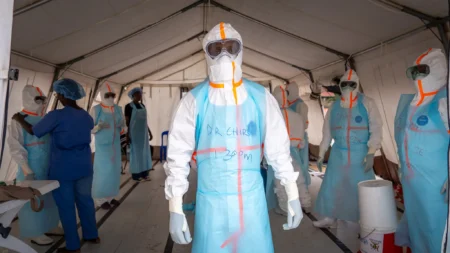
Africa CDC says it requires at least 540 frontline workers to contain the outbreak but has only been able to deploy 84 so far.
“We’re hoping these pledges will be fast-tracked,” Dr Mankoula said. “We will continue engaging member states and partners to ensure commitments translate into actual disbursements to affected countries.”
Health authorities warn that without urgent funding, improved contact tracing, and expanded field operations, the outbreak risks further regional spread in one of Central Africa’s most fragile humanitarian environments.