



NAIROBI, Kenya — As Ebola cases continue to rise across parts of Central and East Africa, health authorities are warning that speed, awareness and public cooperation may determine whether the latest outbreak is contained or escalates into a wider regional emergency.
The current outbreak, linked to the rare Bundibugyo strain of Ebola virus disease, has already triggered border closures, travel restrictions, emergency screenings and international health alerts involving Uganda, the Democratic Republic of Congo (DRC), South Sudan and neighboring countries.
Global health agencies, including the World Health Organization (WHO), have classified the outbreak as a serious international public health threat.
But beyond government statements and emergency meetings, the growing concern now centers on ordinary people: families, traders, students, health workers, transporters and communities moving daily across borders.
For many Africans, Ebola is no longer a distant headline. It is becoming a direct public safety issue.
What is Ebola?
Ebola Virus Disease (EVD) is one of the world’s deadliest infectious diseases. It spreads through direct contact with bodily fluids of an infected person, including blood, sweat, vomit, saliva, urine and other secretions.
The virus can also spread through contaminated surfaces, clothing, bedding and medical equipment.
Unlike airborne illnesses such as influenza, Ebola requires direct exposure to infected fluids. However, once transmission begins inside families, hospitals or crowded communities, outbreaks can accelerate rapidly.
Health experts say early detection and immediate isolation remain the most effective ways to stop transmission chains.
Why the current outbreak is raising global alarm
The latest outbreak is particularly worrying for several reasons.
First, the Bundibugyo strain currently circulating has no fully approved vaccine specifically designed for it, unlike the Zaire strain that previous vaccines targeted.
Second, the outbreak is spreading across highly mobile border regions where thousands of people move daily for trade, transport, farming, work and family connections.
Third, several affected areas already face weak healthcare systems, conflict, displacement and overcrowding, making surveillance and contact tracing more difficult.
International concern intensified after cases emerged in major urban centers, including Kampala, increasing fears that cross-border spread could accelerate if not quickly contained.
Several countries, including the United States, Canada and the Bahamas, have already introduced enhanced travel screening, quarantine measures or restrictions linked to the outbreak.
The symptoms people must never ignore
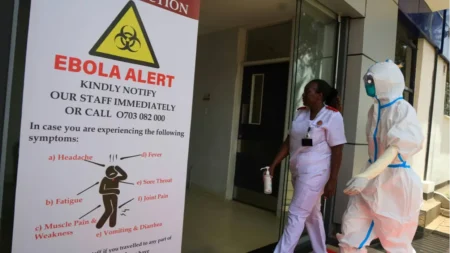
Health officials say one of the biggest dangers during Ebola outbreaks is confusing early symptoms with malaria, typhoid or common viral infections.
The disease often begins suddenly with:
- High fever
- Severe headache
- Extreme weakness
- Muscle and joint pain
- Sore throat
- Fatigue
As the disease progresses, patients may develop:
- Vomiting
- Diarrhea
- Stomach pain
- Skin rash
- Internal or external bleeding
- Difficulty breathing
- Confusion or collapse
Symptoms can appear anywhere between 2 and 21 days after exposure.
Medical experts strongly warn people not to self-medicate or hide symptoms, especially after recent travel or contact with suspected cases.
Why panic can be dangerous
Public fear often spreads faster than the virus itself.
During previous Ebola outbreaks, misinformation, stigma and panic caused communities to hide sick relatives, avoid treatment centers and attack health workers.
That behavior made outbreaks harder to contain.
Health experts say communities must avoid rumors and rely only on verified public health information.
Importantly, Ebola is not spread through casual conversation, social media, ethnicity or nationality.
People who recover from Ebola are not criminals or enemies. They are survivors who need medical support and dignity.
What families should do right now
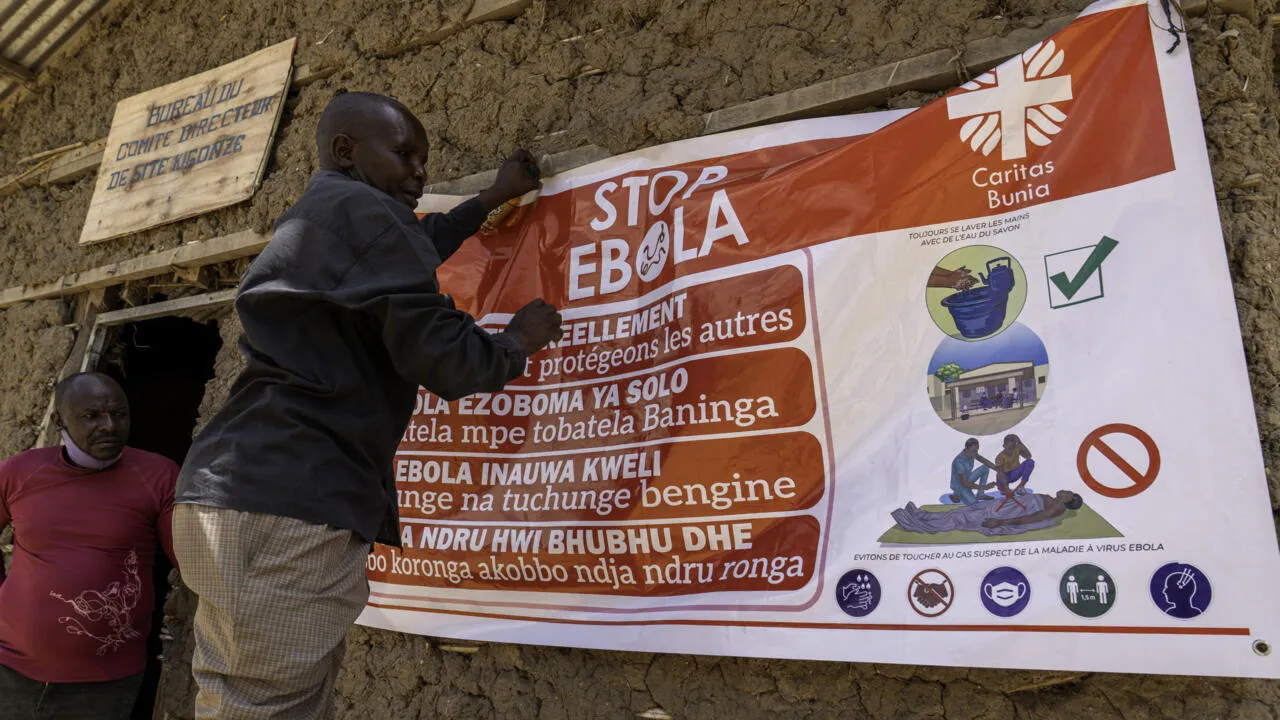
Health authorities across East Africa are urging families to adopt immediate preventive habits even before outbreaks reach their communities.
These include:
Wash hands frequently
Use soap and running water regularly, especially after public contact, transport use or handling shared surfaces.
Avoid direct contact with bodily fluids
Do not touch blood, vomit or other fluids from anyone showing symptoms.
Report suspected symptoms early
Quick medical response can save lives and prevent wider spread.
Avoid unnecessary crowding
Large gatherings increase transmission risk during outbreaks.
Do not handle bodies without protection
Traditional burial practices involving physical contact have previously accelerated Ebola outbreaks.
Follow verified health updates
Rely on official Ministry of Health announcements and trusted medical sources.
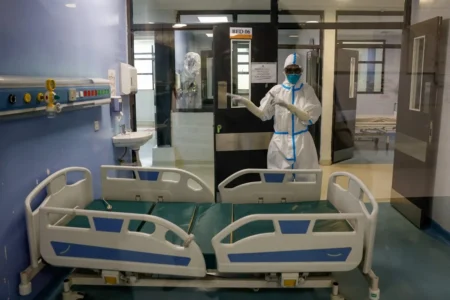
Health workers carry the heaviest risk
Across Uganda and Congo, many of the people currently under monitoring are frontline health workers.
Doctors, nurses, laboratory staff, cleaners, ambulance teams and community surveillance officers often face the highest exposure risk because they come into close contact with infected patients.
Health experts warn that protecting medical personnel is essential because overwhelmed hospitals can quickly become transmission centers.
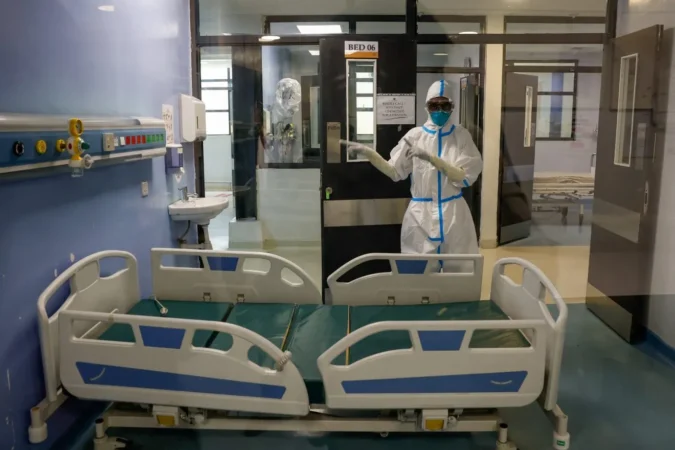
Several governments are now increasing emergency training, protective equipment distribution and screening systems at hospitals and border points.
Why this outbreak matters beyond Africa
Modern outbreaks no longer remain local for long.
International travel, migration and global trade mean diseases can move across continents within hours.
That is why governments across Europe, North America and the Middle East are closely monitoring developments in East and Central Africa.
The WHO says rapid international coordination will be critical to preventing further spread.
But experts stress that Ebola containment ultimately begins at community level — inside homes, clinics, schools, transport hubs and markets.
The most important lesson from previous outbreaks
Public health researchers say one lesson stands out clearly from past Ebola emergencies:
Outbreaks are controlled fastest when communities cooperate early.
Also Read: US announces $13m Ebola response package for Uganda and DR Congo
Countries that successfully contained previous Ebola waves relied heavily on rapid testing, public awareness, honest communication, contact tracing and trust between communities and health workers.
Fear, denial and misinformation repeatedly made outbreaks worse.
East Africa faces a critical moment
The coming weeks may prove decisive.
Authorities are intensifying border surveillance, screening travelers, tracing contacts and preparing treatment centers. But experts warn governments alone cannot stop Ebola without public cooperation.
Every family now has a role to play.
Recognizing symptoms early, avoiding misinformation and following preventive guidance could help prevent another major humanitarian crisis in the region.
Infectious disease outbreaks test not only health systems, but also public discipline, trust and collective responsibility.
As Ebola spreads across parts of East and Central Africa once again, health officials say awareness may become one of the most powerful tools for saving lives.