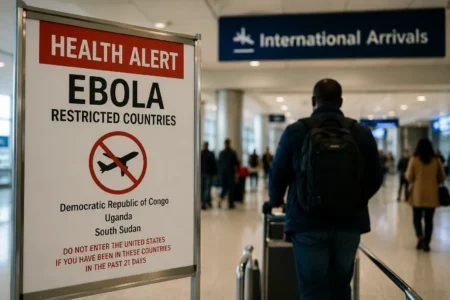



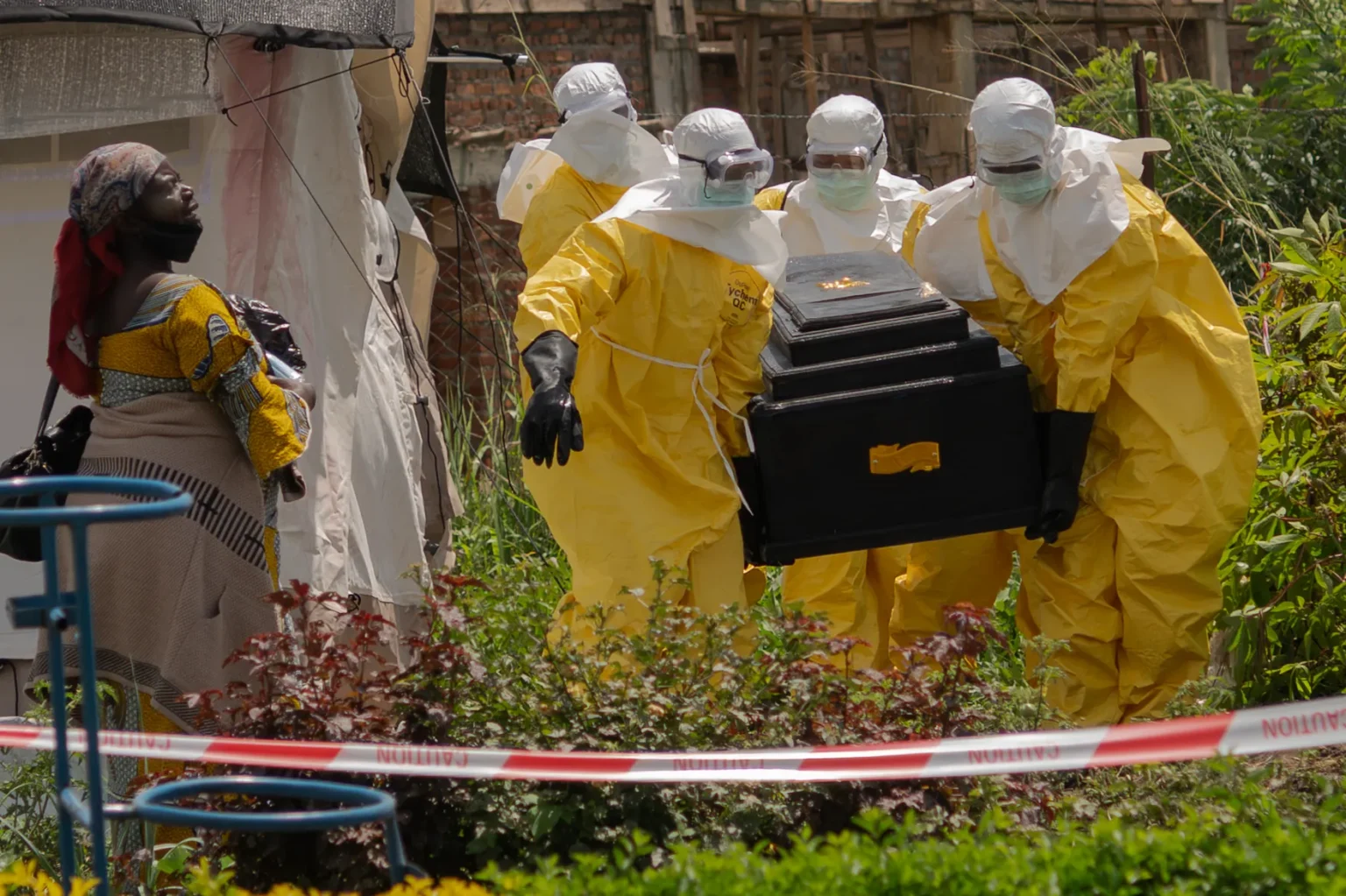
KINSHASA, DR Congo — The Democratic Republic of Congo (DRC) has introduced strict new travel restrictions requiring a 21-day quarantine period for individuals returning from Ebola-affected areas before they can travel internationally, as authorities seek to contain an outbreak that has already crossed borders.
The measures were announced in a ministerial decree issued on June 24 and signed by Health Minister Samuel-Roger Kamba, following growing concerns over the regional and international spread of the disease.
Under the new regulations, anyone identified as a contact of a confirmed or suspected Ebola patient must undergo 21 days of active health monitoring from the date of their last exposure. During that period, both domestic and international travel are prohibited unless specifically authorised by health authorities.
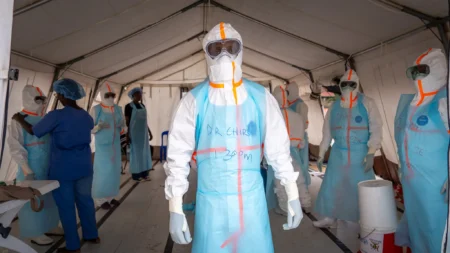
The directive also applies to frontline responders, including healthcare workers, laboratory personnel and emergency response teams returning from affected areas. Such individuals must complete the monitoring period and obtain official clearance before travelling abroad.
In addition to contact tracing measures, the government has imposed broader travel restrictions on individuals who have recently stayed in Ebola-affected provinces.
Authorities said anyone who has been in an affected area will only be permitted to travel internationally after spending at least 21 consecutive days outside the outbreak zone.
All outbound international travellers must now complete a mandatory health declaration form issued by border health authorities. Airlines operating international flights from the DRC have been directed to verify compliance with the new requirements before allowing passengers to board.
The government said the measures are intended to strengthen disease surveillance and reduce the risk of international transmission.
Also Read: Ebola outbreak in DR Congo infects more than 70 health workers, WHO warns
The restrictions come after France confirmed its first imported Ebola case linked to the current outbreak.
According to health authorities, a humanitarian doctor travelling from Kinshasa boarded a commercial flight without displaying symptoms but reportedly became ill during the journey.
The case has heightened concerns among public health officials about the possibility of infected individuals travelling internationally before symptoms emerge.
The current outbreak is being driven by the Bundibugyo strain of the Ebola virus, a relatively rare variant for which no approved vaccine or specific treatment currently exists.
According to figures released by the Congolese government on Wednesday, the outbreak has so far infected 1,118 people and claimed 291 lives.
Health officials continue to monitor the situation closely as response teams work to contain transmission in affected provinces and prevent further international spread.
Public health experts have warned that rapid detection, contact tracing and strict travel controls will remain critical in limiting the impact of the outbreak.