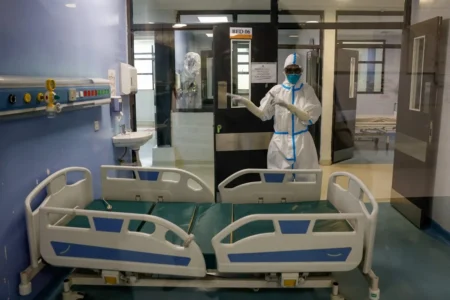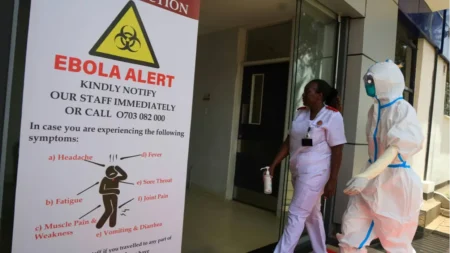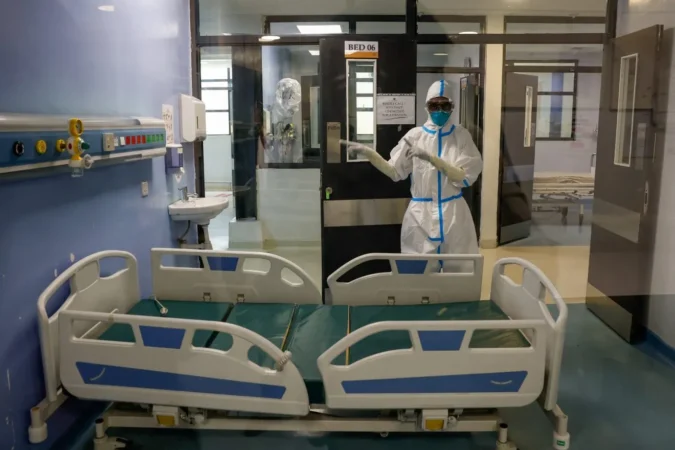




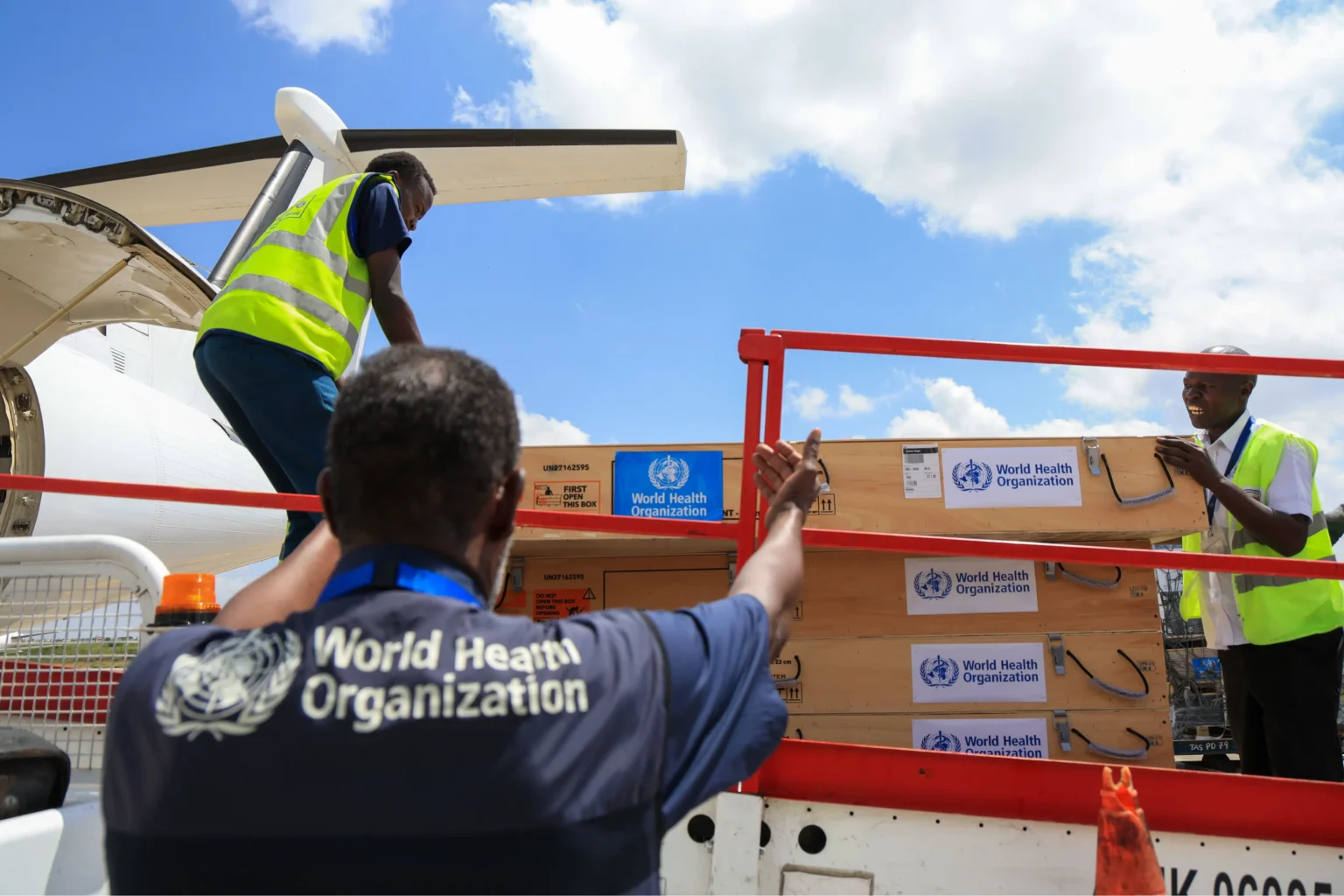
NAIROBI, Kenya — The High Court has issued conservatory orders temporarily halting the establishment and operationalisation of any Ebola-related facility in Kenya under arrangements involving the United States or any other foreign government or agency.
The ruling effectively suspends ongoing or planned efforts linked to Ebola quarantine, isolation, or treatment facilities until a constitutional petition filed by governance watchdog Katiba Institute is fully heard and determined.
In her decision, Justice Patricia Mande restrained the government and all respondents from proceeding with any aspect of the proposed arrangement.
“A conservatory order is hereby issued restraining the Respondents from establishing, operationalising, facilitating, approving or permitting the establishment and/or operation of any Ebola exposure, quarantine, isolation or treatment facility in Kenya pursuant to any arrangement with the United States of America or any foreign government or agency pending the inter-parties hearing of this application,” the judge ruled.
The court further barred any admission, transfer, or facilitation of entry into Kenya of individuals exposed to or infected with Ebola under the contested arrangement.
The orders apply to the Attorney General and the Cabinet Secretary for Health, who are listed as the 1st and 2nd respondents in the case.
Katiba Institute moves to court
The case was filed by Katiba Institute, which argues that the alleged arrangement between Kenya and foreign partners raises serious constitutional, legal, and public health concerns.
The organisation says it was prompted by media reports suggesting advanced discussions on the establishment of a facility in Kenya that could host individuals exposed to or infected with Ebola and other highly infectious diseases as part of a broader international containment framework.
Through an affidavit sworn by Nora Mbagathi, the petitioner argues that the arrangement lacks transparency and violates constitutional requirements on public participation and accountability.
“The impugned arrangement is being undertaken in a manner that is not transparent and is devoid of constitutional accountability, public participation, parliamentary oversight, or full disclosure of its health, environmental, and security implications,” the application states.
Katiba Institute further warns that, if implemented, the proposal could effectively position Kenya as an offshore quarantine hub for foreign nationals, raising sovereignty and public health concerns.
Biosafety and public health concerns
Ebola Virus Disease is classified by the World Health Organization (WHO) as a highly infectious and often fatal disease requiring the highest levels of biosafety containment.
Court documents note that Ebola handling typically requires Biosafety Level 4 (BSL-4) laboratory conditions. However, the petition argues that Kenya’s current laboratory infrastructure is largely limited to BSL-1 and BSL-2 facilities, with only limited BSL-3 capacity, raising concerns over preparedness for high-risk pathogen containment.
The petitioner warns that this gap could expose health workers and surrounding communities to serious risks in the event of accidental exposure, containment failure, or outbreak escalation.
Also Read: Can Africa stop Ebola before it becomes another global crisis?
It also raises concerns over the absence of publicly disclosed environmental impact assessments, biosafety evaluations, or parliamentary approval processes before the reported discussions with foreign partners.
Katiba Institute argues that the secrecy surrounding the arrangement undermines constitutional guarantees of access to information and public participation, particularly in matters involving public health and national security.
Court directions
Justice Mande directed that the matter will be mentioned on June 2, 2026, for further directions, as the legal challenge proceeds.
The ruling effectively places all implementation plans on hold until the court determines the constitutional validity of the proposed arrangement.