


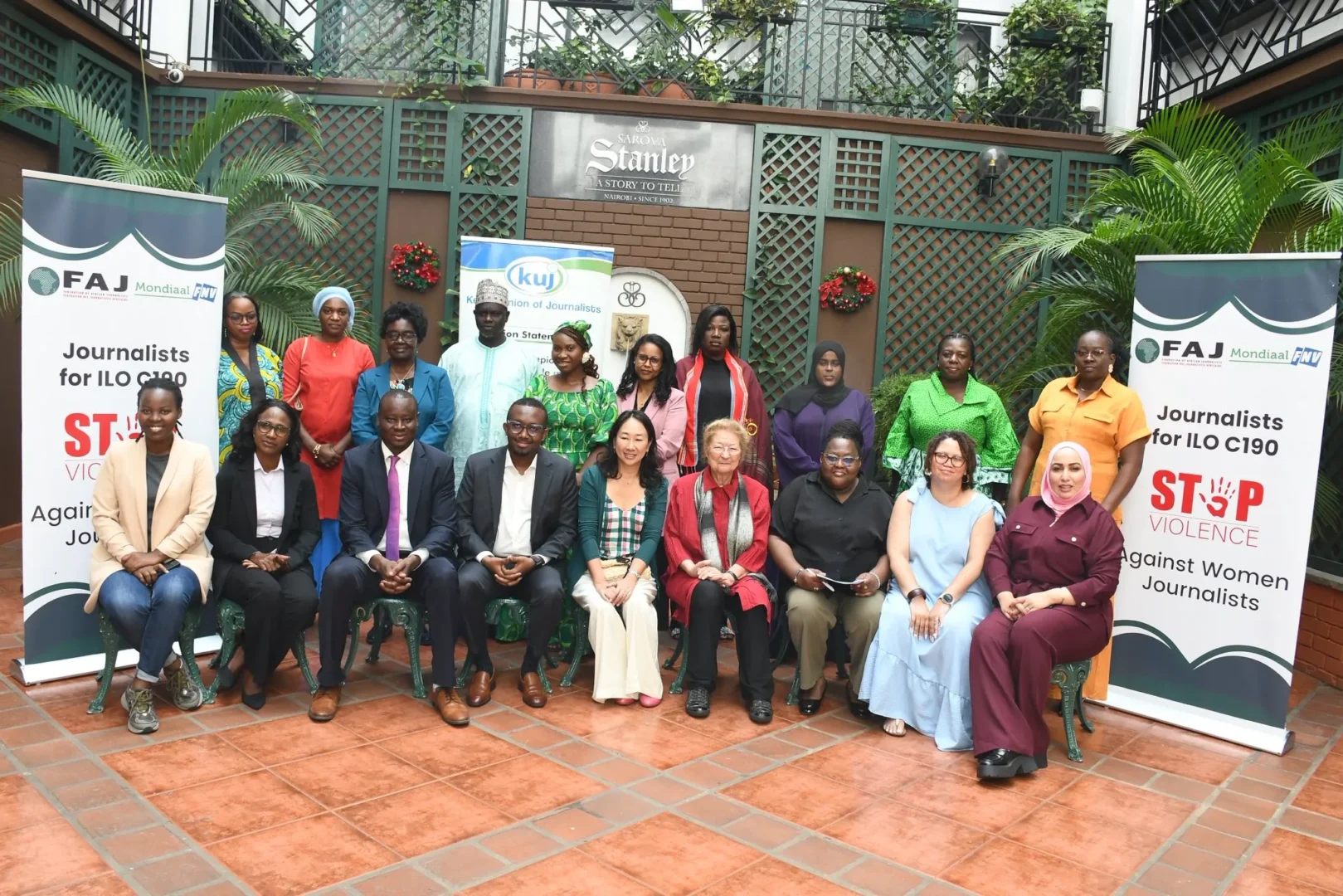
NAIROBI, Kenya — Media leaders from across Africa have adopted a unified continental strategy to strengthen climate justice reporting and safeguard information integrity following a high-level summit in Nairobi.
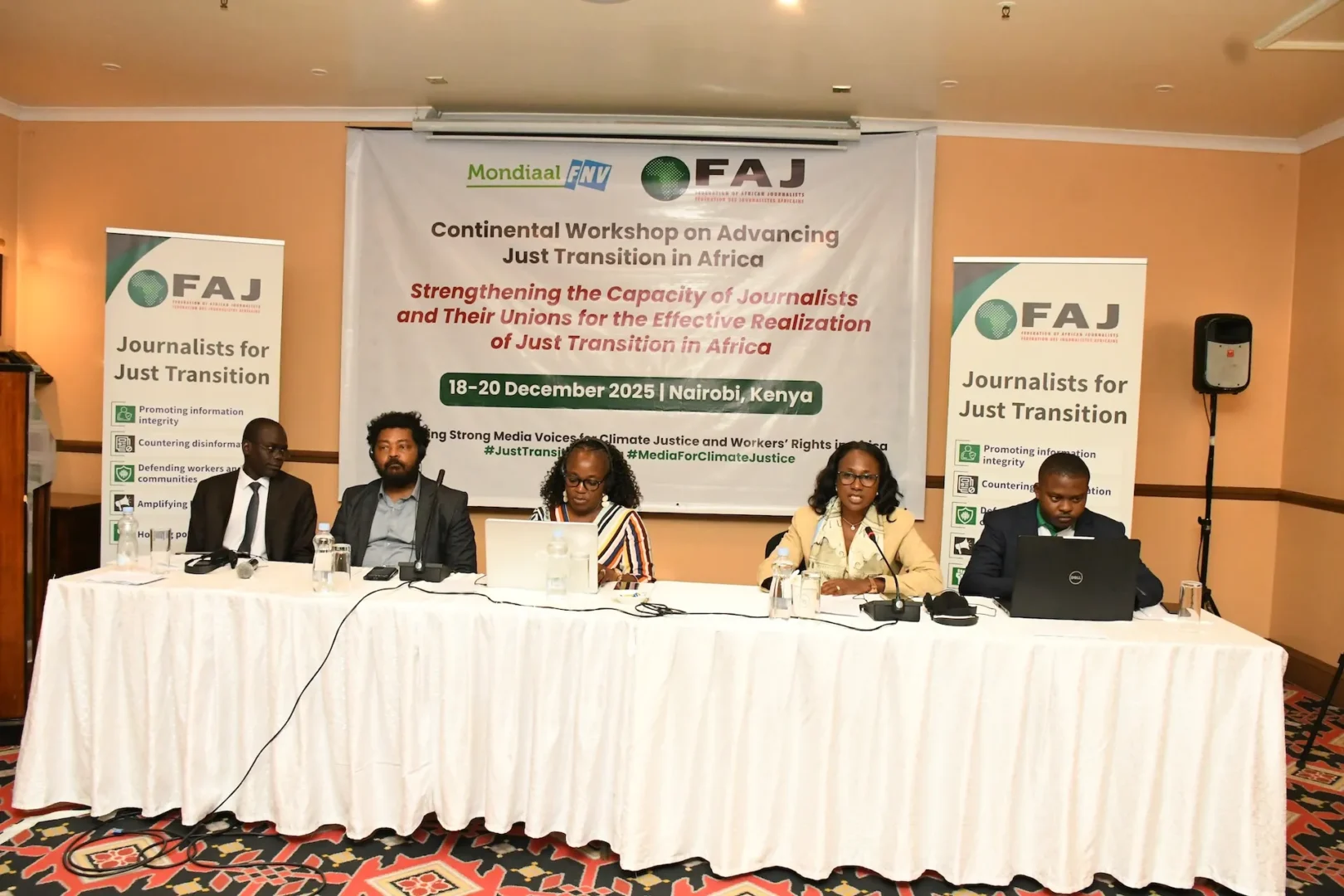
The three-day workshop, convened by the Federation of African Journalists (FAJ) with support from Mondiaal FNV, brought together editors, reporters, and union leaders to examine the media’s expanding role in Africa’s transition toward a sustainable and equitable future.
Championing a “just transition”
Held under the theme “Strengthening the Capacity of Journalists and Their Unions for the Effective Realisation of Just Transition in Africa,” the forum explored how climate change is reshaping African economies, public health systems, and food security.
Participants warned that when climate policies are poorly communicated, accountability weakens and vulnerable communities are left behind.
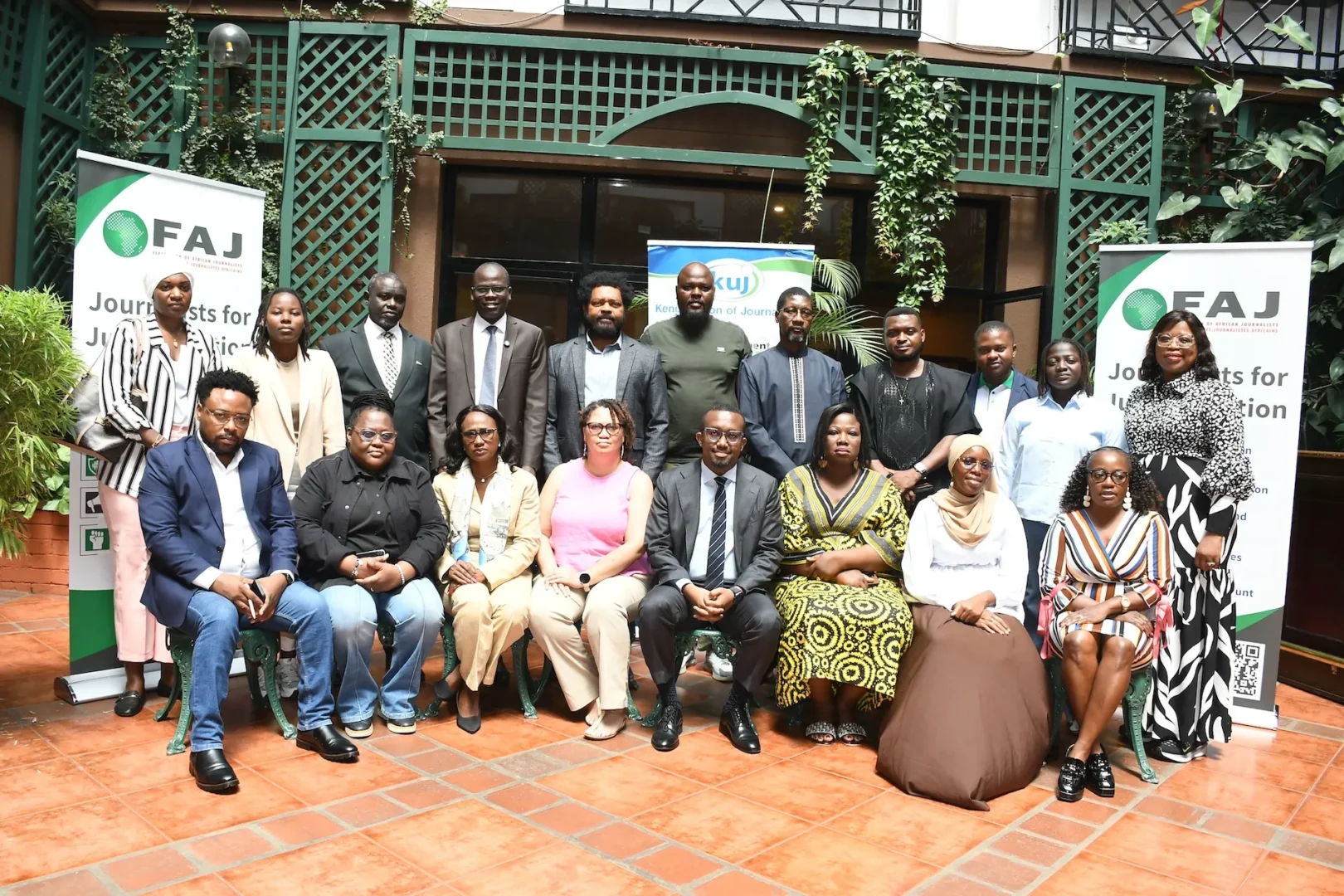
Delegates agreed that journalists must provide accurate, accessible, and locally relevant reporting to ensure that workers and communities are protected as economies shift toward greener models.
Confronting the misinformation threat
In a virtual address, Melissa Fleming, United Nations Under-Secretary-General for Global Communications, underscored the ethical responsibility of the media in countering the surge of climate-related misinformation and disinformation.
She cautioned that false narratives surrounding climate change now represent a serious obstacle to global action, urging newsrooms to adopt a solutions-oriented approach rooted in editorial independence, scientific evidence, and public trust.
Climate justice through a labour lens
A defining feature of the Nairobi forum was its focus on the intersection of climate and labour rights. FAJ affiliates explored how stronger collaboration between media and trade unions can:
- Amplify workers’ voices during the green transition
- Safeguard labour rights and promote decent work
- Translate complex climate policy into practical, citizen-focused reporting
FAJ President Omar Faruk Osman reminded participants that accuracy is the foundation of both journalism and climate action.
Also Read: How Michael Wandati is redefining independent journalism in a noisy digital world
“Journalists carry the responsibility of transforming policy language into trustworthy information that people can use in their daily lives,” he said.
Journalist safety and the Nairobi Declaration
Delegates also raised alarm over escalating threats faced by environmental reporters, including physical violence, digital harassment, and legal intimidation.
Protecting climate journalists, they said, is essential to preserving the public’s right to information.
The summit concluded with the formal adoption of the Nairobi Declaration, a landmark commitment by African journalists to advance climate justice, defend information integrity, and strengthen collaboration with continental and global partners, including the African Union and the United Nations.
In a key leadership development, Ahmed Sahid Nasralla of Sierra Leone was elected President of the FAJ Climate Justice Working Group, tasked with steering the federation’s climate initiatives over the coming year.
