


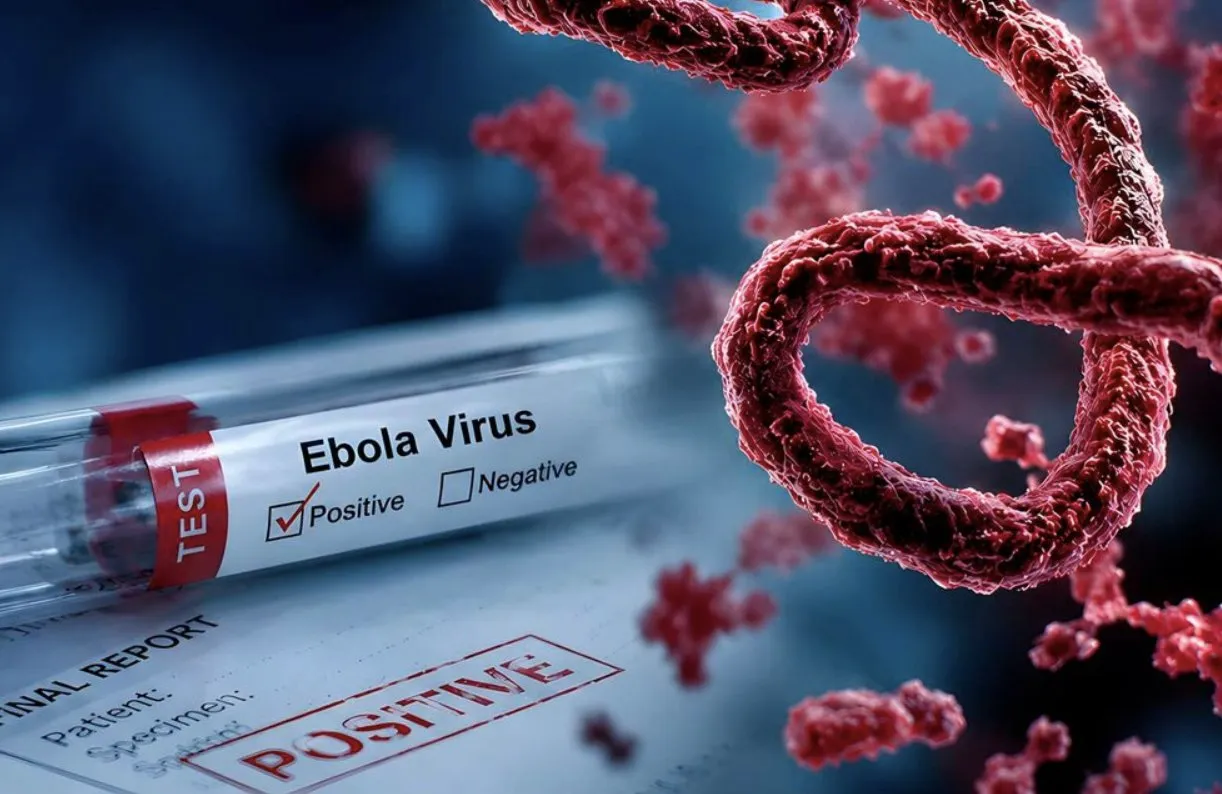
NAIROBI, Kenya — Kenya has confirmed its third case of Ebola disease, involving a 65-year-old woman who developed symptoms while in quarantine, prompting renewed efforts to contain the spread of Bundibugyo virus disease.
The Ministry of Health said on Friday, October 16, 2026, that the woman was a close relative and primary contact of the first two confirmed patients. She had been in quarantine since October 6 as part of measures to prevent further transmission.
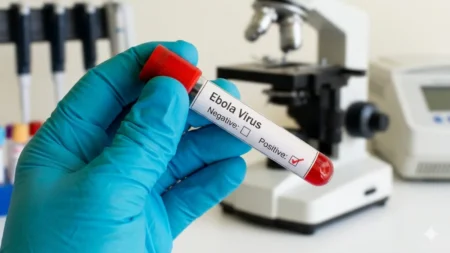
According to a statement issued by Director-General for Health Patrick Amoth, the woman developed a fever, sore throat and general malaise while under monitoring. She was immediately isolated, and samples collected for laboratory testing returned positive for Ebola.
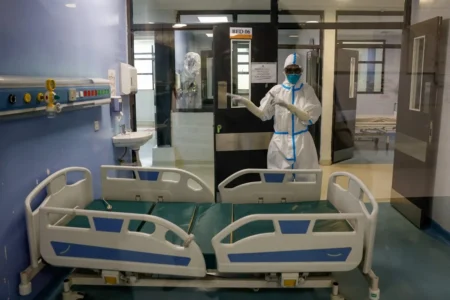
She has since been transferred to an infectious disease unit, where she is receiving supportive care from trained health workers.
The latest case brings Kenya’s confirmed infections to three since the country reported its first imported case earlier this month.
The first patient, a Kenyan who had travelled from the Democratic Republic of Congo (DRC) through Uganda, died after testing positive for the virus. The second patient, a close relative, was also identified while in quarantine.
127 contacts traced and quarantined
The Ministry of Health said 127 of the 130 identified contacts, representing 97.7 per cent, had been traced and placed in quarantine as of Friday.
Efforts were continuing to locate the remaining three contacts.
Health authorities have maintained that identifying, isolating and monitoring people who have been exposed to the virus is central to containing transmission.
The woman’s diagnosis while already in quarantine highlights the importance of monitoring contacts throughout the full follow-up period, even when they initially show no symptoms.
The second patient was reported to be stable and responding well to supportive care, according to the ministry.
Contacts are being monitored for 21 days, the recognised follow-up period used to detect symptoms that may develop after exposure.
For those placed under monitoring during the first week of October, the period is expected to end towards late October, provided they remain symptom-free and meet the applicable public health criteria.
Ministry says public risk remains low
The Ministry of Health has maintained that the risk to the general public remains low, citing the absence of evidence of community transmission.
However, officials have warned that additional cases could be detected among people already identified as contacts before their monitoring period ends.
The distinction is important: infections identified among quarantined contacts do not, by themselves, establish widespread community transmission.
Continued surveillance and the investigation of any new suspected cases remain necessary to determine whether the virus has spread beyond known transmission chains.
The World Health Organization (WHO) has emphasised contact tracing, surveillance, laboratory testing and infection prevention measures as key components of the response to the ongoing Bundibugyo virus disease outbreak.
Kenya strengthens Ebola response
Kenya’s response follows the confirmation of an imported case linked to the outbreak in the Democratic Republic of Congo, where Bundibugyo virus disease has caused thousands of infections and deaths.
The Ministry of Health has intensified surveillance, contact tracing and preparedness measures, working with public health partners to identify infections early and prevent further transmission.
Also Read: DR Congo Ebola cases surpass 9,000 as death toll rises to 4,381
The World Health Organization (WHO) has also provided medical supplies and technical support to strengthen Kenya’s response, including the protection of frontline health workers and the testing of suspected cases.
The Bundibugyo virus is a species of Ebola virus that causes a severe disease. Early recognition of symptoms and prompt medical assessment are important, particularly for people who may have been exposed to a confirmed case.
Health authorities continue to urge the public to rely on official updates, avoid spreading unverified information and seek medical attention if symptoms develop following a possible exposure.
With three confirmed cases now reported, the priority remains to complete contact tracing, monitor exposed individuals throughout the required period and prevent transmission beyond the contacts already identified.