


NAIROBI, Kenya — President William Ruto has signed two pieces of legislation that retain a reduced tax rate on fuel, revise duties on selected building materials and introduce changes to the governance and financing of the Kenya Revenue Authority (KRA).
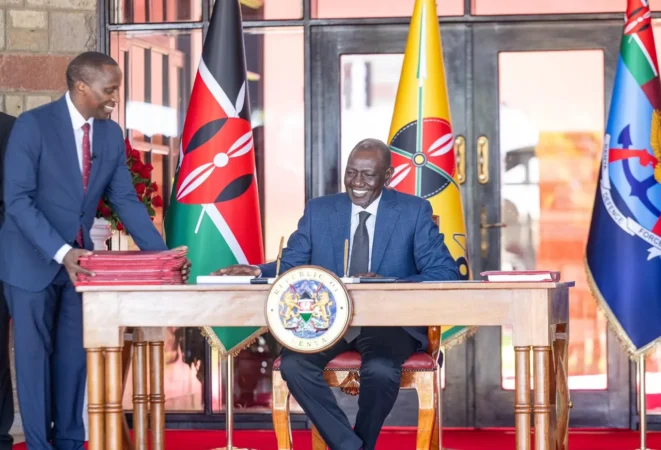
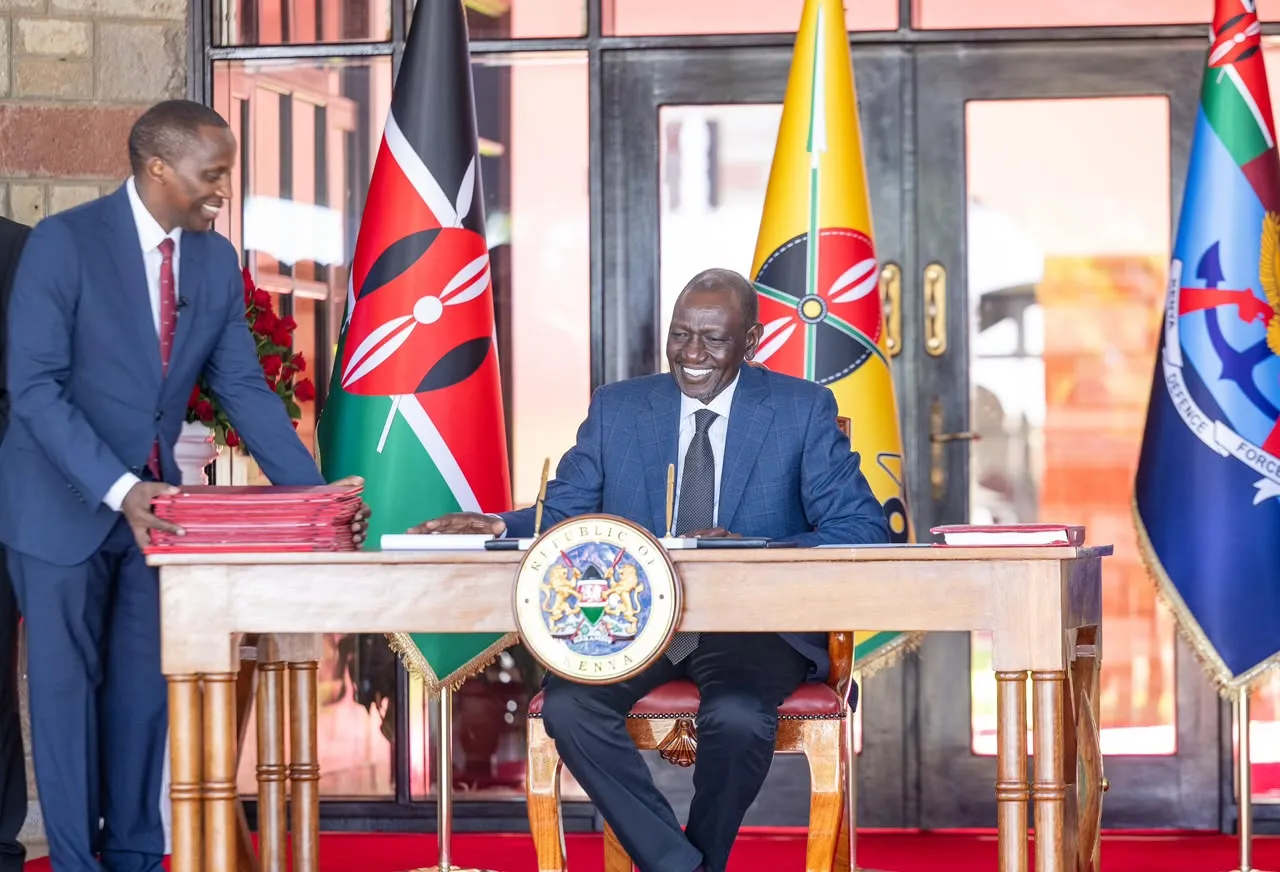
Ruto assented to the Tax Laws (Amendment) Bill, 2026, and the Kenya Revenue Authority (Amendment) Bill, 2026, at Eldoret State Lodge in Uasin Gishu County on Friday, October 16, following their passage by the National Assembly.
The tax changes come amid pressure on Kenya’s fuel prices linked to disruptions in international oil markets and the conflict in the Middle East.
The Energy and Petroleum Regulatory Authority (EPRA) announced higher maximum retail fuel prices on October 15, citing increased import costs.
Fuel VAT retained at 8 per cent
The Tax Laws (Amendment) Act retains the reduced Value Added Tax (VAT) rate of eight per cent on petrol, diesel and paraffin for an initial 90 days, instead of the standard 16 per cent.
The Cabinet Secretary for the National Treasury may extend the reduced rate for a further 90 days through a notice published in the Kenya Gazette.
The measure continues tax relief introduced earlier in 2026 to cushion consumers against rising international fuel costs. The previous relief period ended on October 14, prompting Parliament to consider an extension as global oil-market pressures persisted.
Briefing the President, Deputy Chief of Staff Josephat Nanok said the extension was intended to shield households and businesses from the economic effects of disruptions in the Middle East.
“The Bill first sustains the 8 per cent VAT application on petroleum products, that is, petrol, diesel, and paraffin, to ensure that the effect of the crisis that has been seen in the part of the Middle East does not affect the Kenyan economy without the public being cushioned,” Nanok said.
Nanok added that consultations with EPRA and the Ministry of Energy had ensured the lower VAT rate was incorporated into fuel-price calculations.
“Had that 8 per cent not been factored, the price of fuel announced by EPRA was going to be higher than announced,” Nanok said.
Although the lower VAT rate reduces the tax applied to the specified petroleum products, it does not guarantee that pump prices will fall. International crude prices, exchange rates, shipping costs and other components of the fuel-price formula can continue to influence what motorists pay.
Changes to taxes on construction materials
The legislation also revises excise duty on selected construction materials, including tiles and ceramic sanitary ware.
Excise duty on tiles will be calculated at KSh400 per square metre, replacing the previous weight-based approach. The change shifts the tax calculation to an area-based measure, which more closely reflects how tiles are commonly sold.
The law also reduces excise duty on imported ceramic sanitary ware, including sinks, from KSh50 to KSh30 per kilogramme. It further revises the description of imported flat glass to align it with East African Community protocols.
The changes affect products used in housing and other construction projects, but their impact on retail prices will depend on how importers, distributors and retailers respond. The adjustments should not automatically be interpreted as a reduction in the cost of every building material.
For developers, contractors and households planning construction or renovation work, the revised duties could affect the landed cost of the specified imported products. The final price paid by consumers will also depend on transport, distribution costs, exchange rates and supplier margins.
KRA board and funding changes
The Kenya Revenue Authority (Amendment) Act introduces changes to the composition and membership of KRA’s board.
Among the changes, it removes the designation “ex-officio member” from provisions covering specified government officials and provides for the managing director of the Kenya Ports Authority (KPA) to join the KRA board.
Nanok said the inclusion of the KPA managing director was intended to strengthen coordination between the two institutions, particularly where tax administration intersects with port operations.
“It therefore brings the managing director of KPA into the board so that that relationship is sustained and decisions made in KRA are also felt at the port,” Nanok said.
The amendments also provide for KRA to receive at least two per cent of its estimated annual revenue collections, as reflected in the financial estimates, and update the list of laws administered by the Authority.
The funding provision establishes a minimum allocation linked to projected revenue collections. Its practical implications will depend on the applicable financial estimates, implementation arrangements and oversight of the Authority’s expenditure.
What the new laws mean for Kenyans
The two laws address separate but connected areas of economic policy: the cost of fuel, the taxation of selected construction materials and the institutional arrangements underpinning tax collection.
Maintaining the eight per cent VAT rate is intended to limit additional pressure on fuel costs, which can feed into transport fares, food distribution and the prices of other goods and services.
However, the relief does not remove the influence of international oil prices or other costs in the domestic fuel market.
Also Read: EPRA hikes petrol, diesel and kerosene prices in Kenya
The changes to excise duty could affect the cost of particular imported tiles and sanitary products, although any savings reaching consumers will depend on market pricing and supply-chain costs.
Meanwhile, the KRA amendments change the authority’s board arrangements and provide a statutory basis for minimum funding tied to estimated collections.
The effects on revenue administration and coordination with port operations will depend on how the provisions are implemented.
The laws therefore extend targeted fuel-tax relief while making narrower changes to construction-material duties and the administration of tax collection.
Their broader economic impact will become clearer as the measures take effect and businesses adjust their pricing and operations.