

NAIROBI, Kenya — Photographs of Nairobi Senator Edwin Sifuna at veteran broadcaster Fred Obachi Machoka’s 50th anniversary concert have triggered a heated debate on social media after President William Ruto publicly mocked the opposition politician over alcohol and his political ambitions.,
The controversy followed the Machoka @50 Grand Concert, held at Ulinzi Sports Complex in Nairobi on Saturday, October 10, 2026, to celebrate five decades of Machoka’s broadcasting career. The event featured Congolese rhumba star Koffi Olomide and other established performers, drawing politicians, media personalities and music fans.
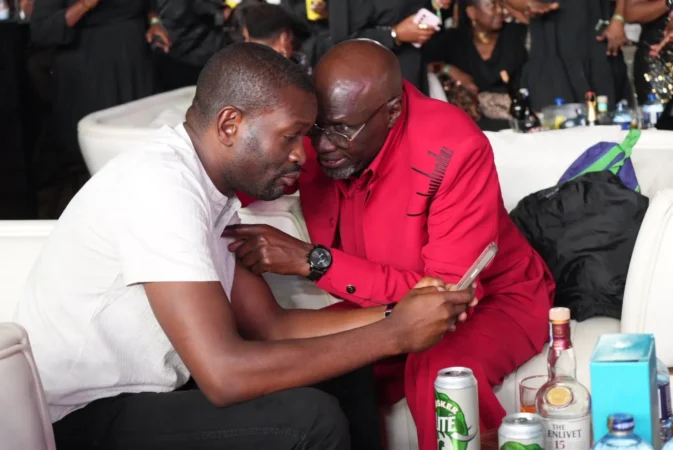
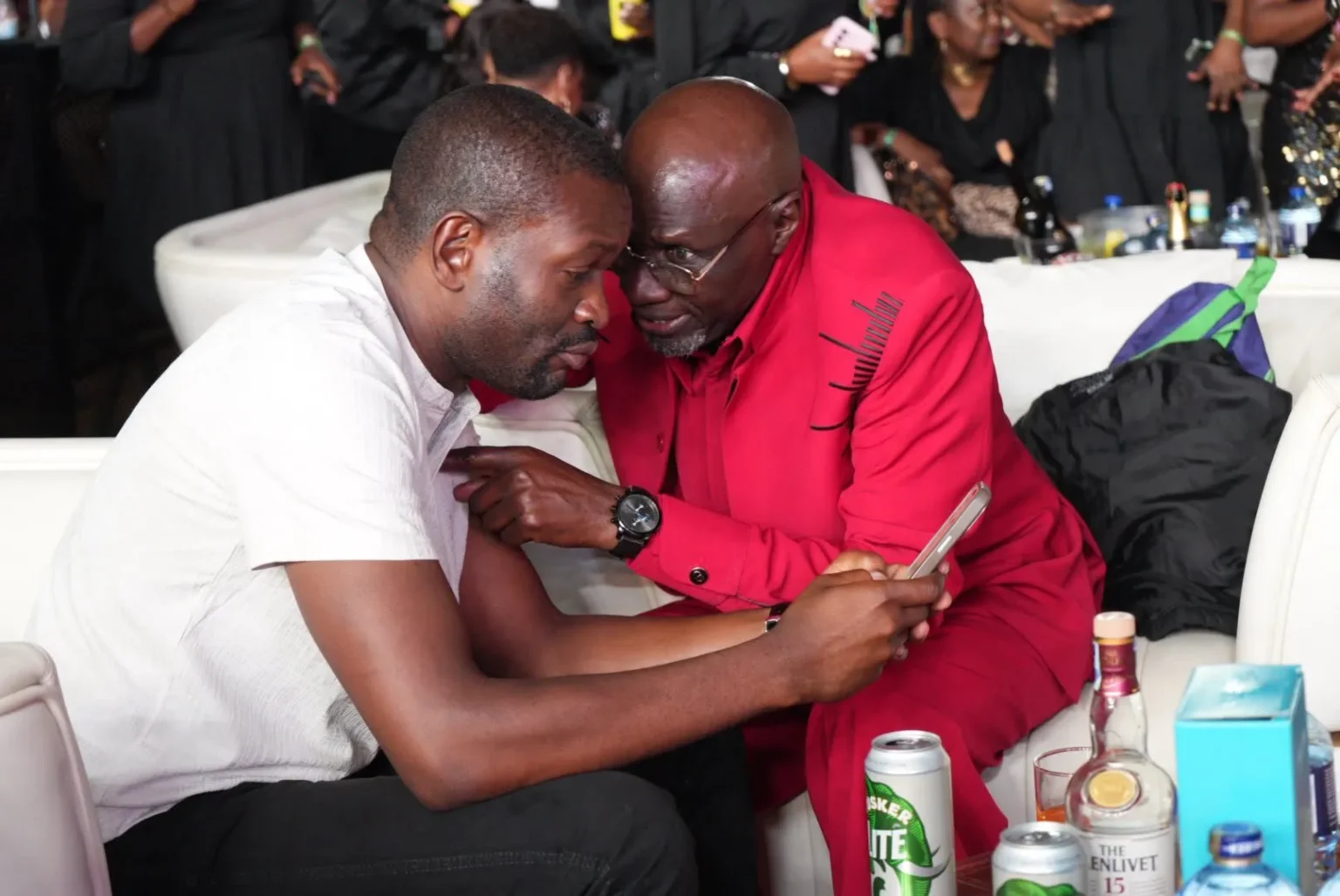
Images circulating online showing Sifuna at the event, including scenes in which alcoholic drinks were visible, became a subject of political commentary.
What might otherwise have remained a celebrity appearance at a music celebration developed into a wider argument over whether a politician’s private choices should influence public perceptions of leadership.
Ruto mocks Sifuna over alcohol
The debate intensified on Wednesday, October 14, when Ruto took aim at Sifuna while speaking in West Pokot County.
The President linked the senator’s appearance at the concert to the launch of The Equitable Party (TEP), a political platform associated with Sifuna and his allies, questioning the substance of the opposition politician’s political ambitions.
“I saw Mr. Empty launch a party called The Empty Party, then head straight to a bar. The last time we saw him, he was with Koffi Olomide, and the table was full of that expensive liquor with two names,” Ruto said.
Ruto’s comments added a personal dimension to the political exchanges between the President and Sifuna, who has become a prominent figure in the opposition’s political mobilisation ahead of the 2027 General Election.
The remarks also brought renewed attention to the expectations placed on politicians seeking national leadership, including whether their conduct outside official duties should carry political consequences.
However, the presence of alcoholic drinks at a social event does not, on its own, establish that a person was intoxicated or has a problem with alcohol. Nor does it independently determine a politician’s capacity to hold public office.
Social media users defend Sifuna
Ruto’s comments prompted a wave of responses on X, with some users criticising Sifuna’s conduct while others defended his right to enjoy a social occasion without having his leadership credentials judged by what he drinks.
Supporters argued that political leaders should be assessed primarily on their public record, respect for the Constitution, accountability and treatment of citizens rather than on photographs taken during leisure time.
One user wrote: “If your political argument against Edwin Sifuna begins and ends with a picture of Alcohol drinks, Perhaps it is your argument that needs rehabilitation.”
Another argued: “A cold drink on a weekend doesn’t write public policy, govern poorly, or violate the Constitution. We need leaders who respect the rule of law and human rights, not performative saints hiding behind hypocrisy. Let people live!”
Robert Gachugu similarly argued that leadership should be measured by accountability, protection of rights and service to the public rather than a politician’s drinking choices.
The responses reflect one strand of the online debate: that a politician’s personal habits should not automatically outweigh scrutiny of their decisions and performance in public office.
Other critics, however, maintained that the public image and personal conduct of those seeking high office remain legitimate subjects of political discussion.
The debate therefore extends beyond Sifuna’s appearance at the concert to a broader question about where voters should draw the line between personal freedom and the expectations attached to political leadership.
Viral campaign challenges moral policing
The controversy gained another dimension after X user @LeviMunyeri reportedly invited Kenyans to share photographs of themselves enjoying alcoholic drinks in solidarity with Sifuna.
The resulting online thread attracted users who used their photographs to challenge what they regarded as selective moral scrutiny of politicians. Some also shared images of international public figures drinking alcohol to argue that social drinking is not, by itself, evidence of an inability to lead.
A report published by Y News Digital said the post had attracted approximately 220,000 views and 10,000 likes, alongside thousands of comments. Such engagement figures are platform-specific and may change over time.
The campaign turned the controversy into a visible expression of support for Sifuna, although participation in an online thread should not be taken as evidence of the views of Kenyan voters generally.
Religious image and political accountability
The dispute has also revived questions about the place of religion and public morality in Kenyan politics.
Politicians frequently attend church services and invoke religious values during public engagements, particularly during election campaigns. For some critics, the emphasis on public displays of piety can become problematic when it is treated as a substitute for examining a leader’s record in office.
Sifuna’s defenders have drawn a distinction between a politician’s personal lifestyle and conduct in public office, arguing that constitutional compliance, integrity, human rights and accountability offer more substantive grounds for assessing leadership.
That argument does not mean personal conduct is beyond scrutiny. Rather, it raises the question of whether criticism is based on demonstrable misconduct or assumptions drawn from a photograph.
The same distinction is important when evaluating claims about political leaders: allegations of corruption, abuses of power or violations of rights require evidence and should not be treated as established facts simply because they circulate widely online.
Fact-check warns against manipulated image
The debate has also unfolded amid the circulation of misleading material about the senator.
Africa Check reported on October 16 that an image purporting to show Sifuna asleep beside Machoka, with alcohol bottles and glasses on a table, had been manipulated. The fact-check identified inconsistencies between the image and footage from the event.
Also Read: Registrar begins process to rename Sifuna’s TEP to Linda Mwananchi Movement
The finding highlights the need to distinguish authentic photographs from altered images and to avoid using unverified material to make claims about a public figure’s behaviour.
It also underlines the risks of viral political content, in which a genuine event can become the basis for misleading visual claims or exaggerated conclusions.
A wider debate ahead of 2027
The exchange between Ruto and Sifuna comes as political actors position themselves ahead of the 2027 General Election, making public image and political messaging increasingly significant.
For Sifuna’s supporters, the controversy has become a test of whether voters will prioritise a politician’s personal lifestyle or focus on governance, constitutional accountability and public service.
For his critics, the episode has raised questions about the image expected of politicians seeking higher office.
The online reaction does not establish a national consensus on either position. It does, however, show how a moment at a social event can quickly become a political flashpoint when prominent figures are involved.
Ultimately, Sifuna’s appearance at the concert and Ruto’s subsequent remarks have opened a debate about the standards applied to political leaders. Whether that debate influences voters in 2027 will depend on a much wider assessment of candidates’ records, policies, integrity and conduct in public office.