


NAIROBI, Kenya — The World Health Organization (WHO) has reassured Kenyans that there is no evidence of an ongoing Ebola outbreak in the country, as health authorities continue to monitor contacts linked to the first confirmed imported case.
Dr Martins Chibueze, WHO Kenya’s Head of Health Emergencies, said surveillance and contact tracing remained central to efforts to detect any further infections and prevent local transmission.
Speaking on Citizen TV’s Daybreak programme on Wednesday, October 14, Chibueze said people who had developed symptoms and subsequently undergone testing had returned negative results.
“There’s no evidence of an ongoing Ebola outbreak in Kenya following the confirmation of one imported case,” he said.
His remarks come as the Ministry of Health continues monitoring people who may have been exposed to the virus, while working with WHO to strengthen surveillance and coordinate the national response.
Kenya confirmed its first imported case of Bundibugyo virus disease, a form of Ebola, on October 6. The patient was a Kenyan national who had been living in the Democratic Republic of the Congo (DRC) and travelled to Kenya through Uganda.
According to the Ministry of Health, the patient arrived in Nairobi on October 3 aboard Jambojet flight 8523 from Kampala. He was assessed and isolated after his symptoms and travel history raised suspicion of Ebola. Laboratory tests subsequently confirmed the infection.
The patient later died, prompting authorities to intensify contact tracing and other containment measures.
108 contacts placed under quarantine
The government reported on October 11 that it had identified and verified 122 contacts linked to the confirmed case, with 108 placed in quarantine and undergoing daily monitoring.
Health Cabinet Secretary Aden Duale said none of those contacts had developed symptoms at the time of the update, while efforts to follow up on the remaining contacts continued.
The Ministry of Health also reported that 293 samples had been tested from 289 alerts, with only the confirmed case returning a positive result.
The findings have provided some reassurance that the infection has not spread further, although health authorities continue to monitor exposed individuals and investigate potential transmission risks.
The government has also stepped up screening at points of entry and strengthened preparedness at designated isolation and treatment facilities.
WHO stresses surveillance and contact tracing
WHO is working with the Kenyan government to strengthen disease surveillance, support contact tracing and coordinate the response.
Contact tracing enables health authorities to identify people who may have been exposed to an infected person, monitor their health and arrange testing if symptoms develop.
The measures are particularly important because Ebola symptoms can initially resemble those of other illnesses, making clinical assessment alone insufficient to confirm or exclude an infection.
According to WHO, the incubation period for Ebola ranges from two to 21 days. People infected with the virus do not transmit it before developing symptoms, but can spread it through direct contact with infected blood or other bodily fluids.
The international health agency recommends a combination of surveillance, laboratory testing, infection prevention and control, and the monitoring of exposed individuals to contain outbreaks.
Regional outbreak raises vigilance
Kenya’s imported case was linked to an ongoing Bundibugyo virus disease outbreak in the DRC, which has faced a growing number of infections and deaths.
In an October 8 situation update, WHO said the patient had travelled from the DRC through Uganda before being diagnosed in Kenya. The agency confirmed that public health response measures, including contact tracing, had been initiated in both Kenya and Uganda.
Also Read: Kenya declares Ebola a formidable epidemic disease, introduces new rules
The case has highlighted the importance of cross-border coordination, particularly when people travel from areas experiencing active outbreaks.
While WHO’s latest assessment offers reassurance, health authorities must continue monitoring contacts throughout the relevant follow-up period and investigate suspected infections promptly.
What Kenyans should know
Health officials have urged the public to rely on verified information from the Ministry of Health and WHO rather than unconfirmed claims circulating on social media.
People experiencing symptoms consistent with Ebola, particularly after possible exposure to an infected person or travel from an affected area, should seek immediate medical advice and disclose their travel and contact history to healthcare providers.
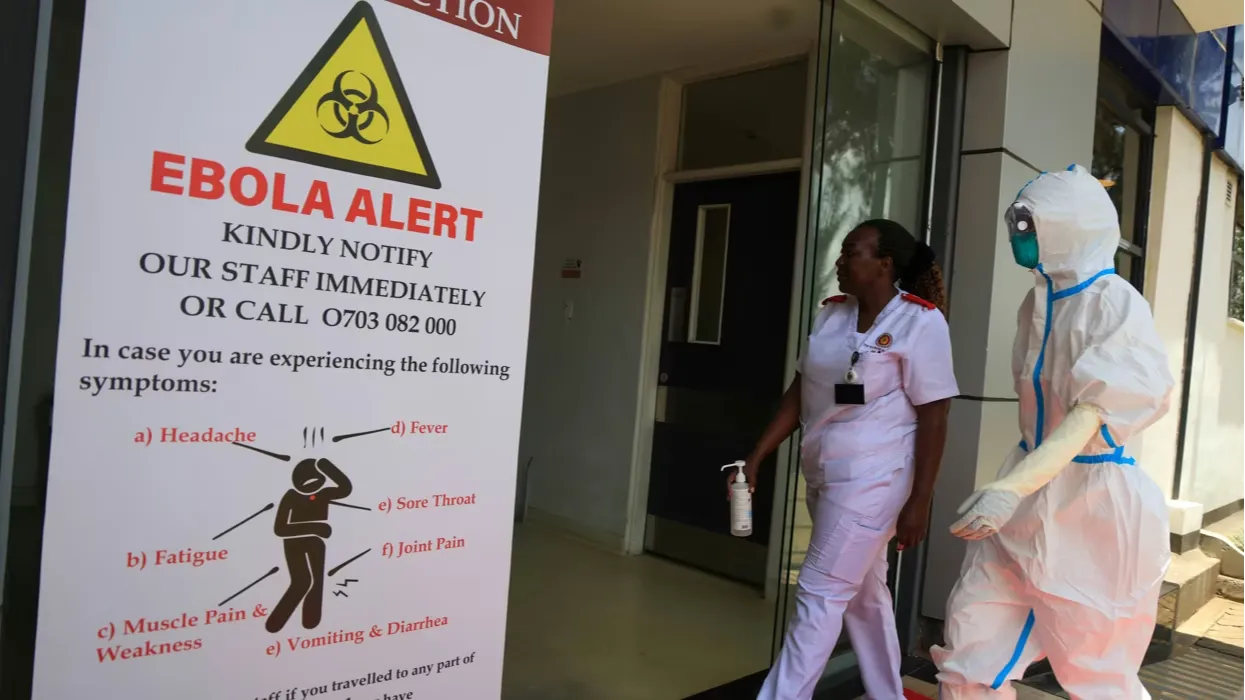
Symptoms can include fever, fatigue, muscle pain, headache and sore throat, followed in some cases by vomiting, diarrhoea and other complications. These symptoms do not automatically mean someone has Ebola; laboratory testing is necessary for confirmation.
For now, WHO’s position is that Kenya has no evidence of an ongoing Ebola outbreak following the imported case. Continued surveillance, contact tracing and prompt reporting of suspected infections remain essential to preventing further transmission.