

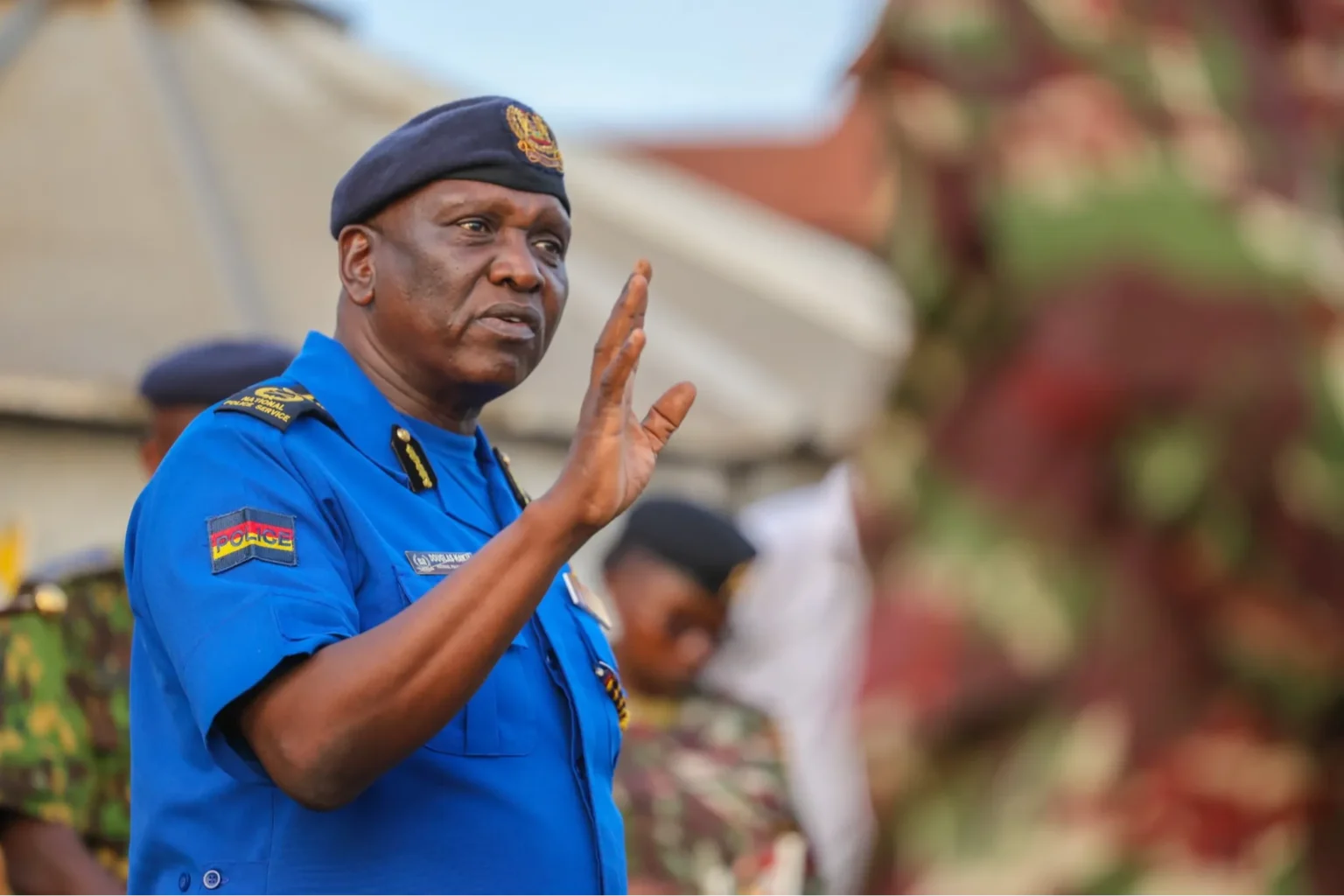
NAIROBI, Kenya — Inspector General of Police Douglas Kanja has ordered the immediate interdiction of key officers whenever a detainee dies inside a police cell, pending investigations into the circumstances of the death.
Kanja issued the directive on Wednesday, August 12, during a sensitisation forum on the new Service Standing Orders and ongoing police reforms at the National Police Leadership Academy in Ngong.
The officers targeted by the directive are the Occurrence Book (OB) recording officer, cell sentry and duty officer who were responsible for the station at the time of the death.
“In the case of any death occurring in police cells, the OB recorder, cell sentry, and duty officer must be interdicted immediately, pending investigation of whatever happened,” Kanja said.
He directed regional police commanders attending the forum to ensure the measure is implemented at stations under their command.
Kanja said deaths occurring inside police cells were a serious concern and required immediate action by commanders.
He said the interdictions would allow investigators to establish what happened before further disciplinary or legal action is taken.
Officers found culpable could face additional sanctions, including demotion or criminal prosecution, depending on the findings of investigations.
The directive effectively places greater responsibility on officers directly involved in the custody and supervision of detainees.
It also signals a tougher approach by the National Police Service (NPS) towards accountability whenever a person dies while under police custody.
The directive comes amid renewed scrutiny of deaths in police custody.
In Makueni, Gedion Makau was found dead inside a cell at Kilungu Police Station after his arrest on August 4.
Police reportedly attributed his death to suicide while he was in detention, but Makau’s family has disputed that account and demanded answers.
The Independent Policing Oversight Authority (IPOA) has since joined investigations into the circumstances surrounding his death.
The case has renewed questions about how detainees are monitored and protected while in police custody.
Kanja’s directive also comes after the death of popular influencer Albert Ojwang while in police custody last year, a case that triggered intense public scrutiny of the National Police Service.
Kanja subsequently interdicted the Officer Commanding Station (OCS) at Nairobi’s Central Police Station and other officers who were on duty when Ojwang died.
During a murder trial in July, the Director of Public Prosecutions (DPP) told the court that Ojwang had been assaulted with a blunt object before being strangled while in detention.
Also Read: CCTV shows Albert Ojwang was alive before death in Nairobi police cells
The prosecution also raised allegations concerning the deletion of CCTV footage from the police station.
The case has since become a major test of accountability within Kenya’s police service.
Kanja’s latest directive introduces an immediate administrative response whenever a detainee dies in police custody.
The interdiction itself does not establish culpability. Rather, it removes the officers concerned from active duty while investigations determine whether there was negligence, misconduct or criminal wrongdoing.
The findings of those investigations will determine whether the affected officers face further disciplinary or legal proceedings.
The directive places regional commanders under pressure to ensure that deaths in police cells are promptly reported, investigated and handled in accordance with the new Service Standing Orders.