

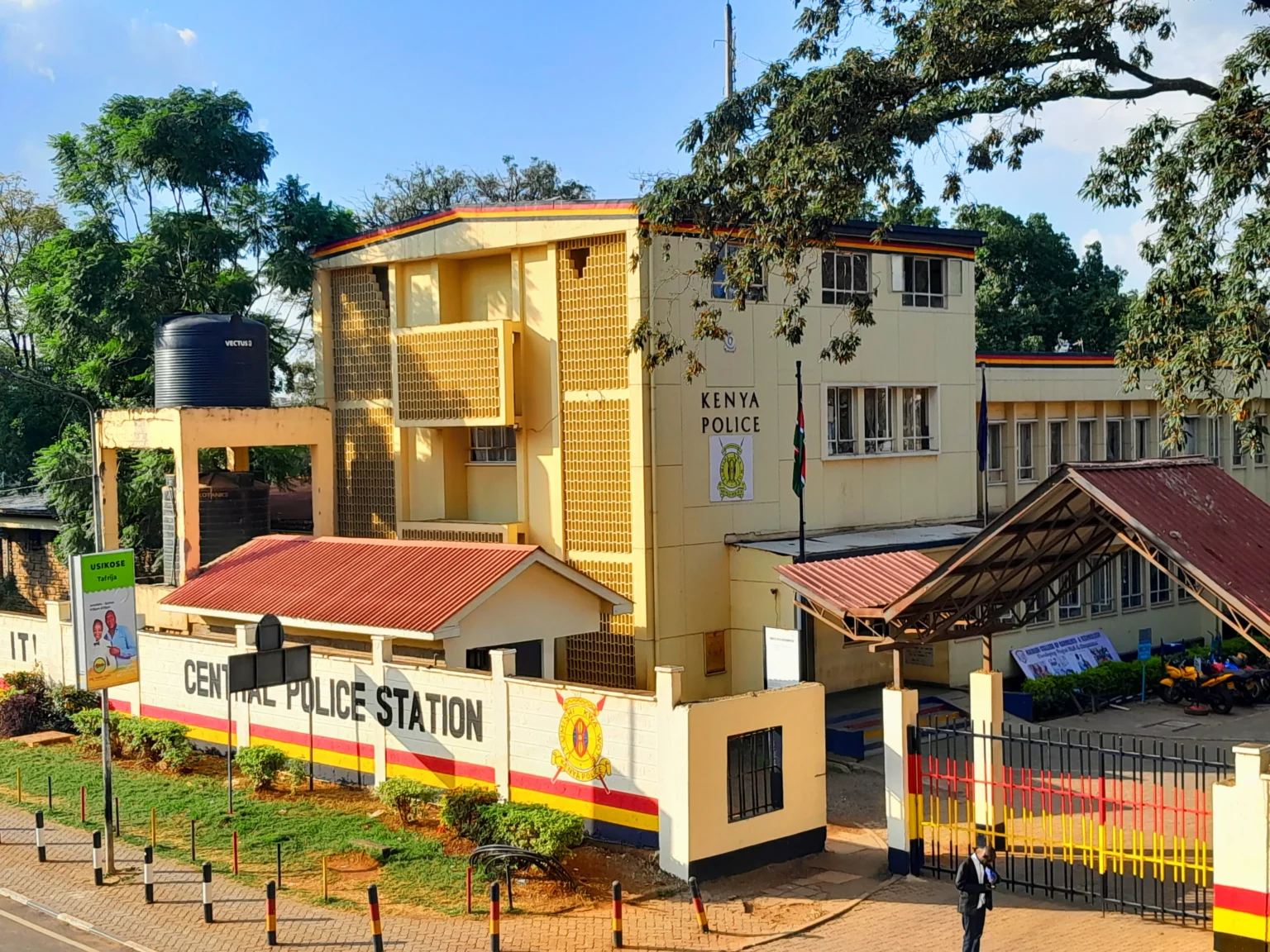
NAIROBI, Kenya — When investigators arrived at Nairobi’s Central Police Station on June 9, 2025, they encountered a problem that often marks the beginning of difficult cases.
The cameras had stopped talking. Or rather, somebody had tried to silence them.
The Digital Video Recorder (DVR) responsible for storing surveillance footage had been formatted. The system had been disconnected from power. Critical recordings that might explain what happened inside one of Kenya’s most important police stations appeared, at least initially, to have vanished.
Yet months later, inside a courtroom packed with lawyers, journalists and observers, those same cameras would emerge as some of the most important witnesses in the murder trial of Albert Ojwang.
Their testimony was silent.
But it was powerful.
And according to evidence presented in court this week, it tells a story that prosecutors believe contradicts attempts to obscure the truth about Ojwang’s final hours.
The significance of a timeline
Murder investigations often revolve around one fundamental question.
What happened between the moment a person was last seen alive and the moment they were found dead?
In the case of Albert Ojwang, prosecutors increasingly appear to believe the answer lies not in conflicting witness accounts but in a sequence of digital records reconstructed from surveillance footage.
According to testimony presented by Joshua Mutua, the Independent Policing Oversight Authority’s (IPOA) Head of Forensics, recovered CCTV footage shows that Ojwang was alive and responsive when he arrived at Central Police Station.
The same footage later shows him being removed from the station while unresponsive.
That distinction has become one of the most consequential developments in the trial so far.
If accepted by the court, it narrows the timeline of interest dramatically.
It also intensifies scrutiny on what happened while Ojwang was in police custody.
A system that somebody tried to erase
The courtroom heard that Mutua’s investigation began on June 9, two days after the events under examination.
He told the court that he visited Central Police Station alongside fellow investigator Naphtali Nduhi to examine the surveillance infrastructure.
What they found immediately raised questions.
Before arriving, Mutua had contacted a technician identified as Dan, whose details had been provided by station personnel. Dan referred him to another technician, Aaron, who had helped install the CCTV system in 2024.
The investigation then moved inside the Officer Commanding Station’s office.
There, according to testimony, investigators found that the DVR had been disconnected from the power supply.
After reconnecting the equipment, forensic analysis revealed something even more significant.
The system logs showed that the recording device had been formatted at exactly 7:30:14 a.m. on June 8, 2025.
Not accidentally.
Not through system failure.
According to investigators, deliberately.
The timing matters because it came only hours after the events now under examination.
For prosecutors, the formatting raises obvious questions.
Who ordered it?
Who carried it out?
And why was surveillance footage removed immediately after Ojwang’s detention?
The digital trail that refused to disappear
Historically, attempts to destroy evidence often succeeded because physical records could be removed permanently.
Modern forensic investigations operate differently.
Deleting data no longer guarantees its disappearance.
The court heard that despite the formatting of the DVR, investigators successfully recovered critical footage using forensic recovery techniques.
The recovered material included recordings from Central Police Station and Mbagathi.
Mutua testified that investigators were able to reconstruct movements, interactions and timelines involving police officers and the deceased despite attempts to erase the recordings.
In many ways, the technology itself became a witness.
Not because the system functioned perfectly.
But because even after being tampered with, traces remained.
Digital forensics experts frequently compare deleted electronic evidence to burned paper documents. The pages may be damaged, but fragments often survive long enough to reveal what happened.
That appears to be precisely what occurred in this case.
What the cameras saw
The prosecution’s case gained further momentum after recovered CCTV footage was played in court.
According to evidence presented during proceedings, a police officer stationed near the holding cells was captured interacting with two unidentified men shortly after 10:25 p.m. on June 7.
The men, both wearing caps, entered the search area and were subsequently allowed access to the section containing holding cells.
They then moved directly toward the cell where Ojwang was being held.
Court proceedings indicated they remained inside for several minutes before leaving.
What followed has become a central focus of the trial.
The footage reportedly shows additional movement around the same cell later that evening.
At one point, several men are seen running from the area before returning.
Prosecutors have not yet completed presenting their interpretation of those events.
But the sequence has intensified public interest in what happened during the hours before Ojwang was later removed from the station.
A case larger than one courtroom
The Albert Ojwang trial increasingly appears to be about more than a single death.
It has become a test of institutional accountability.
Cases involving deaths in custody often encounter the same challenge: the people responsible for documenting events are frequently the same institutions whose conduct later comes under scrutiny.
That reality places extraordinary importance on independent evidence.
Medical records.
Forensic reports.
Digital data.
Surveillance footage.
Independent witnesses.
In this case, CCTV evidence has emerged as one of the few sources capable of reconstructing events without relying solely on competing narratives.
That helps explain why testimony regarding the formatting of the DVR has attracted so much attention.
The issue is no longer simply what happened to Albert Ojwang.
It is whether somebody attempted to prevent investigators from discovering what happened.
The unanswered questions
The hearing continues.
More witnesses are expected.
More evidence is likely to be presented.
And many questions remain unresolved.
Also Read: DCI probes IPOA over alleged phone misuse in Albert Ojwang’ murder investigation
Who authorised the formatting of the surveillance system?
Why was the DVR disconnected?
Who were the unidentified individuals seen entering the holding-cell area?
What happened between the moment Ojwang arrived responsive and the moment he was later removed from custody unresponsive?
Those questions now sit at the heart of a trial that has captured national attention.
For prosecutors, the recovered footage offers a chronological framework around which their case can be built.
For the defence, it will likely become a key piece of evidence to challenge and interpret.
For the public, it has already transformed the narrative.
The cameras were supposed to be erased.
Instead, they became witnesses.
And their testimony may ultimately prove difficult to ignore.