

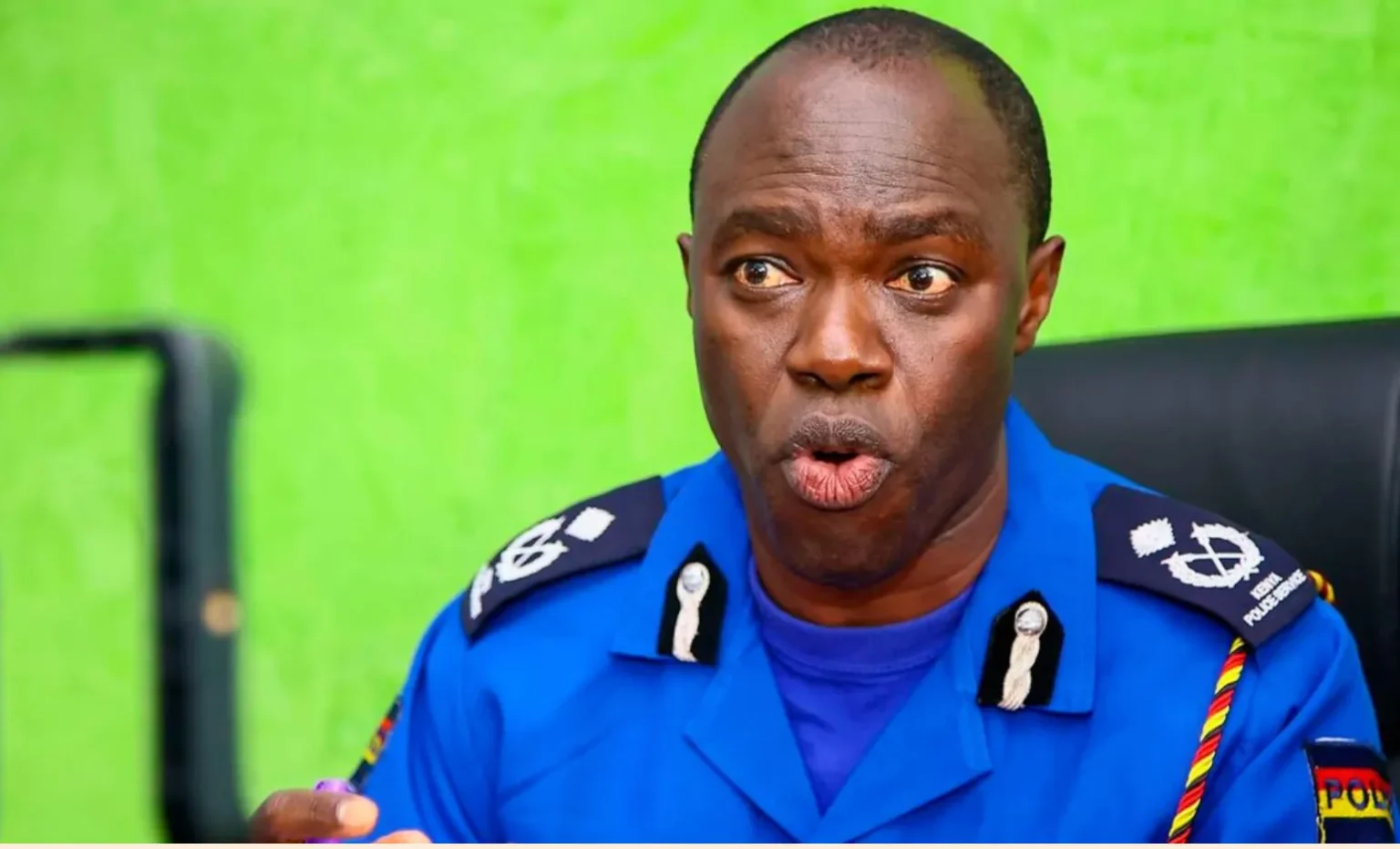
NAIROBI, Kenya — The National Police Service (NPS) has warned that tackling goonism ahead of Kenya’s 2027 General Election will require more than police action, urging communities to play a role in preventing and reporting violence.
NPS spokesperson Muchiri Nyaga said on Monday, August 10, 2026, that security agencies were continuing to map areas considered vulnerable to criminal activity as the country moves towards the 2027 election.
“The area of goonism is not entirely a police matter, but also a societal problem,” Nyaga told journalists.
He said authorities had identified areas facing different levels of risk.
“We have continued mapping of goons and identified areas where we have moderate, high, and very high situations when it comes to goons ahead of the 2027 General Elections,” Nyaga said.
His remarks come amid growing concern over the possible use of organised criminal groups in political activities as parties and prospective candidates begin positioning themselves ahead of the election.
The International Commission of Jurists (ICJ) said state institutions needed to take stronger preventive measures to address emerging security risks.
ICJ chairperson Christine Alai said citizens remained concerned about their safety and wanted authorities to demonstrate that they were responding effectively to threats.
“We are not satisfied because we feel exposed as citizens and as a country. We are asking questions of the duty bearers; we want to see more actions and tangible results,” Alai said.
She drew parallels between current concerns over criminal groups and the violence that followed Kenya’s disputed 2007 presidential election.
“The trends and patterns that preceded the 2007/2008 post-election violence looked like these: goonism. Society being exposed to criminal gangs and elements, some of them, the name and shape of ethnic militias, eg Mungiki,” she said.
Alai said the post-election violence became possible in part because political actors were able to mobilise criminal groups.
“The PEV became possible because the political elite were able to activate the criminal gangs. What we have observed is that those patterns are being replicated today,” she said.
The 2007–08 post-election violence followed the disputed presidential election and resulted in more than 1,000 deaths and the displacement of hundreds of thousands of people, according to international and Kenyan investigations.
The comparison has renewed scrutiny of whether institutions are acting early enough to prevent political mobilisation of criminal groups ahead of the 2027 vote.
The Independent Policing Oversight Authority (IPOA) also said it had identified areas where police could concentrate preventive measures against goonism.
IPOA commissioner Annette Mbogoh said mapping vulnerable areas could help security agencies deploy preventive measures before violence occurs.
“We have been able to map out areas that we think police can implement and address the issue of goonism,” Mbogoh said.
Also Read: Governor Sakaja denies funding goons Ksh 2M to ‘neutralise’ Nairobi protests, provides alibi
The convergence of the NPS and IPOA positions points to a greater emphasis on early intervention, intelligence gathering and targeted policing rather than waiting for violence to erupt.
However, Nyaga’s comments also underline the limits of policing alone. Communities, political organisations and other institutions are likely to play a critical role in identifying emerging threats and preventing criminal groups from being drawn into political activity.
The issue is expected to attract greater attention as the 2027 election approaches, particularly in areas identified by security agencies as having elevated risks of criminal or politically motivated violence.
Civil society organisations have meanwhile called for stronger accountability by security agencies and political actors, as well as greater protection of citizens as political competition intensifies.