



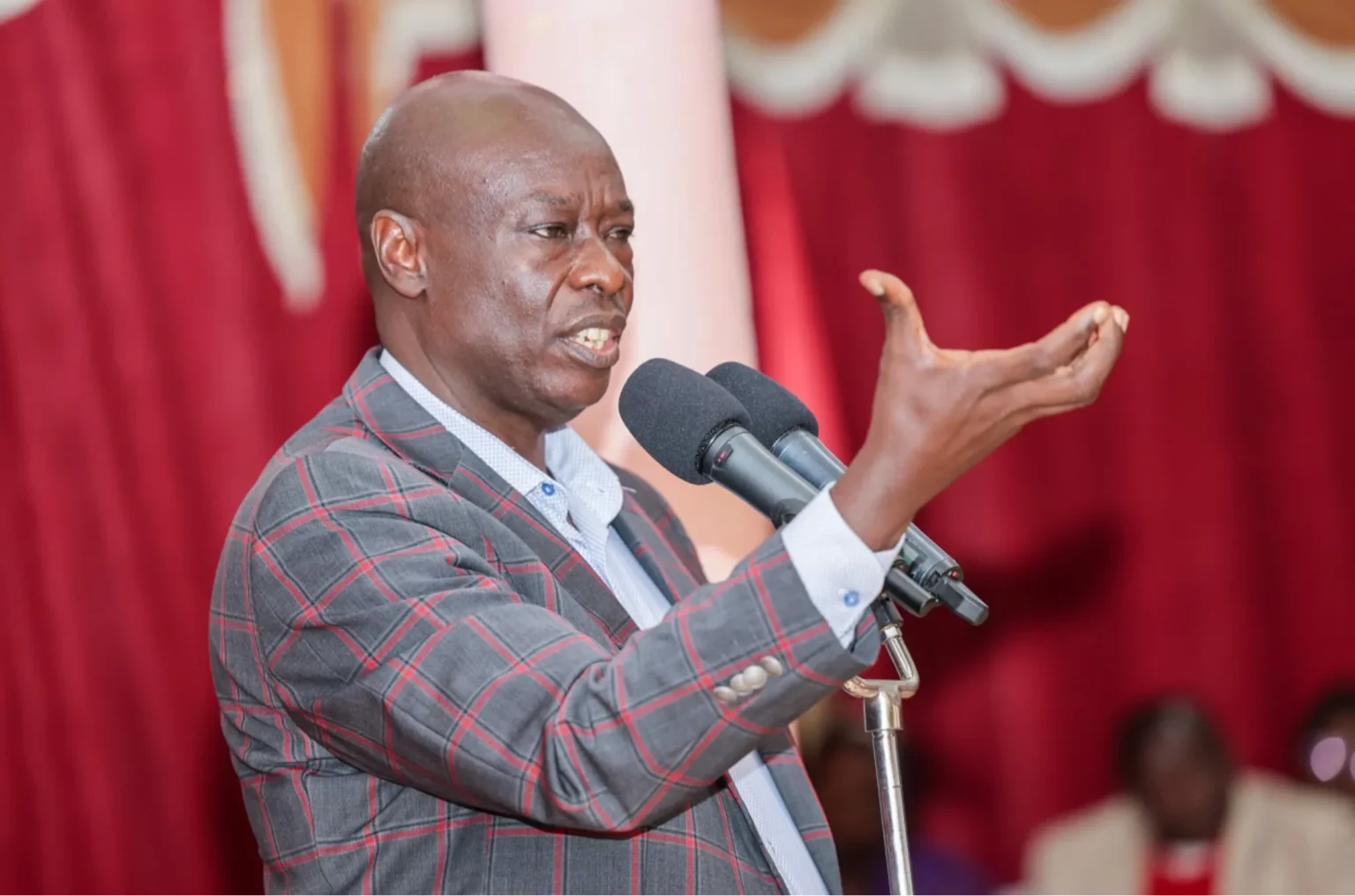
NAIROBI, Kenya — Former Deputy President Rigathi Gachagua has accused President William Ruto of hypocrisy, questioning his commitment to young Kenyans following reported remarks by the Head of State that young leaders are being denied an opportunity to lead.
In a statement posted on X on Wednesday, November 11, the Democracy for the Citizens Party (DCP) leader challenged Ruto to explain what he described as the government’s record of violence, abductions and arrests involving young people during anti-government demonstrations.
Addressing the President as “Mr. Taxes”, Gachagua questioned his moral authority to speak about the future of young Kenyans while, according to him, many had died or disappeared during protests over the past two years.
“Is that really you talking about young Kenyans?” Gachagua asked.
He proceeded to name several people whose deaths have become associated with allegations of police brutality, including Rex Masai, Kennedy Onyango, Albert Ojwang, Erick Mutisia, Ibrahim Kamau and Boniface Kariuki.
Gachagua also claimed that more than 200 young people had been killed during the 2024 Gen Z protests and the 2025 Saba Saba demonstrations, questioning whether those who died would have become the country’s future leaders.
The figure was presented as part of Gachagua’s allegations and should not be treated as an independently verified death toll.
The former Deputy President further accused the government of orchestrating abductions and using terrorism-related charges to intimidate young people who participated in demonstrations.
Gachagua invokes Kiambaa church killings
Gachagua also brought the 2007-2008 post-election violence into his criticism, referring to the Kiambaa church attack in Eldoret, where dozens of people, including children, were killed after a church was set on fire.
He questioned whether the victims had also been part of the generation expected to lead Kenya in the future.
“Weren’t they supposed to be the leaders of tomorrow? Has it escaped your memory? Does it not prick your conscience?” he wrote.
Ruto was among the Kenyan politicians charged by the International Criminal Court (ICC) over alleged crimes against humanity arising from the 2007-2008 post-election violence.
However, the ICC terminated the case against Ruto and former radio presenter Joshua arap Sang on April 5, 2016, after a majority of judges found that the prosecution had not presented sufficient evidence to sustain the charges.
The decision vacated the charges and discharged the two men without acquitting them, while leaving open the possibility of a future prosecution. Ruto has consistently denied wrongdoing.
Gachagua also criticised what he described as Ruto’s political messaging, referring to the “41 vs. 1” narrative associated with the 2007 election campaigns and the President’s “Usawa ni Sawa” message.
Ruto’s remarks on use of force against protesters
The former Deputy President further recalled Ruto’s July 2025 remarks directing police to shoot in the legs people who vandalised or burned property during demonstrations.
Speaking during an event in Nairobi on July 9, 2025, Ruto told officers that people caught destroying property should be shot in the legs, taken to hospital and subsequently presented in court.
The remarks attracted criticism from human rights advocates amid concerns over police conduct during protests.
Also Read: Gachagua accuses Ruto, Kindiki of plot to divide Mt Kenya ahead of 2027
Gachagua used the statement to question the President’s record on the protection of young people, also referring to Ruto’s repeated use of the Swahili expression “kusafirisha watu”, which he linked to alleged abductions.
“Who is next on the safari?” he asked.
He went on to compare Ruto with several former African leaders, including Idi Amin, Mobutu Sese Seko, Siad Barre, Jean-Bédel Bokassa, Sani Abacha, Robert Mugabe and Omar al-Bashir.
Gachagua concluded his statement with a sarcastic remark directed at the President: “Tell us more lies tomorrow!”
The latest exchange adds to the increasingly bitter political rivalry between the two leaders, who were elected together in 2022 before their relationship deteriorated, culminating in Gachagua’s removal from office in October 2024.