




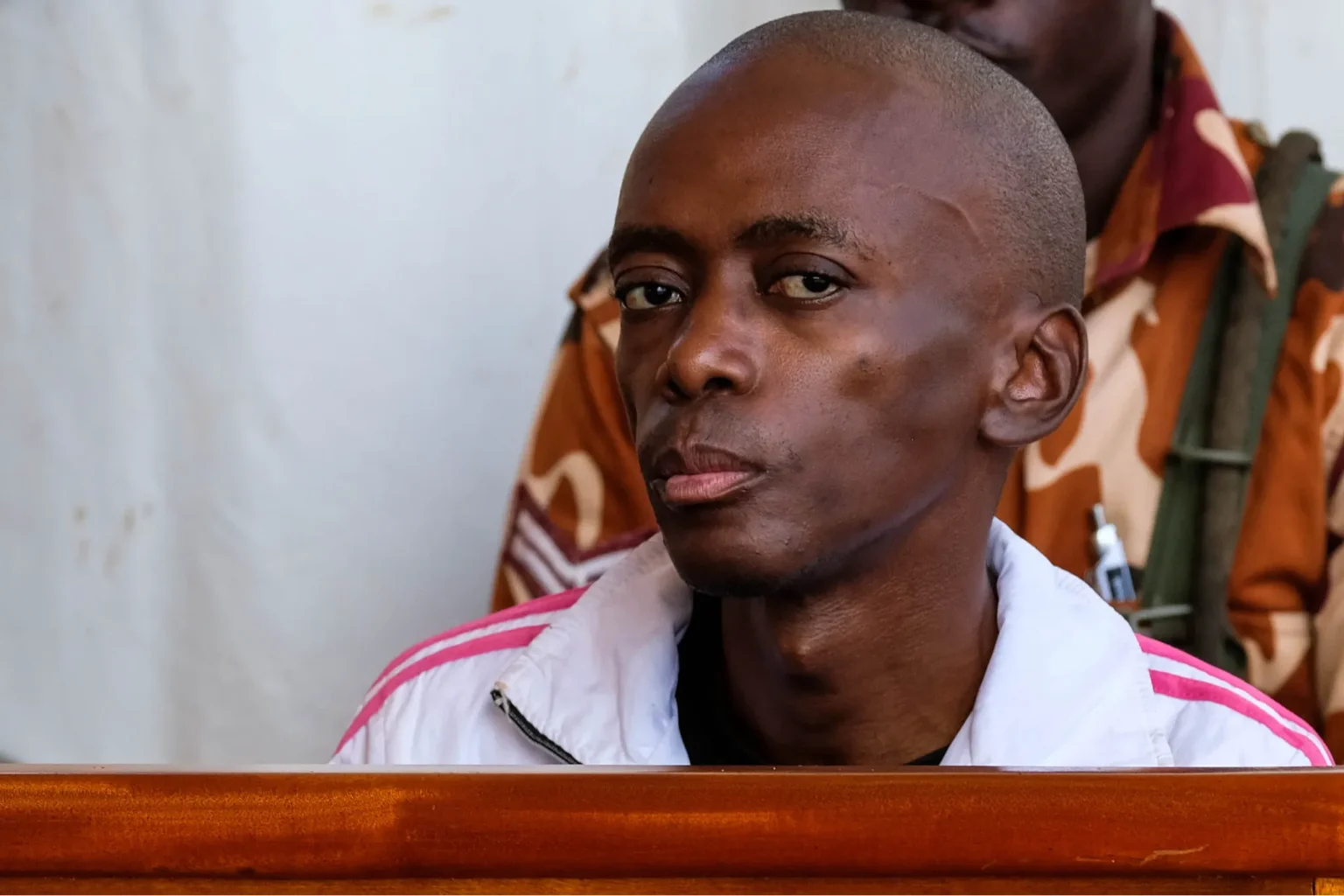
KAMPALA, Uganda — Uganda’s Court of Appeal has assigned three judges to examine Christopher Okello Onyum’s challenge to his conviction and death sentences for murdering four toddlers at a daycare centre in Ggaba, Kampala.
Justices Christopher Gashirabake, Eva K. Luswata and John Mike Musisi have been assigned to handle the appeal, according to a judicial officer allocation notification issued through the Judiciary’s Electronic Court Case Management Information System (ECCMIS) on November 10, 2026.
The appeal marks the next stage in one of Uganda’s most closely watched murder cases, with Okello seeking to overturn his convictions on four counts of murder or have the sentences imposed by the High Court reviewed.
Registered as Criminal Appeal No. COA-00-CR-CN-0288-2026, the case challenges the High Court’s evaluation of the evidence, its treatment of medical findings concerning Okello’s mental condition and the appropriateness of the death penalty.
In his memorandum of appeal filed on June 12, 2026, Okello raises three grounds through which he wants the appellate court to intervene.
His first argument is that trial judge Justice Alice Komuhangi Khaukha failed to properly evaluate the evidence presented during the trial, consequently reaching an erroneous decision that resulted in a miscarriage of justice.
Secondly, he challenges the court’s assessment of medical evidence concerning his mental condition, arguing that the judge failed to properly consider evidence relating to his psychological state before determining his criminal responsibility.
The argument revisits the insanity defence that featured prominently during the original trial, with Okello maintaining that the court did not adequately assess the medical evidence relevant to his mental state.
His third ground challenges the death sentences, which he considers harsh and excessive.
He is asking the Court of Appeal to quash his convictions, set aside or vary the sentences and order his release.
Evidence and insanity defence under scrutiny
The appeal arises from the April 2, 2026 killings at Ggaba Early Childhood Development Centre in Makindye Division, Kampala, where four children aged below three years were fatally attacked.
The victims were Gideon Eteku, Keisha Agenorwoth Otim, Ignatius Sseruyange and Ryan Odeke.
During the trial, the prosecution presented evidence that Okello had visited the daycare facility under the pretext of seeking admission for a child before attacking the toddlers.
The proceedings were conducted by the High Court through a mobile court sitting at Ggaba Community Church grounds, near the scene of the killings.
The trial attracted considerable public attention as witnesses gave accounts of the incident and prosecutors presented evidence seeking to establish Okello’s responsibility for the children’s deaths.
On April 30, 2026, Justice Komuhangi Khaukha convicted him on all four counts of murder under Sections 171 and 172 of Uganda’s Penal Code Act.
The judge rejected his insanity defence, finding that the evidence did not establish that he suffered from a disease of the mind that deprived him of the ability to understand the nature and consequences of his actions at the time of the killings.
In reaching the decision, the court considered psychiatric assessments, witness testimony, CCTV footage, telephone records and evidence concerning his movements and conduct before and during the attacks.
The prosecution also presented forensic evidence, including DNA findings, linking him to the crime.
The judge considered evidence of his interactions with daycare staff, financial transactions and movements, finding that his conduct demonstrated purposeful and organised behaviour.
The three court assessors who participated in the proceedings also advised the court to convict him, concluding that the prosecution had proved the ingredients of murder beyond reasonable doubt.
Okello seeks to overturn four convictions
After finding him guilty on all four counts, Justice Komuhangi sentenced Okello to death on April 30, describing the killings as among the rarest of rare cases warranting the maximum punishment.
Okello subsequently filed a notice of appeal on May 6, 2026, from Luzira Prison, signalling his intention to challenge both the convictions and sentences.
Also Read: Uganda death penalty debate rekindled after Christopher Okello Onyum sentencing
He formally lodged his memorandum of appeal on June 12 through the Uganda Law Society’s Legal Aid Project, setting out the three grounds upon which he wants the Court of Appeal to overturn the High Court’s decision.
The assignment of the three appellate judges now places the trial court’s findings under judicial scrutiny, particularly its evaluation of the insanity defence, the evidence establishing criminal responsibility and the decision to impose the death penalty.
The Court of Appeal will examine whether the High Court properly applied the law and evaluated the evidence before reaching its verdict.
It will also consider whether the sentences imposed were legally justified and whether there are grounds to quash the convictions, order a retrial or otherwise interfere with the trial court’s decision.
However, the assignment of the judges does not amount to a determination of the appeal. Okello’s convictions and sentences remain in force unless and until the appellate court rules otherwise.