
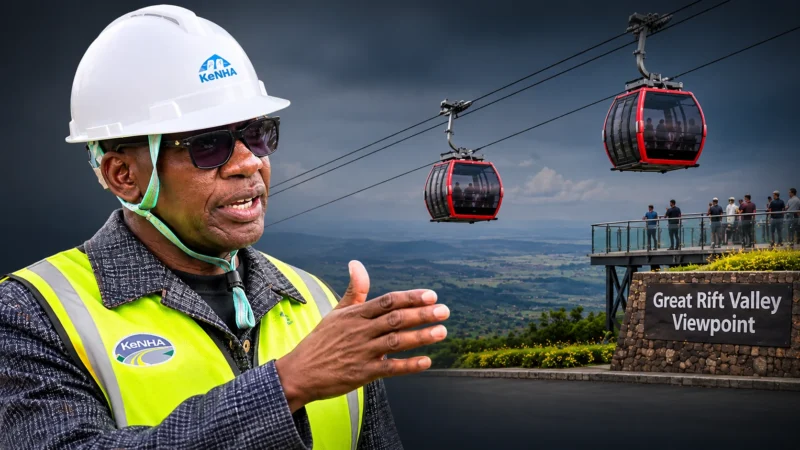


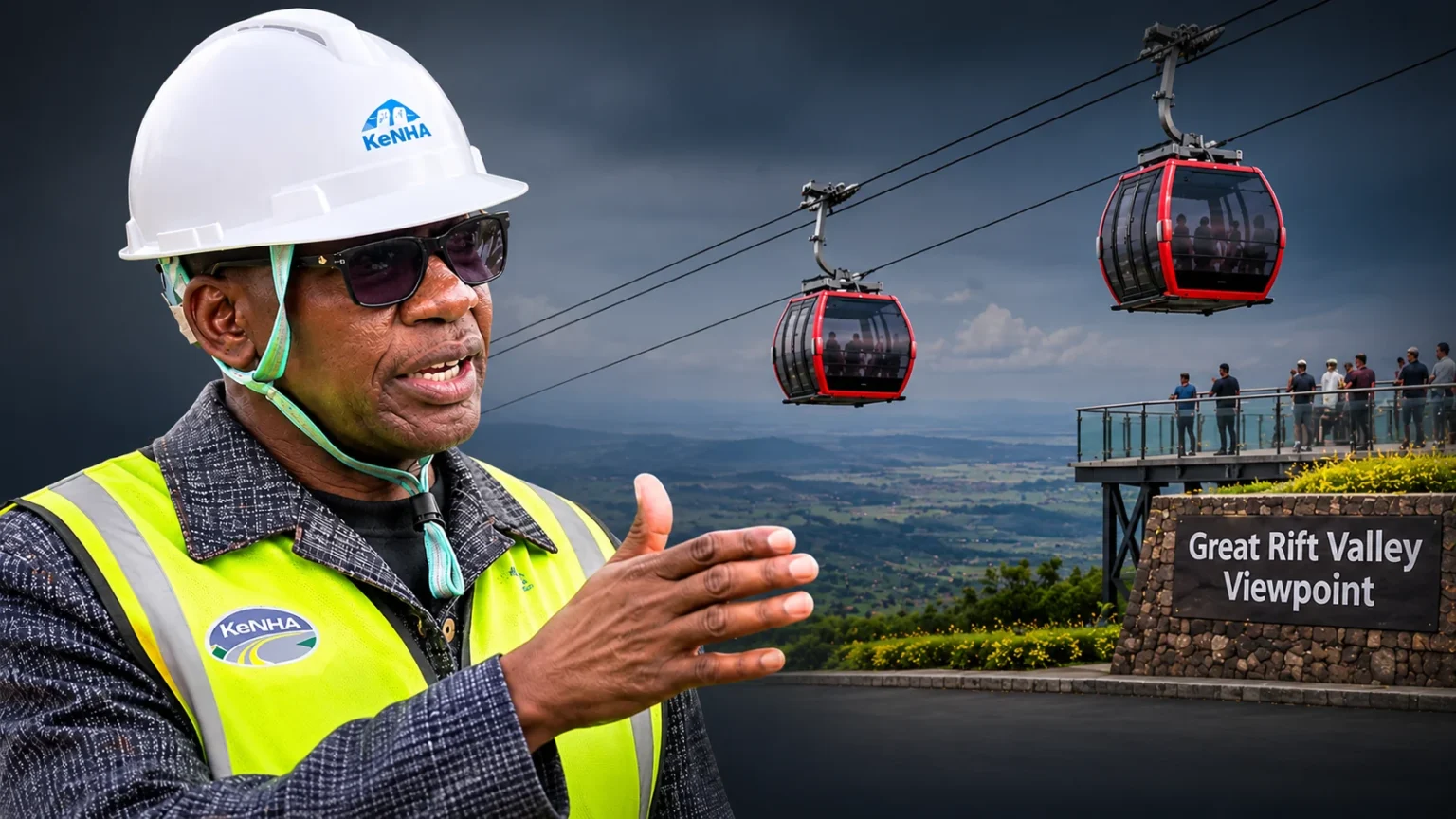
NAKURU, Kenya — Kenya is planning an ambitious transformation of the Great Rift Valley Viewpoint, with proposed cable cars, world-class hotels and redesigned curio shops aimed at turning the iconic escarpment stopover into a major tourism destination.
Transport Cabinet Secretary Davis Chirchir said the proposed developments would enhance the visitor experience along the Nairobi-Nakuru highway, allowing tourists to enjoy aerial views of the Great Rift Valley through a cable car system connecting the A8 and A8 South sections of the highway.
Chirchir described the proposed project as a major tourism investment, saying it would elevate the viewpoint beyond its traditional role as a roadside stopover.
“The viewpoint will be world-class, with cable cars connecting the A8 to the A8 South, the Escarpment corridor. It will be a magnificent tourism point,” Chirchir said during an interview with Kenyan Historian Enock Sikolia.
The proposed cable cars would transport visitors in suspended passenger cabins along overhead steel cables, offering panoramic views of the Great Rift Valley, Mount Longonot and the surrounding escarpment.
Beyond the cable car project, the government also plans to redesign the existing curio shops and attract private investors to establish hotels in the area.
Chirchir said the intention was to create an attractive tourism hub where visitors could spend more time exploring the landscape, shopping for locally made products and accessing hospitality services.
“We are going to redo the curio shops that will force tourists to stop and want to spend time. We will probably let investors put up hotels. We want to leverage the God-given tourist attractions of the Rift Valley,” he added.
The proposed transformation, however, raises questions about the future of traders who have operated at the viewpoint for years, particularly as the ongoing expansion of the Rironi-Mau Summit highway has already resulted in the demolition of several curio shops and other business premises.
The viewpoint has traditionally supported small businesses selling souvenirs, traditional ornaments, wood carvings and other locally made products to domestic and international tourists.
Some traders have warned that the highway redevelopment could disrupt hundreds of livelihoods, with businesses supporting employees and families who depend on tourism-related income.
They have consequently called on the government to provide alternative trading spaces during construction or guarantee their return once the highway works are completed.
The proposed introduction of modern commercial facilities and hotels also raises questions about how existing small-scale traders will be accommodated in the redeveloped tourism destination.
Chirchir did not, however, disclose when the government expects to begin implementing the cable car project, provide an estimated construction cost or outline the proposed financing and procurement arrangements.
Also Read: Nairobi-Talanta railway line set for December 15 completion ahead of Bayern-Ajax friendly
It also remains unclear how the government intends to balance private investment in hotels and modern tourism facilities with the interests of traders who have depended on the viewpoint for their livelihoods.
The announcement comes as the government accelerates construction of the Rironi-Naivasha section of the approximately Ksh200 billion Rironi-Mau Summit highway project.
Chirchir recently announced a revised construction strategy targeting the completion of one kilometre of road daily, with contractors expected to concentrate on completing the road base before applying the final asphalt layer.
The government is targeting to open the approximately 60-kilometre Rironi-Naivasha section to motorists before the end of 2026.
If implemented, the proposed tourism redevelopment could give the Great Rift Valley Viewpoint a new identity as a destination in its own right rather than simply a popular stopover for motorists travelling between Nairobi and Nakuru.
