



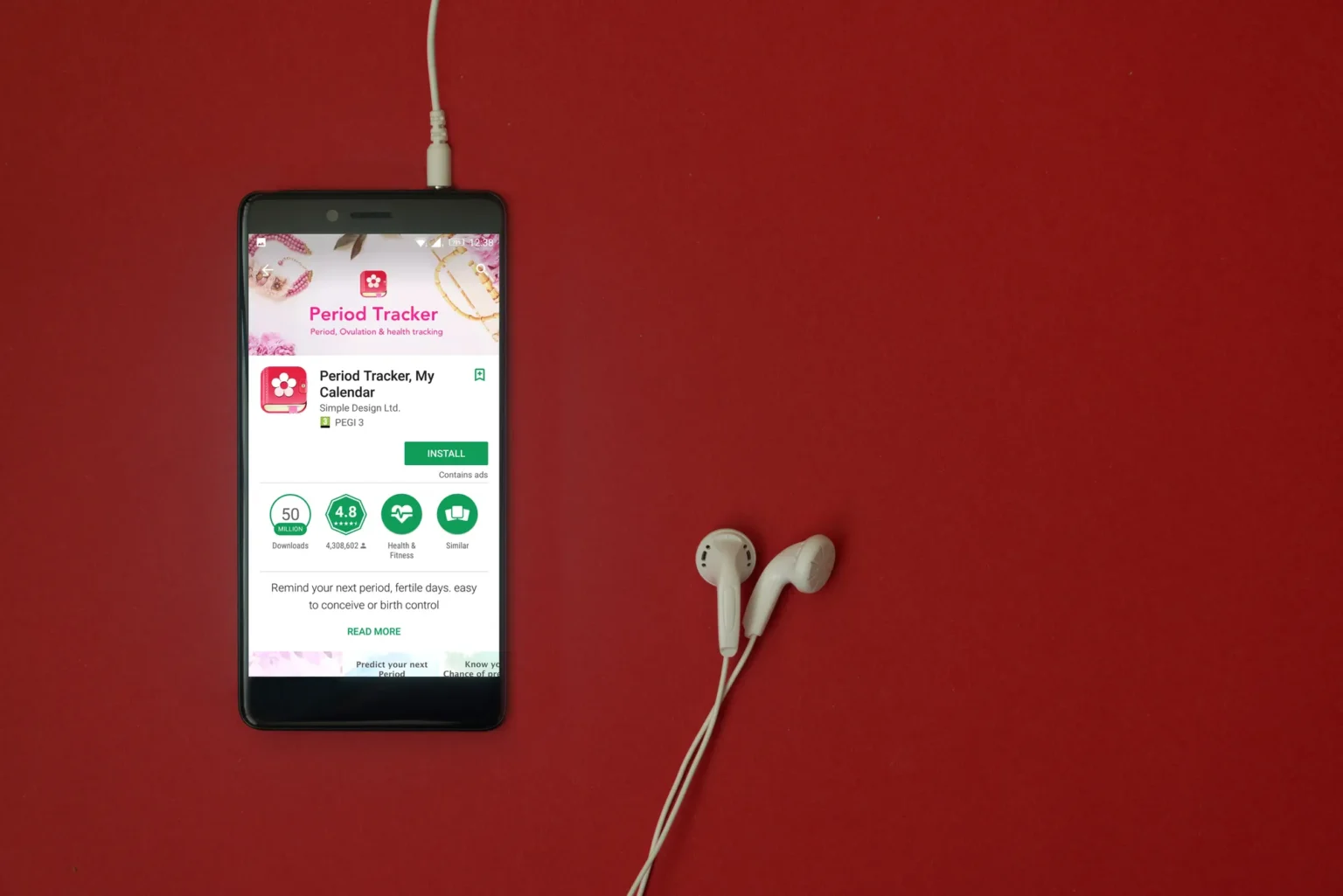
NAIROBI, Kenya — For millions of women around the world, a period-tracking app has become one of the most intimate technologies on their phones.
It knows when they menstruate.
It knows when they are trying to conceive.
It knows when they may be pregnant.
It knows about cramps, mood swings, medications, sexual activity, birth control, fertility concerns and, in some cases, even their emotional state.
In an era when smartphones record almost every aspect of daily life, few digital tools collect information as personal as menstrual health apps.
Most users download them for a simple reason.
Convenience.
A quick tap can predict a period, estimate ovulation, track symptoms and help manage reproductive health in ways that would once have required notebooks, calendars or regular medical consultations.
Yet behind the brightly coloured interfaces and promises of empowerment lies a question that privacy experts increasingly believe deserves greater attention:
What happens to all that information once it leaves your phone?
A new investigation by the Mozilla Foundation, the non-profit organisation behind the Firefox browser, suggests the answer depends heavily on which app a user chooses.
Some appear to handle reproductive health data with extraordinary care.
Others share information with advertising, analytics and technology companies in ways many users may never realise.
The findings arrive at a moment when reproductive health data has become politically and legally sensitive, particularly in the United States after the Supreme Court’s 2022 decision to overturn federal abortion protections.
For privacy advocates, the concern is no longer theoretical.
The issue is not simply whether an app helps predict a menstrual cycle.
It is who gains access to the information generated along the way.
The most personal data on your phone
Most smartphone applications collect data.
Navigation apps know where people travel.
Social media platforms know what they watch.
Shopping apps know what they buy.
Period trackers occupy a different category.
They capture information that many users may not even share with close friends or family members.
That makes them uniquely valuable—not only to users but also to advertisers, data brokers and analytics companies seeking insights into consumer behaviour.
According to Mozilla’s investigation, the most concerning example involved Stardust, a popular app that combines menstrual tracking with astrology and horoscope features.
The company publicly promises users that their information remains private.
“Your data is private. Period.”
Mozilla’s researchers found something more complicated.
Their investigation concluded that Stardust transmitted reproductive health information to a data management company known as RudderStack.
According to the report, the information included pregnancy status, birth control usage, alcohol consumption, moods and specific physical symptoms.
The company disputes the implication that users’ privacy is being compromised.
A Stardust spokesperson told Mozilla that RudderStack functions only as a technical intermediary and cannot use the information for its own purposes.
The company further stated that the data does not contain information that directly identifies individual users.
From a legal perspective, that may be sufficient.
From a privacy perspective, experts say the situation is less straightforward.
Every additional company that touches sensitive information creates another potential point of exposure.
Why privacy matters more than ever
A decade ago, concerns about period-tracking apps largely focused on advertising.
Today, the stakes are significantly higher.
Privacy researchers increasingly worry about how reproductive health information could be accessed through legal requests, court orders or law enforcement investigations.
Police agencies around the world already obtain data from technology companies during criminal investigations.
Location records, text messages, search histories and social media activity have all appeared in court proceedings.
Health data represents another potentially revealing layer.
Sara Geoghegan, Director of the Consumer Privacy Program at the Electronic Privacy Information Center, believes many users underestimate the power of seemingly ordinary digital records.
“Data collected from a period tracking app can be part of a whole tapestry woven from many different threads of surveillance,” she says.
“That can be very revealing.”
The concern extends beyond reproductive health.
The simple fact that someone uses a fertility or menstrual tracking app may itself reveal information about their personal circumstances.
For privacy advocates, that reality transforms period trackers from wellness tools into potential repositories of highly sensitive personal information.
The apps that share less
Not every app performed poorly.
In fact, Mozilla’s findings suggest the industry may be slowly improving after years of criticism.
Among all applications examined, one stood out.
Mozilla described Euki as “squeaky clean.”
Unlike most competitors, Euki stores reproductive health information directly on the user’s device rather than transmitting it to company servers.
Users do not need to create accounts.
The app also includes a decoy feature capable of displaying harmless information if someone attempts to inspect the device.
To privacy researchers, Euki demonstrates that extensive data collection is not necessary for menstrual tracking to function effectively.
“We can and we should have technology that isn’t built upon harmful practices,” Geoghegan argues.
Flo and Clue also performed relatively well.
Mozilla found no evidence that either company shared reproductive health information with outside organisations.
Both apps provide users with detailed privacy controls and transparency mechanisms.
Yet they still store large amounts of reproductive health information on their own servers.
Supporters view that architecture as necessary for synchronisation and personalised services.
Critics argue that any stored data introduces risk, regardless of how secure it may appear.
When privacy policies become their own problem
One of the central findings of Mozilla’s report is not necessarily what companies are doing.
It is how difficult it can be for ordinary users to understand what is happening.
Privacy policies routinely span thousands of words.
Most people never read them.
Even those who do often struggle to interpret the technical language used to describe data-sharing arrangements.
As a result, users frequently believe their information remains entirely private when, in reality, certain categories of data may be flowing through a network of analytics providers, advertising platforms and software infrastructure companies.
The challenge is not always secrecy.
Often, it is complexity.
What companies disclose and what users understand are not necessarily the same thing.
A trust question, not just a technology question
The debate surrounding period-tracking apps ultimately extends beyond software.
At its heart lies a question of trust.
Can users trust companies with some of the most intimate information they generate?
Can they trust governments not to misuse that information?
Can they trust technology firms to prioritise privacy over commercial incentives?
Also Read: Kenya plans to create digital intelligence unit to monitor Kenyans online
The answers vary widely depending on jurisdiction, regulation and corporate practices.
Europe’s stricter privacy laws provide stronger safeguards than many countries.
The United States still lacks a comprehensive federal privacy framework governing how sensitive personal information can be collected, shared and retained.
That gap leaves many decisions in the hands of individual companies.
The bigger choice facing users
The Mozilla investigation does not suggest women should abandon period-tracking apps.
For many people, these tools provide genuine health benefits.
They improve awareness.
They support family planning.
They help identify irregularities that may require medical attention.
The question is not whether people should use them.
It is whether users fully understand the privacy trade-offs that accompany convenience.
Every app represents a different balance between functionality, personalisation and privacy.
Some prioritise data protection.
Others prioritise analytics, growth and advertising performance.
Most fall somewhere in between.
As reproductive health becomes increasingly digitised, the choice of a period tracker may no longer be solely about tracking a cycle.
It may also be a decision about who gets access to one of the most detailed records of a person’s private life.