


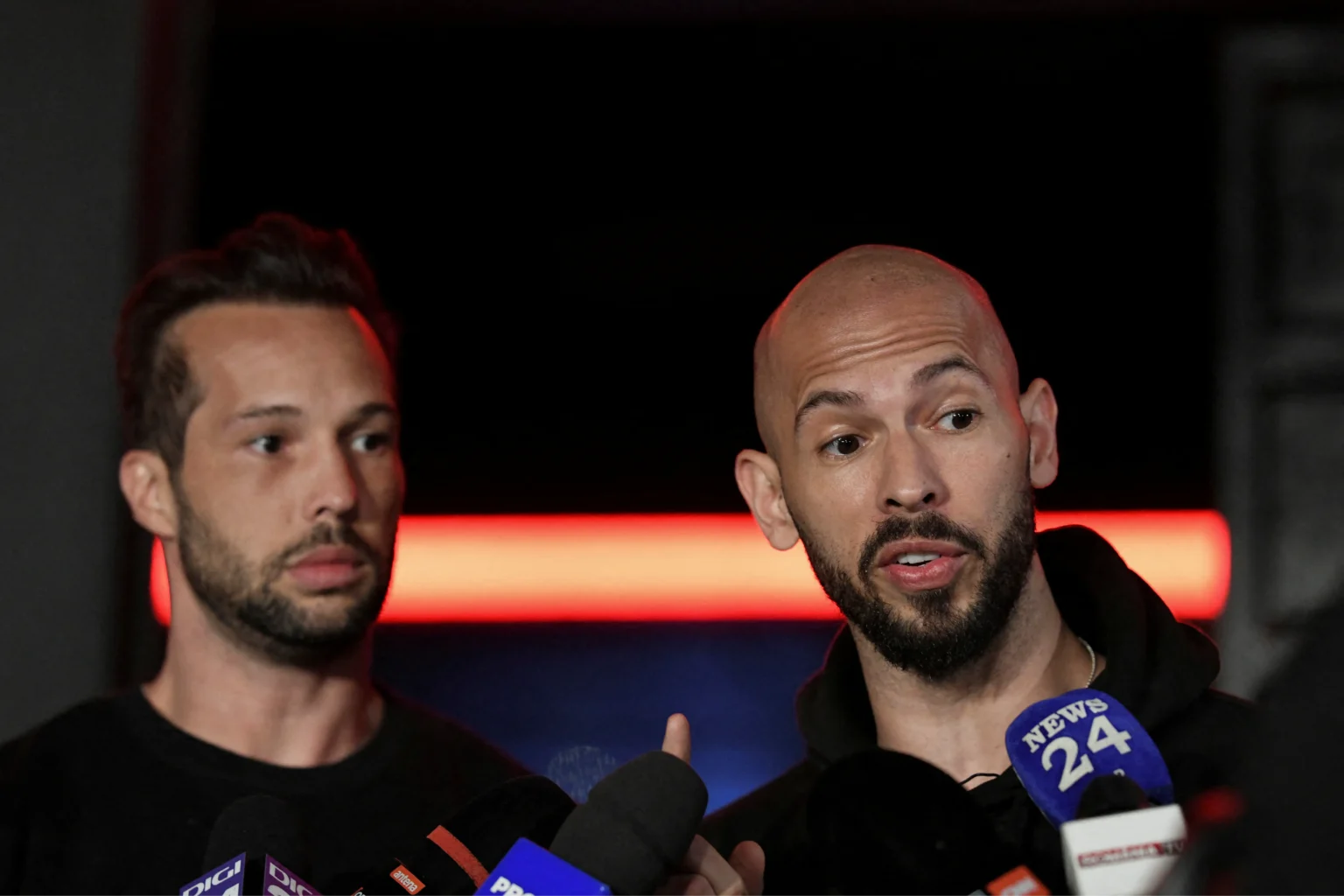
WASHINGTON, United States — For years, Andrew Tate built a global brand around a simple message: strength, defiance and the rejection of authority.
To his millions of followers, he was a self-made success story who challenged institutions and mocked critics. To detractors, he became one of the internet’s most controversial figures, accused of promoting misogyny and helping shape an online culture increasingly hostile to women.
This weekend, however, the story surrounding Tate shifted away from social media influence and back into the courtroom.
The radical social media influencer and his younger brother, Tristan Tate, were taken into custody in the United States as British authorities moved to expand a criminal case that has followed them across continents and years of legal battles.
The arrests mark the latest and potentially most consequential chapter in a saga that has transformed Andrew Tate from an online celebrity into the subject of multiple criminal investigations spanning the United Kingdom, Romania and the United States.
For British prosecutors, the case is no longer merely about allegations that have circulated for years.
It is now about bringing the brothers before a British court.
Authorities confirmed that Andrew and Tristan Tate were detained in the United States pending legal proceedings after the United Kingdom formally sought their extradition over a raft of new allegations.
Karena Thomas, assistant chief constable of Bedfordshire Police, said the pair had been detained “pending ongoing legal proceedings.”
The US Marshals Service also confirmed the arrests.
Footage published by US entertainment outlet TMZ showed law enforcement officers escorting the brothers into waiting vehicles in Miami on Saturday.
When asked by an onlooker whether he had anything to say, Tristan Tate remained silent.
The images were striking not only because of who appeared in handcuffs but because they symbolised how dramatically the legal pressure surrounding the brothers has intensified.
For years, Andrew Tate’s influence appeared to grow faster than the investigations surrounding him.
Despite repeated controversies, platform bans and public criticism, he continued to cultivate a loyal following numbering in the millions.
Now prosecutors say the case against the brothers has expanded significantly.
British authorities announced that they have authorised a further 38 charges against the pair, bringing the total number of allegations to 59.
According to the Crown Prosecution Service (CPS), Andrew Tate faces 42 charges while Tristan Tate faces 17.
“We have decided to prosecute Andrew and Tristan Tate for further offences including rape, arranging or facilitating trafficking for sexual exploitation and offences relating to indecent images of a child,” Malcolm McHaffie, head of the CPS Special Crime Division, said in a statement.
“The CPS has requested the extradition of the Tates from the US,” he added.
The latest charges stem from new evidence provided by Bedfordshire Police, according to prosecutors.
Authorities also say the number of alleged victims connected to the case has risen to seven.
The development significantly broadens a legal battle that already stretched across several jurisdictions.
Earlier this year, police in Hertfordshire reopened investigations into rape and sexual assault allegations made against Andrew Tate dating back more than a decade.
Separately, Bedfordshire Police have investigated allegations of rape and human trafficking involving different complainants.
The brothers also face accusations related to tax evasion and money laundering in the United Kingdom.
Taken together, the allegations represent one of the most extensive criminal cases currently involving a major online influencer.
Yet the legal scrutiny facing the Tate brothers extends far beyond Britain.
In Romania, where the brothers have spent much of the past several years, authorities continue to pursue separate investigations involving allegations of trafficking minors, sexual offences and money laundering.
Meanwhile, authorities in the US state of Florida launched a criminal investigation earlier this year, although officials have not publicly clarified its current status.
The result is an unusual legal landscape in which multiple countries are simultaneously examining allegations involving the same public figures.
For legal analysts, the extradition request may prove a decisive turning point.
Extradition proceedings are often lengthy and contested, but British prosecutors appear determined to bring the brothers back to face trial.
The brothers continue to deny wrongdoing.
Their attorney, Joseph McBride, said in a statement that both men remain innocent.
“We are confident that once a competent judge sees the facts, and once the Department of Justice confronts this egregious abuse of its own authority, Andrew and Tristan Tate will walk free,” McBride said.
But for alleged victims and their representatives, the latest developments are being viewed as a long-awaited breakthrough.
Lawyer Matt Jury, whose firm represents four women who have accused Andrew Tate in the United Kingdom, said the arrests bring the prospect of accountability closer.
“They have spent years fighting for action to be taken, and I now urge the authorities to ensure this case proceeds as quickly as possible.”
“Andrew and Tristan Tate are accused of some of the most serious offences, including multiple counts of rape and human trafficking. It is time they face justice,” he added.
Beyond the courtroom, however, the case has become something larger than a criminal prosecution.
Andrew Tate’s rise coincided with the explosive growth of the so-called “manosphere” — an online ecosystem of influencers, podcasts and communities centred around masculinity, anti-feminism and self-improvement.
Supporters view him as a champion of traditional male values and personal responsibility.
Also Read: South African influencer Cyan Boujee apologises for promoting controversial Russian job scheme
Critics argue that his content normalises misogyny and hostility toward women while glamorising wealth, dominance and aggression.
That cultural influence has ensured that every legal development involving Tate attracts global attention far beyond what might accompany an ordinary criminal investigation.
With more than 10 million followers on X alone and a vast audience spread across multiple platforms, Tate remains one of the most recognisable and polarising figures of the internet age.
The coming months will determine whether the legal system can move as decisively as the public debate surrounding him.
For now, the influencer who built a career challenging authority finds himself facing growing pressure from it.
The extradition battle that lies ahead may ultimately become the most consequential contest of Andrew Tate’s life.