





KAJIADO, Kenya — The offer appeared simple enough: a job, regular pay and the promise of a better future. For many young women searching for employment in Kenya’s increasingly difficult labour market, such offers can appear to be the beginning of a new chapter.
Investigators now believe that, for dozens rescued this week in Kajiado County, they became the first step into an alleged criminal enterprise where vulnerability was turned into profit through online sexual exploitation and commercial prostitution.
The twin operations carried out by detectives in Ongata Rongai and Kiserian have uncovered what authorities describe as two separate but equally disturbing networks targeting young women, highlighting how organised criminal groups are increasingly exploiting digital platforms, false recruitment schemes and social isolation to sustain lucrative illegal businesses.
While police have previously dismantled prostitution rings and human trafficking operations, investigators say the latest raids point to an evolving model in which sexual exploitation is increasingly linked to the commercial production of explicit online content.
That shift reflects a broader global trend in which exploitation no longer depends solely on physical movement across borders. Increasingly, victims can be controlled, exploited and monetised from ordinary residential neighbourhoods using laptops, cameras, smartphones and internet connections.
Two operations, one disturbing pattern
According to the Directorate of Criminal Investigations (DCI), detectives first moved into Rimpa in Ongata Rongai after receiving information from members of the public about suspicious activities inside a residential house believed to have been converted into a commercial production centre for explicit online content.
Inside, officers found 30 women aged between 19 and 27, whom investigators believe had become part of an organised operation producing obscene material for commercial distribution.
A search of the premises led to the recovery of seven laptops fitted with cameras together with other equipment believed to have been used in producing explicit online content.
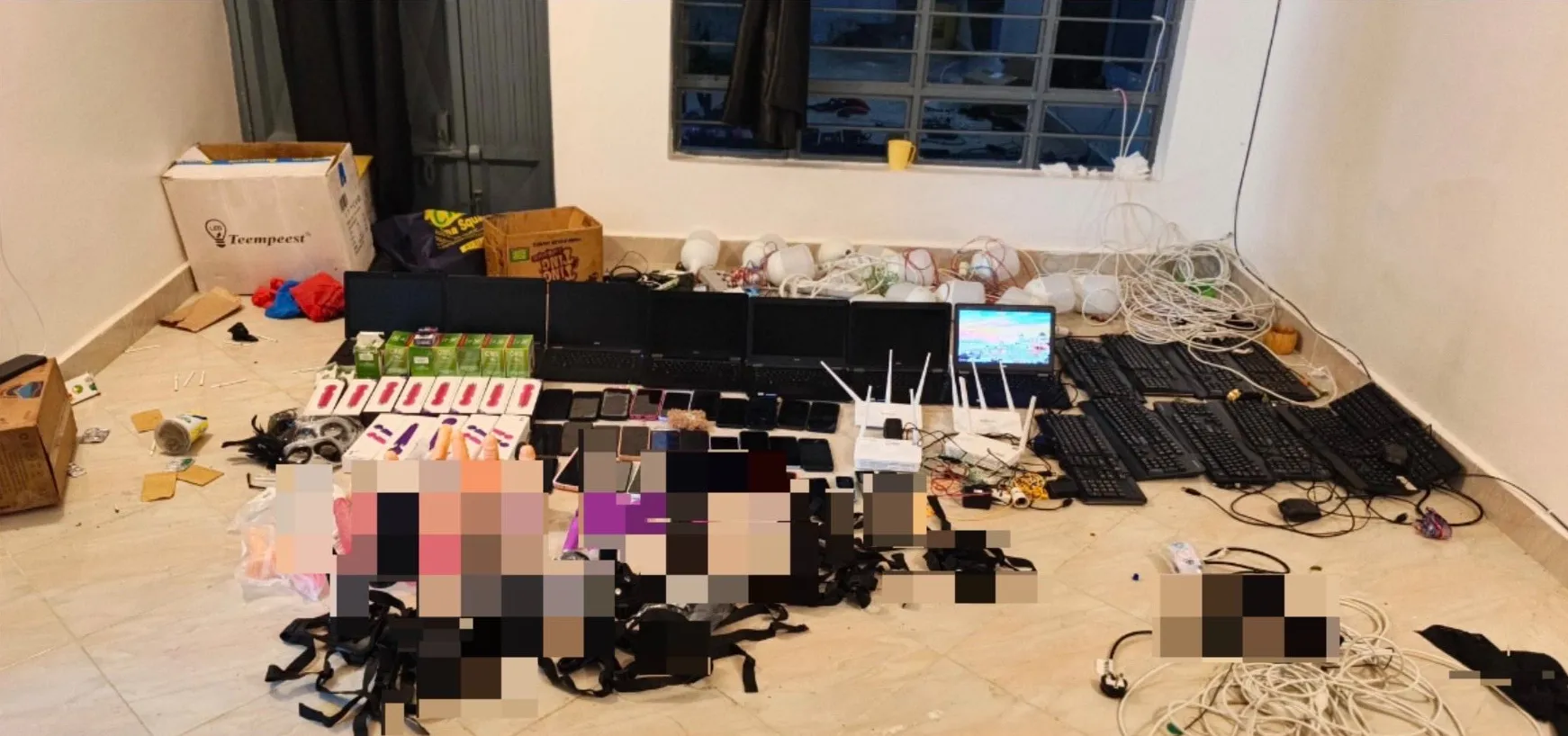
The suspects were taken into custody at Ongata Rongai Police Station as detectives launched further investigations ahead of their planned arraignment.
The operation did not end there.
In neighbouring Kiserian, detectives acting on separate intelligence uncovered another suspected exploitation network operating under a different recruitment strategy.
Police say young women had allegedly been promised domestic employment before finding themselves trapped in commercial sexual exploitation instead.
Working jointly with officers from Kiserian and Rongai police stations, detectives rescued 18 women, who have since been placed under police protection.
Officers also recovered mobile phones, laptops and other electronic devices believed to have facilitated the alleged criminal activities.
The principal suspect in the Kiserian operation remains at large, with detectives pursuing leads to locate and arrest the individual.
When technology changes the business of exploitation
Taken together, the two operations illustrate a significant shift in how exploitation networks are evolving.
Traditional trafficking often relied on transporting victims across long distances into brothels, entertainment venues or forced labour.
Digital technology has altered that landscape.
Today, investigators increasingly encounter cases where victims are exploited inside ordinary residential properties equipped with internet-enabled devices capable of producing and distributing content to paying customers across the world.
The alleged Rongai operation reflects that transformation.
Instead of conventional commercial sex work alone, detectives believe the suspects were using technology to generate online content capable of reaching international audiences, dramatically increasing the potential profitability of exploitation while making detection more difficult.
Cyber-enabled exploitation has become one of the fastest-growing forms of organised crime globally because offenders require relatively little infrastructure compared to traditional trafficking operations.
Ordinary rental houses can become production centres.
Laptops become broadcast studios.
Victims become commodities in an online marketplace that often stretches far beyond national borders.
False promises remain the first trap
Although technology may have changed how exploitation occurs, investigators say recruitment methods remain remarkably familiar.
Promises of employment continue to be among the most effective tools used by criminal networks targeting economically vulnerable young people.
With youth unemployment remaining a persistent challenge, advertisements offering quick employment opportunities can attract individuals desperate for financial stability.
By the time victims realise the true nature of the work, many have already been isolated, intimidated or financially trapped.
Police believe that dynamic was evident in the Kiserian case, where women were allegedly recruited under the guise of domestic employment before being exploited.
The DCI has repeatedly warned job seekers to verify prospective employers and remain cautious about opportunities offered through unverified intermediaries or social media recruiters.
Public vigilance proves critical
The Rongai raid also underscores another important aspect of combating organised exploitation.
It began with information from ordinary citizens.
According to investigators, members of the public alerted police to suspicious activities taking place inside the residential property, enabling detectives to obtain actionable intelligence before launching the operation.
Such community reporting has become increasingly important because many exploitation networks deliberately operate behind the appearance of ordinary residential life.
Neighbours may notice unusual visitor patterns, restricted movement, heightened security measures or other indicators that something is wrong.
Without public cooperation, many such operations remain hidden for prolonged periods.
Beyond arrests
The arrests themselves represent only one stage of the investigation.
Detectives now face the more complex task of establishing the full scope of the suspected networks.
That includes identifying financiers, recruiters, technology suppliers, content distributors and any potential international links connected to the alleged operations.
Digital forensic examinations of recovered laptops, mobile phones and other electronic devices may provide investigators with evidence regarding communications, financial transactions, customer networks and additional suspects.
Such investigations often extend well beyond the locations where victims are rescued.
Supporting survivors
Authorities say arrangements are already underway to provide the rescued women with comprehensive support services.
According to the DCI, the women will receive safe accommodation together with psychosocial counselling, medical care and other rehabilitation services intended to support their recovery and reintegration.
Recovery from exploitation frequently extends far beyond physical rescue.
Many survivors require long-term psychological support after experiencing coercion, manipulation, violence or prolonged emotional abuse.
Rebuilding trust, restoring dignity and helping survivors regain economic independence often become just as important as prosecuting offenders.
A crime that continues to evolve
The latest operations illustrate how organised exploitation continues adapting to changing technology and economic conditions.
What once depended largely on physical trafficking increasingly incorporates digital platforms capable of generating substantial profits while concealing criminal activity behind residential neighbourhoods and ordinary consumer technology.
That evolution presents new challenges for investigators.
It also demands greater public awareness.
Also Read: Three suspects arrested in Nairobi online sexual exploitation raid
Employment opportunities that appear unusually lucrative, require secrecy or originate from unverified recruiters may warrant closer scrutiny.
For law enforcement agencies, dismantling individual operations remains important.
Preventing future recruitment may prove equally critical.
Investigations continue
The Directorate of Criminal Investigations (DCI) said investigations into both operations remain ongoing as detectives work to establish the full extent of the suspected criminal enterprises.
Authorities are also seeking additional suspects believed to have participated in the alleged exploitation networks.
“The Directorate of Criminal Investigations remains unwavering in its commitment to dismantling criminal networks that profit from sexual exploitation and the production of obscene material,” the agency said.
“Investigations into both incidents are ongoing to establish the full extent of the operations, identify additional suspects, and ensure that all those responsible are held accountable.”
For investigators, the rescues mark an important breakthrough.
For the women now beginning the long journey toward recovery, they represent something even more significant: the first opportunity to reclaim lives that police believe were being exploited for profit behind closed doors.