




KAMPALA, Uganda — For a brief moment, it appeared that thousands of small internet entrepreneurs across Uganda were about to lose their businesses.
The Uganda Communications Commission (UCC) had issued an advisory warning against illegal Wi-Fi hotspot operations, triggering anxiety among operators who have quietly become one of the country’s fastest-growing sources of affordable internet access.
Across trading centres, university hostels, urban settlements and small towns, many feared a regulatory crackdown that could shut down businesses built on selling low-cost internet bundles to communities often priced out of traditional connectivity.
What followed, however, was something less common in Uganda’s regulatory environment: a pause.
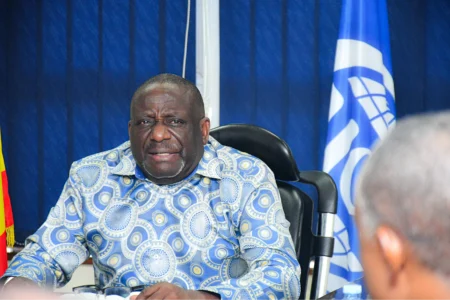
Instead of immediately enforcing the directive, UCC Executive Director Nyombi Thembo invited representatives of the Alliance of Hotspot Operators Uganda (AHOU) for discussions.
By the end of the engagement, the Commission had suspended enforcement actions and promised a broader consultation process aimed at finding a workable solution.

The development may appear administrative on the surface. Yet beneath it lies a much bigger story about how Uganda’s digital economy is evolving—and how regulators are struggling to keep pace with innovation emerging from the grassroots.
A digital business model born from necessity
Long before policymakers began speaking about digital transformation and the future economy, thousands of young Ugandans were already building businesses around one simple challenge: internet remains expensive for many people.
In many urban neighbourhoods, particularly among students, boda boda riders, market vendors and informal workers, purchasing large mobile data packages is often beyond reach. Hotspot operators stepped into that gap.
Using a combination of wireless equipment, reseller arrangements and locally developed billing systems, many began providing internet access at prices significantly lower than traditional retail offerings.
The model spread rapidly.
A small hotspot serving a university hostel could become profitable within months. Others expanded into trading centres and densely populated urban settlements where affordable connectivity was in constant demand.
What emerged was a largely informal ecosystem of digital entrepreneurs operating outside regulatory frameworks designed for traditional telecom companies.
The success of these businesses highlights a recurring reality in Africa’s technology landscape: innovation frequently emerges not from boardrooms or policy documents, but from citizens responding directly to unmet needs.
That success, however, inevitably brought them into contact with regulators.
When innovation moves faster than regulation
One of the most revealing remarks during the discussions came from Nyombi himself.
“At UCC, our mandate is clear: we are here to manage national resources such as the radio spectrum, protect consumers from exploitation, and ensure fair, non-discriminatory competition in the market. However, we must also recognise that technology and grassroots innovation often move faster than government policy.”
That observation captures a challenge facing regulators globally.
Technology evolves at extraordinary speed. Laws, licensing frameworks and regulatory systems often evolve much more slowly.
Ride-hailing apps disrupted transport regulations.
Mobile money transformed banking.
Artificial Intelligence (AI) is now challenging labour and privacy laws worldwide.
In Uganda, community hotspot businesses appear to be creating a similar dilemma.
From the regulator’s perspective, concerns are not imaginary.
Operating communications infrastructure outside established frameworks can create technical interference, undermine consumer protections and raise questions about cybersecurity and data privacy.
Nyombi acknowledged those concerns directly.
“We do not want to stifle this spirit of innovation. At the same time, operating in an unregulated, unlicensed ecosystem poses severe risks, ranging from network interference to threats to consumer data privacy.”
The challenge for policymakers is therefore not simply whether hotspot operators should exist.
The challenge is determining how they can exist legally without destroying the affordability and accessibility that made them successful in the first place.
The politics of affordable internet
The debate arrives at a time when internet access is increasingly viewed as an economic necessity rather than a luxury.
For many Ugandans, connectivity determines access to jobs, education, banking services, government programmes and markets.
A student downloading coursework, a trader processing mobile payments, a content creator uploading videos and a job seeker submitting applications all depend on affordable internet access.
Yet affordability remains a persistent concern.
While mobile internet coverage has expanded significantly over the past decade, the cost of data continues to influence how citizens participate in the digital economy.
This helps explain why hotspot operators have gained traction.
They are not merely reselling bandwidth.
In many communities, they are effectively acting as the last-mile distributors of digital opportunity.
That reality complicates any attempt to regulate them through a purely enforcement-based approach.
Shutting down operators without providing viable alternatives risks reducing connectivity for precisely the citizens Uganda’s digital transformation agenda seeks to empower.
A shift from enforcement to engagement
Perhaps the most significant outcome of the meeting was not the suspension of enforcement itself.
It was the signal that UCC may be reconsidering how it approaches emerging digital businesses.
According to Nyombi, the Commission has directed its teams to halt enforcement actions while consultations continue.
“Although our public regulatory notice remains in effect, I have officially directed our teams to suspend all enforcement actions. This grace period will allow us to engage, learn, and co-create a realistic path to compliance.”
The language is notable.
Rather than framing operators as offenders, the Commission is increasingly describing them as stakeholders.
The proposed process includes technical assessments of hotspot business models, discussions with telecom companies and internet service providers, engagement with the Uganda Revenue Authority, and consultations with local authorities.
The objective appears to be creating a regulatory framework that acknowledges both legal requirements and commercial realities.
Such an approach reflects a broader trend visible in technology governance worldwide.
Increasingly, regulators are discovering that innovation cannot always be regulated effectively through prohibition alone. Successful regulation often requires understanding how new technologies work before deciding how they should be governed.
Beyond hotspots: The battle over Uganda’s digital future
The hotspot debate also intersects with a larger conversation that UCC has been advancing in recent months: the role of young people in shaping Uganda’s digital future.
Nyombi recently hosted members of Top Content Creators Uganda, where discussions focused on responsible digital citizenship, online opportunities and the Commission’s #GoldenPosts initiative.

Speaking after the meeting, he described a generation eager to use digital platforms productively.
“These energetic youth reached out with a noble ambition: they want to be equipped with the right skills, mindset, and opportunities to spread positivity and build Brand Uganda online.”
His comments reflected a broader philosophy emerging within the Commission.
Rather than relying exclusively on regulation and enforcement, UCC increasingly appears interested in positioning itself as a partner in developing Uganda’s digital economy.
“At UCC, we are shifting our approach from mere policing to active partnership and guidance.”
Whether discussing content creators or hotspot operators, the message is remarkably similar: innovation should be encouraged, but it must operate within rules designed to protect consumers and the broader public interest.
The bigger question
The dispute over hotspot operators ultimately raises a question confronting governments around the world.
How should regulators respond when citizens create solutions to problems that existing systems have failed to solve?
For Uganda, the answer matters because the country’s digital economy is expanding far beyond traditional telecommunications companies.
Also Read: Can Uganda’s small Wi-Fi hotspot providers afford UCC’s licence fees?
Young entrepreneurs are building internet businesses, content platforms, digital marketplaces and technology services faster than regulatory frameworks can adapt.
The meeting between UCC and hotspot operators may therefore be remembered as more than a discussion about Wi-Fi.
It may represent an early test of whether Uganda can build a regulatory environment that protects consumers without suffocating innovation.
For now, enforcement has been paused and dialogue has begun.
The outcome of those discussions could shape not only the future of hotspot businesses, but also the direction of Uganda’s broader digital transformation.
Because beneath the debate over licences, bandwidth and compliance lies a larger reality: the future of Uganda’s digital economy will depend not only on how innovation is created, but also on how it is governed.