




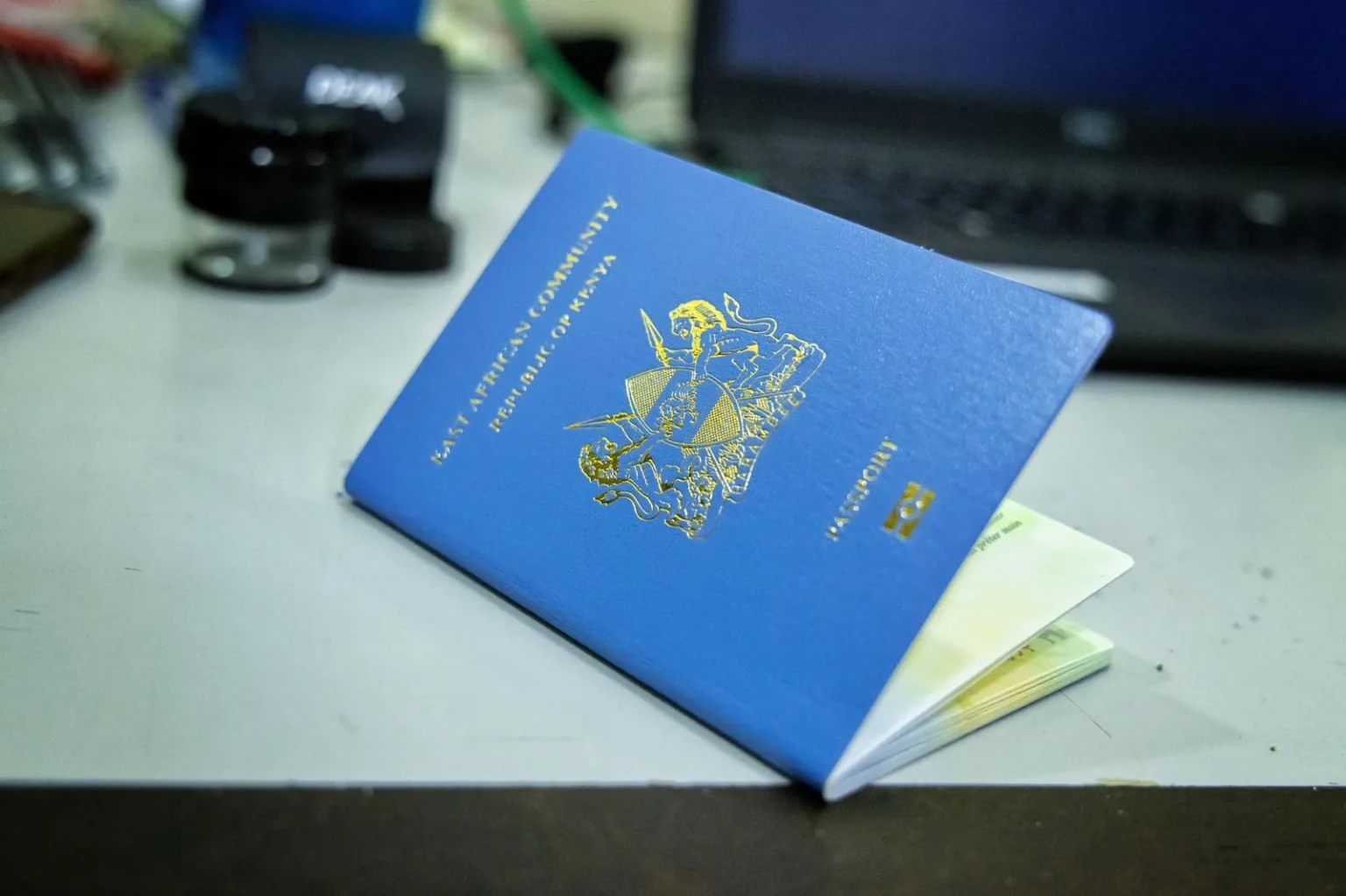
NAIROBI, Kenya — For much of the past year, many Kenyans trying to apply for passports were not complaining about delays.
They were complaining about cost.
A first-time applicant hoping to secure a passport for a university admission abroad, a Gulf job opportunity or a business trip often encountered a frustrating reality on the eCitizen portal: the affordable 34-page passport was unavailable.
The only practical option for many new applicants was the larger 66-page passport, a document designed for frequent travellers but one that came with a significantly higher price tag.
For households already grappling with rising living costs, that difference mattered.
Some postponed their applications altogether. Others borrowed money to proceed. Many simply waited, hoping the cheaper option would eventually return.
That wait appears to have ended.
The reappearance of the 34-page passport on eCitizen has triggered an immediate rush of applications, filling biometric appointment slots at immigration centres across the country and exposing a challenge that runs deeper than passport pricing.
What is unfolding is a reminder of how demand for travel documents is evolving in Kenya — and how even a seemingly minor policy or system adjustment can unleash years of pent-up demand almost overnight.
A quiet change that triggered a surge
The return of the 34-page passport has generated extraordinary interest because it is currently the only ordinary passport option available for new applications on the eCitizen platform.
Although the Directorate of Immigration Services continues to list three ordinary passport categories under its official fee structure, applicants report that only the 34-page A Series passport can currently be selected for fresh applications.
| Passport Type | Pages | Official Fee |
|---|---|---|
| A Series | 34 Pages | KSh 7,550 |
| B Series | 50 Pages | KSh 9,550 |
| C Series | 66 Pages | KSh 12,550 |
The 50-page B Series and 66-page C Series remain part of the official passport framework but are currently unavailable for new ordinary passport applications through the online system.
That distinction is important.
For months, the absence of the cheaper passport option effectively increased the cost of entry into the passport system for many Kenyans.
Now the opposite is happening.
By restoring access to the lowest-priced passport category, the government has inadvertently unlocked a flood of demand from applicants who had been sitting on the sidelines.
“I had delayed my application for nearly six months,” said one applicant Joyce Muthoni in Nairobi, whose experience reflects sentiments expressed by many passport seekers.
“I didn’t need a 66-page passport. I only needed a passport to travel for work. The difference in cost was enough for me to wait.”
Why the price difference matters
To a frequent traveller, the difference between 34 and 66 pages may seem insignificant.
To many ordinary Kenyans, it is not.
The 34-page passport is typically sufficient for first-time travellers, students, seasonal workers, job seekers and business people making occasional regional trips.
Many never come close to exhausting the pages before the passport expires.
The larger booklet primarily benefits individuals who travel frequently and require additional visa and immigration stamps.
For a family already budgeting for visa fees, travel costs, medical examinations, air tickets and relocation expenses, saving KSh 5,000 can be the difference between proceeding with an application and postponing it.
That is why the current rush should not be viewed simply as a passport story.
It is also a story about affordability.
A system that had started winning back public confidence
Ironically, the surge comes at a time when Kenya’s passport processing system had begun showing signs of improvement after years of criticism over delays.
Throughout 2023 and parts of 2024, passport backlogs became a national issue, with applicants reporting waits stretching into months.
Government reforms, increased printing capacity and administrative changes gradually improved turnaround times.
Some applicants in recent months have reported receiving passports within days rather than weeks.
“I completed biometrics on a Monday and collected my passport on Thursday,” said one recent applicant in Mombasa.
“It was much faster than I expected.”
Others have shared similar experiences, suggesting that the immigration department had significantly improved processing speeds compared to previous years.
That progress may now face a new test.
While printing capacity appears stronger than before, the challenge is shifting to the front end of the system — biometric appointments.
The new bottleneck
A passport application does not begin with printing.
It begins with biometrics.
Every applicant must secure an appointment for fingerprint capture, photographs and document verification before processing can commence.
That stage is increasingly becoming the bottleneck.
As thousands of applicants rushed to secure the newly available 34-page passport, appointment calendars at some centres quickly filled up.
Many applicants are now finding that the earliest available dates are weeks away.
The situation illustrates a reality that often goes unnoticed in discussions about government digitisation.
Online applications can scale almost instantly.
Physical processing centres cannot.
A sudden spike in demand that takes minutes to generate online may require weeks to absorb on the ground.
The bigger forces driving demand
The renewed passport rush is also occurring against the backdrop of broader economic and demographic trends.
Kenya is experiencing growing outward mobility.
More young people are pursuing education abroad.
Labour migration programmes continue attracting applicants seeking employment in Europe, North America, the Gulf and other destinations.
Regional business travel within East Africa has increased.
At the same time, a passport is increasingly viewed not as a luxury document but as an economic asset.
For many families, obtaining a passport represents an investment in future opportunities.
“My son received a college admission letter months ago,” another applicant said.
“The passport was the only thing delaying the process. When the cheaper option came back, we applied immediately.”
Those stories are being repeated across the country.
Digital government’s double-edged sword
The episode also demonstrates both the strengths and vulnerabilities of digital government services.
The eCitizen platform has transformed how Kenyans access public services.
Processes that once required multiple visits to government offices can now be completed online.
Yet digital systems also make public behaviour highly responsive.
A single change to an application portal can trigger thousands of decisions simultaneously.
When information spreads through social media, WhatsApp groups and online communities, demand can surge within hours.
That creates pressure not only on appointment systems but also on staffing, verification processes and document production chains.
Could delays return?
The question many applicants are now asking is whether the current surge could reverse the gains made in passport processing.
The answer may depend on whether immigration authorities can expand appointment capacity quickly enough to absorb the new demand.
At present, there is little evidence that passport printing itself has slowed.
The larger concern is that appointment backlogs could create delays before applications even enter the production stage.
In other words, the challenge may not be how fast passports are printed.
It may be how quickly applicants can reach the point where printing begins.
More than a travel document
The rush for the 34-page passport ultimately reveals something larger than immigration statistics.
It highlights the aspirations of a generation increasingly looking beyond national borders for education, employment, business and opportunity.
For government officials, the surge may be interpreted as evidence that a more affordable passport option remains essential.
Also Read: Kenya’s global influence is rising, so why is its passport still ranked 64th?
For applicants, it is a reminder that access matters just as much as efficiency.
The return of the 34-page passport has done more than reduce the cost of applying for a travel document.
It has exposed the scale of demand waiting beneath the surface.
And as appointment calendars continue filling up across the country, one thing is becoming clear: Kenya’s passport challenge is no longer primarily about printing documents.
It is about keeping pace with the ambitions of the people seeking them.