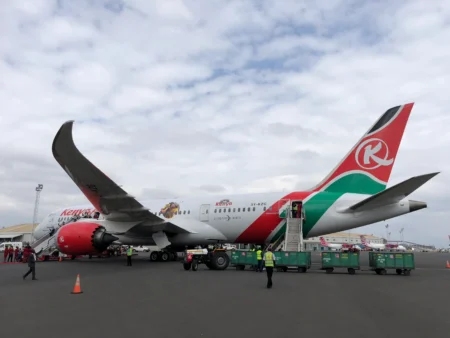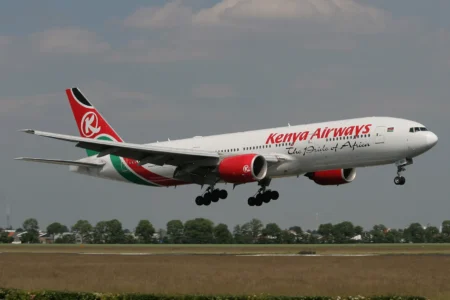




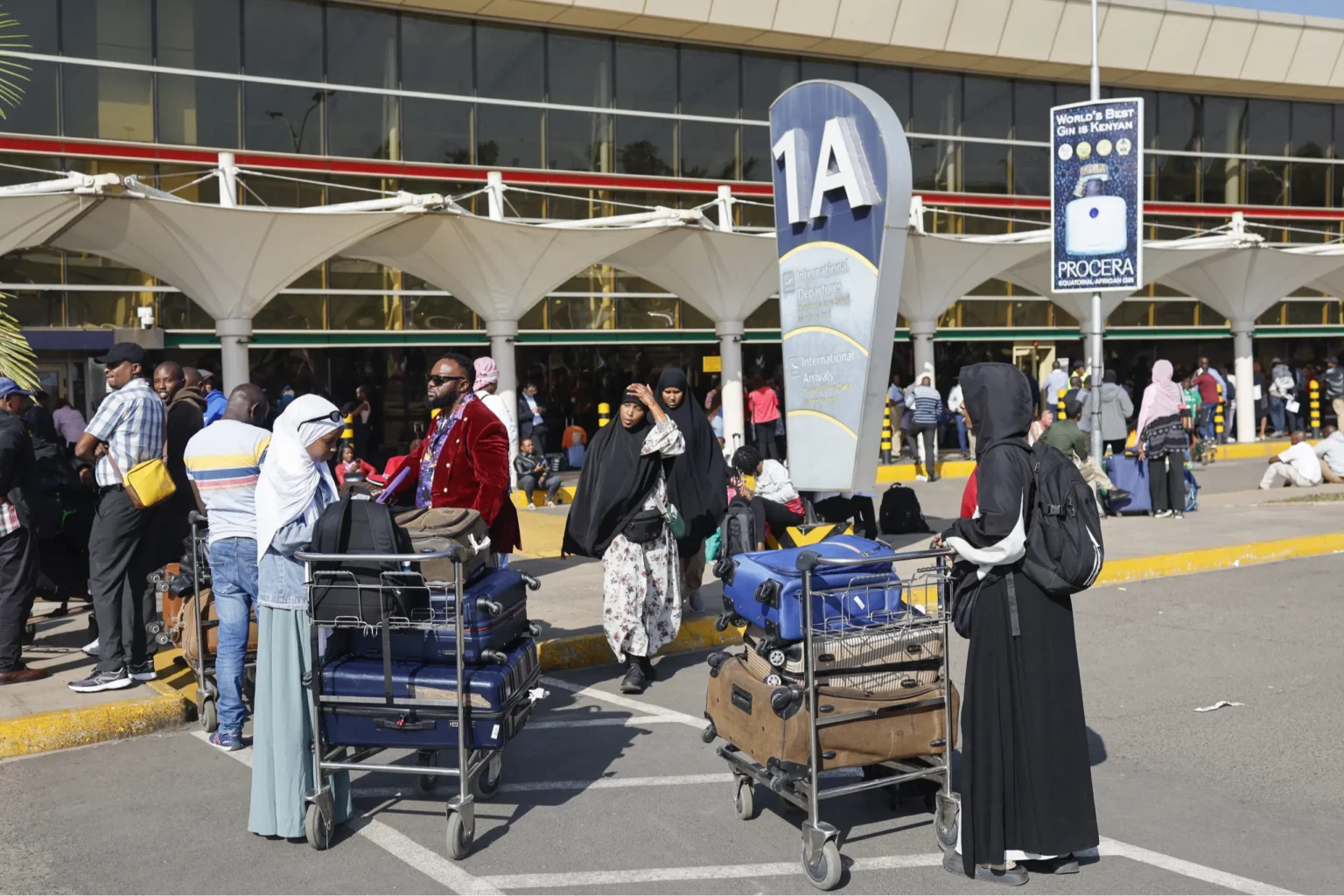
NAIROBI, Kenya — For millions of travellers passing through Kenya’s airports each year, aviation largely works as it should.
Flights depart, passengers check in, cargo moves across continents and aircraft connect Nairobi to destinations stretching from Mombasa to New York.
Most people rarely think about the thousands of workers who keep that system running.
Until those workers threaten to stop.
That moment arrived again this week when the Kenya Aviation Workers Union (KAWU) issued a seven-day strike notice, warning that employees across key aviation institutions could withdraw their labour unless longstanding grievances are addressed.
If the dispute is not resolved, the consequences could extend far beyond airport terminals.
The threatened strike risks disrupting passenger travel, cargo operations, tourism, regional trade and one of Kenya’s most strategically important economic sectors.
Yet beneath the headlines lies a deeper question: why does Kenya’s aviation industry keep finding itself in the same labour conflicts year after year?
A warning from inside a critical industry
The latest dispute involves workers drawn from the Kenya Civil Aviation Authority (KCAA), Kenya Airports Authority (KAA) and airline operators.
Addressing journalists, union leaders argued that management had failed to honour commitments contained in Collective Bargaining Agreements (CBAs), leaving workers frustrated despite previous negotiations.
KAWU Secretary General Moss Ndiema framed the dispute as a struggle over workers’ rights rather than merely wages and benefits.
“We want a successful, prosperous aviation sector, but that cannot be achieved at the detriment of workers’ rights. We will not allow that,” said Ndiema.
“They will know that power resides in us more than in them. Seven days from Monday, you are likely to face inconveniences and challenges if you are to use any of our facilities in this country.”
The warning immediately revived memories of earlier disruptions that exposed how dependent Kenya’s economy has become on uninterrupted aviation services.
The strike that never really ended
Officially, this week’s notice concerns unresolved grievances.
Unofficially, it reflects frustrations that have been building for months.
Earlier this year, aviation workers staged industrial action that disrupted operations at some of the country’s busiest airports.
At the time, workers demanded better employment terms, improved conditions, salary adjustments and implementation of a long-delayed collective bargaining agreement.
Government intervention eventually produced a return-to-work deal.
The strike ended.
The underlying tensions did not.
Labour experts often describe such situations as “deferred disputes” — conflicts temporarily paused through negotiations but never fully resolved.
The current strike notice suggests aviation workers believe many of the commitments that persuaded them to resume work earlier this year remain unfulfilled.
Why aviation disputes matter more than most strikes
Not all industrial action carries the same economic consequences.
A strike in aviation has an unusually large ripple effect because airports function as economic multipliers.
When flights are delayed or cancelled, the impact extends beyond airlines.
Hotels lose bookings.
Exporters struggle to move goods.
Tour operators face cancellations.
Businesses delay meetings.
Passengers miss connections.
Perishable cargo can spoil.
For Kenya, whose economy relies heavily on tourism, horticulture exports and regional business travel, prolonged disruption at major airports can quickly generate losses running into millions of shillings.
Jomo Kenyatta International Airport (JKIA) is not merely Kenya’s busiest airport.
It serves as one of Africa’s leading transport hubs, connecting East Africa to Europe, Asia, the Middle East and North America.
That strategic role explains why labour disputes in aviation attract national attention far more quickly than many other sectors.
A sector under growing pressure
The threatened strike also arrives at a time when Kenya’s aviation industry is navigating multiple pressures.
Passenger numbers have continued recovering following years of global travel disruption.
Airports are handling increasing traffic.
Airlines are grappling with high operating costs, including fuel prices, foreign exchange pressures and rising maintenance expenses.
Meanwhile, aviation workers argue that increased operational demands have not always been matched by improvements in working conditions.
This tension is not unique to Kenya.
Across Africa and globally, aviation industries are experiencing difficult negotiations between employers seeking efficiency and workers seeking better compensation and job security.
The challenge for policymakers is balancing both objectives without undermining service delivery.
What travellers should expect
For now, flights continue operating normally.
The strike notice serves as a warning rather than an immediate shutdown.
Historically, many industrial disputes in Kenya have been resolved through negotiations before workers actually withdraw their labour.
Government officials are therefore likely to intensify discussions with union representatives over the coming days in an effort to avert disruption.
Also Read: Strike at Kenya’s busiest airport causes major delays at JKIA
However, the union’s strong language suggests members expect tangible commitments rather than further promises.
Should negotiations fail, passengers travelling through JKIA and other airports could face delays, reduced services, flight rescheduling and operational disruptions.
The extent of any disruption would depend on the number of workers participating and whether essential services exemptions are negotiated.
More than a labour dispute
At first glance, the story appears to be about a strike.
But the larger issue concerns trust.
Repeated labour disputes often signal a widening gap between commitments made at negotiating tables and the experiences of workers on the ground.
That gap appears to be at the centre of the current standoff.
For passengers, the concern is straightforward: whether they will be able to travel without disruption.
For workers, the issue is whether previous agreements will finally be honoured.
For government and industry leaders, the challenge is ensuring that one of Kenya’s most important economic gateways does not once again become the stage for a conflict that many believed had already been settled.
As the seven-day countdown continues, the future of Kenya’s aviation sector may depend less on aircraft in the sky than on negotiations taking place on the ground.