



NAIROBI, Kenya — President William Ruto has confirmed that the government has signed a contract for the long-awaited expansion of Jomo Kenyatta International Airport (JKIA), unveiling a financing model that he says will deliver the KSh150 billion project without increasing taxes or adding to Kenya’s public debt burden.
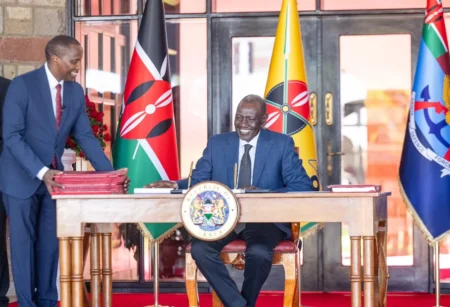
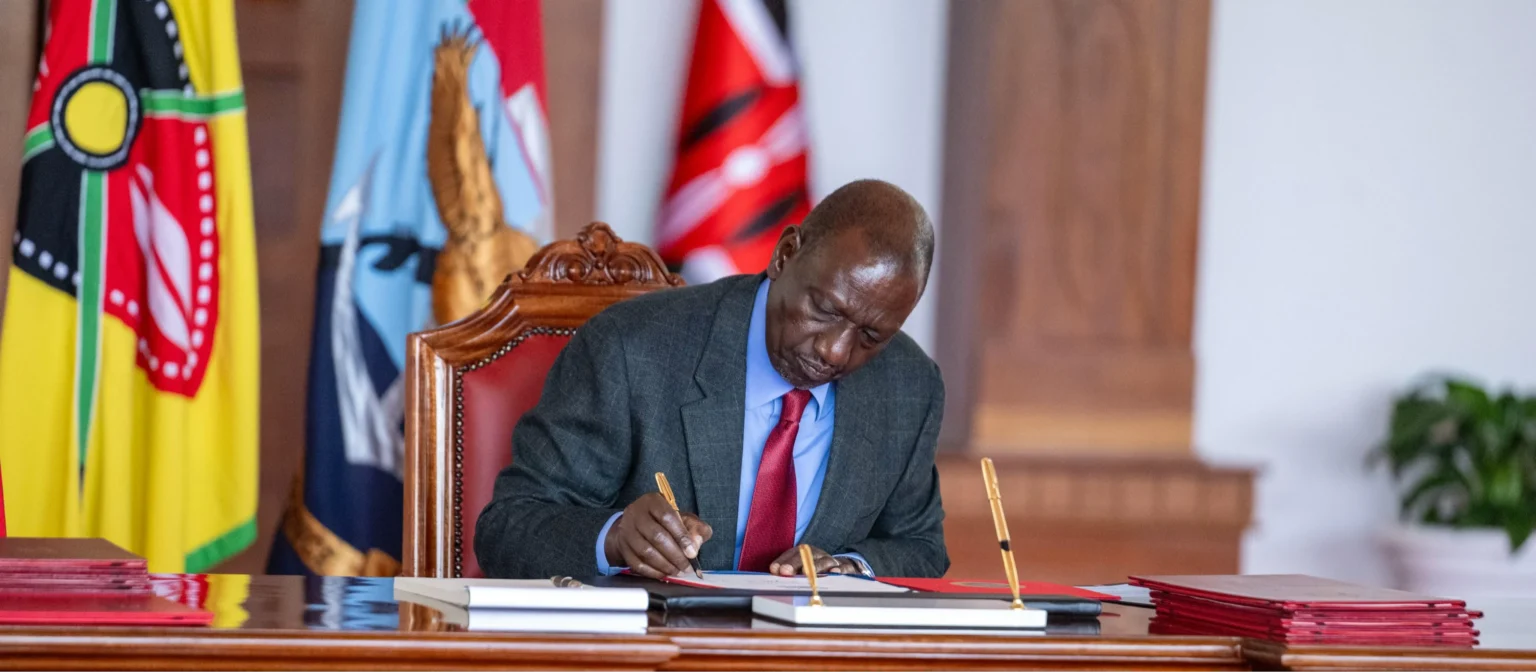
Speaking at State House on Wednesday during the signing ceremony for the newly enacted Sovereign Wealth Fund law, Ruto described the airport expansion as one of the most significant infrastructure investments planned under his administration’s economic transformation agenda.
“We just signed the contract for the Jomo Kenyatta International Airport. It’s going to be a KSh150 billion project. We cannot build that project using our budget because it’s heavy,” the President said.
The announcement comes amid growing pressure to modernise JKIA, East Africa’s busiest aviation hub, whose infrastructure has struggled to keep pace with increasing passenger and cargo volumes over the past decade.
New financing model
According to Ruto, the government will avoid traditional financing methods such as additional taxation or sovereign borrowing.
Instead, it will deploy approximately KSh20 billion from the National Infrastructure Fund (NIF) to attract private investors who will provide the bulk of the project’s capital.
“We will not borrow, and we will not add additional taxes. We are going to use KSh20 billion raised under the National Infrastructure Fund to crowd in the balance of the money from the private sector,” Ruto said.
The model mirrors financing structures increasingly adopted globally, where governments use public capital as a catalyst to attract larger pools of private investment into major infrastructure projects.
Treasury officials have previously argued that such arrangements reduce pressure on public finances while accelerating project implementation.
Why JKIA expansion matters
JKIA remains Kenya’s primary international gateway and one of Africa’s key aviation hubs.
The airport handled millions of passengers annually before capacity constraints began raising concerns among airlines, investors and aviation stakeholders.
The expansion project is expected to:
- Increase passenger handling capacity
- Improve cargo processing facilities
- Modernise airport infrastructure
- Enhance Kenya’s competitiveness as a regional aviation and logistics hub
- Support growth in tourism, trade and investment
Industry experts have long argued that expansion of JKIA is critical if Kenya is to maintain its position as a leading transport and commercial gateway for East and Central Africa.
The project also aligns with broader government plans to strengthen transport infrastructure under the country’s long-term economic development strategy.
Role of the National Infrastructure Fund
Ruto said the National Infrastructure Fund was specifically designed to bridge the financing gap facing large-scale development projects.
Kenya has traditionally relied on public borrowing, donor financing and direct government expenditure to fund infrastructure development. However, rising debt-servicing obligations have increased pressure to find alternative funding sources.
The President said the fund would mobilise capital from:
- Pension funds
- Commercial banks
- Institutional investors
- Asset managers
- Insurance companies
- Private equity and infrastructure investors
Officials believe this approach will unlock billions of shillings in domestic and international investment that would otherwise remain outside government development programmes.
Linked to broader economic reforms
The JKIA project is among the first major investments expected to benefit from a new framework that combines the National Infrastructure Fund with the recently established Kenya Sovereign Wealth Fund.
Government officials argue that the two funds will complement each other by financing strategic projects while also preserving national wealth for future generations.
Also Read: Ruto declares 2026 year of ‘execution at scale’ with pega projects and reforms
Chief of Staff and Head of Public Service Felix Koskei described the strategy as part of Kenya’s effort to create sustainable financing mechanisms capable of supporting long-term economic growth.
Questions likely to emerge
Despite government optimism, the announcement is likely to generate scrutiny over the structure of the financing arrangement, the identity of private investors and the contractual obligations attached to the project.
JKIA expansion plans have previously attracted public debate, particularly over proposals involving private-sector participation and airport management agreements.
Analysts say transparency around procurement, ownership structures and future revenue-sharing arrangements will be crucial in maintaining public confidence in the project.
For now, the signing of the contract marks a significant step toward one of Kenya’s largest planned infrastructure projects, with the government betting that innovative financing can deliver a modernised airport without increasing the country’s debt burden.