



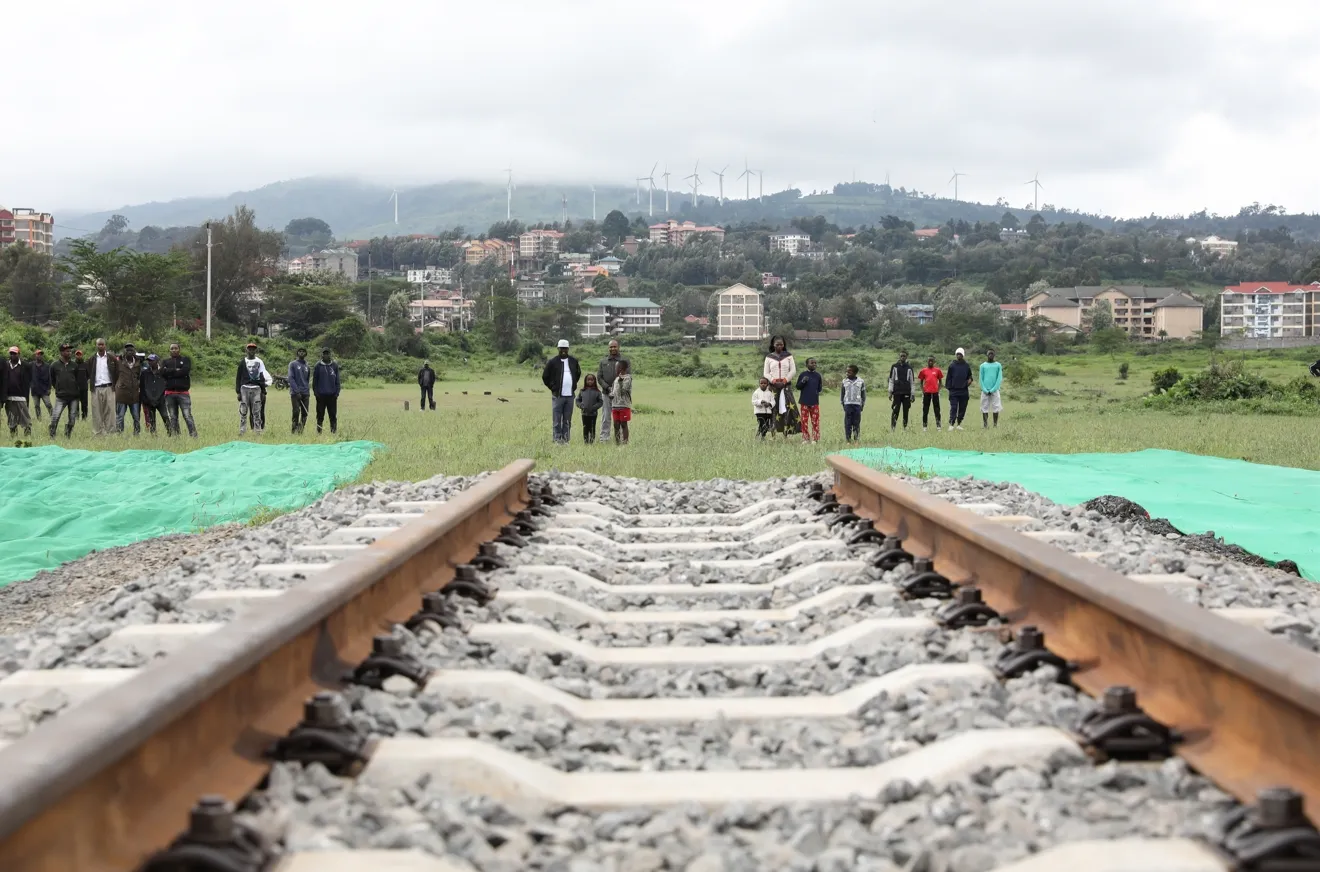
NAIROBI, Kenya — For years, Kenya’s infrastructure story has been defined by cranes, railways, highways and ambitious promises of connectivity.
Governments have often presented major transport projects as symbols of economic progress—evidence that the country is modernising, expanding mobility and investing in future growth.
Yet on Friday 17, July 2026, one such project became a cautionary tale about a different principle of development: that even the most ambitious infrastructure plans must remain accountable to the Constitution.
In a ruling with potentially far-reaching implications for how major public projects are financed and implemented, the High Court in Nairobi declared the Sh11.5 billion Riruta-Ngong commuter metre-gauge railway project unconstitutional, finding multiple breaches of public finance, procurement and public participation requirements.
The judgment does not merely halt a railway.
It raises deeper questions about how public money is spent, how major projects are approved and whether urgency in development can ever justify bypassing constitutional safeguards.
At the centre of the dispute lies a fundamental tension that has increasingly emerged across Africa’s infrastructure boom: the desire to build quickly versus the obligation to build lawfully.
Justice Gregory Mutai’s ruling suggests that in the case of the Riruta-Ngong railway, the government crossed that line.
“The commencement of construction of the project and the expenditure of RDNF and other public funds on the project without parliamentary appropriation. The estimate of development expenditure in FY2023-2024 was unconstitutional,” Judge Mutai ruled.
The decision represents one of the most significant judicial interventions into a public infrastructure project in recent years because it focuses not on whether the railway itself is desirable, but on whether the processes used to approve, finance and execute it complied with the Constitution.
That distinction matters.
Few would dispute the potential value of expanding commuter rail services around Nairobi.
As traffic congestion continues to worsen and the city’s population expands, policymakers have increasingly looked to rail transport as a solution to mobility challenges affecting hundreds of thousands of residents.
The proposed Riruta-Ngong line was conceived within that broader vision.
But constitutional governance requires more than good intentions.
According to the court, the project encountered legal problems almost from the beginning.
A central issue concerned the use of the Railway Development Levy Fund (RDLF), a fund created to support railway development and infrastructure investments.
Justice Mutai found that the use of the fund to finance the project violated legal provisions governing public finance.
More significantly, the court ruled that expenditures made before March 27, 2026, were unconstitutional because they violated Articles 201(a) and 206(1) of the Constitution.
Those provisions are designed to protect one of the most important principles in public finance management: that public money cannot simply be spent because a project appears worthwhile.
It must first receive lawful approval through established constitutional processes.
Public finance experts often describe parliamentary appropriation as one of the strongest safeguards against arbitrary expenditure because it subjects government spending to scrutiny by elected representatives.
The court found that safeguard had not been adequately respected.
Yet financing was only one aspect of the ruling.
The judgment also shines a spotlight on a recurring challenge in Kenya’s development landscape: public participation.
Over the last decade, courts have repeatedly emphasised that public participation is not a procedural formality but a constitutional requirement.
From housing projects and urban redevelopment schemes to environmental approvals and transport corridors, judges have increasingly insisted that affected communities must be meaningfully consulted before major decisions are made.
In the Riruta-Ngong case, the court concluded that the consultation process failed to meet that standard.
Justice Mutai ruled that public participation conducted in relation to the project was retroactive, inadequate and constitutionally defective.
That finding is likely to resonate beyond the railway itself.
Large infrastructure projects often require land acquisition, relocation of residents, environmental adjustments and changes to local economic activities.
Communities living along project corridors frequently argue that they learn about developments only after key decisions have already been made.
The court’s ruling reinforces the principle that consultation cannot occur after decisions have effectively been finalised.
It must be genuine, timely and capable of influencing outcomes.
The judgment also identified concerns over procurement.
According to the court, the procurement of two contractors supervising the project through direct procurement rather than open competitive tendering violated constitutional and statutory requirements.
Procurement disputes have become a familiar feature of major public projects across the region.
Transparency advocates argue that competitive tendering remains one of the most effective mechanisms for protecting public resources because it encourages competition, improves value for money and reduces opportunities for abuse.
The court’s findings suggest those protections may not have been adequately observed.
Perhaps the most striking aspect of the judgment is that it does not permanently terminate the railway project.
Instead, it establishes a constitutional roadmap for how the government may proceed.
Justice Mutai ordered the National Executive, the National Treasury and the Principal Secretary for Transport to obtain parliamentary appropriation for the project within 90 days through supplementary development expenditure estimates.
The court also directed authorities to conduct fresh public participation involving affected communities and stakeholders.
Importantly, that process must include disclosure of key project documents, including feasibility studies, route alignments, financing arrangements and procurement records.
The requirement reflects a broader judicial trend toward transparency in public projects.
Information, courts have increasingly argued, is a prerequisite for meaningful participation.
Citizens cannot effectively evaluate projects if critical details remain inaccessible.
The ruling further requires either a fresh competitive procurement process or sufficient justification demonstrating that existing contracts can withstand constitutional scrutiny following disclosure and parliamentary oversight.
Until those conditions are met, construction remains suspended.
Justice Mutai extended conservatory orders first issued in January 2026, effectively halting work on the railway for another year or until compliance is demonstrated to the satisfaction of the court.
Also Read: Chinese contractor says halting Riruta–Ngong railway project will cost taxpayers
For project-affected communities, the judgment is likely to be viewed as a victory for accountability.
For government planners, it represents a reminder that infrastructure development must increasingly navigate a constitutional environment in which courts are willing to intervene when legal procedures are overlooked.
For investors and contractors, the ruling underscores the growing importance of regulatory compliance and due diligence in public projects.
And for Kenya’s broader development agenda, it raises an important question.
As governments seek to accelerate infrastructure delivery to meet growing economic demands, can they do so while fully adhering to constitutional requirements on financing, procurement and public participation?
The High Court’s answer appears unequivocal.
Development may be urgent.
But constitutional compliance is not optional.
The fate of the Riruta-Ngong railway will now depend not on engineering plans or construction schedules, but on whether the government can convince both Parliament and the public that the project is being pursued within the framework demanded by the Constitution.
Until then, a railway intended to connect communities has become a powerful reminder that the rule of law remains one of the most important foundations upon which public infrastructure must be built.