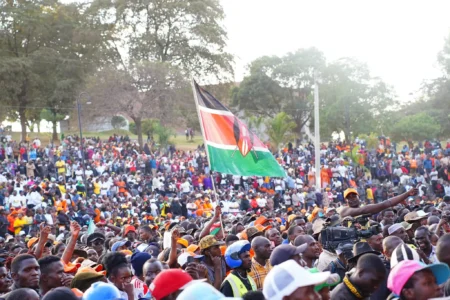





NAIROBI, Kenya — The Wantam Movement has unveiled a digital voting platform that will allow its supporters to choose their preferred presidential flagbearer ahead of Kenya’s 2027 General Election, in a move organisers say is intended to place candidate selection in the hands of ordinary citizens rather than political elites.
The initiative, known as the Wantam Digital Election System, was launched amid increasing political activity as parties, coalitions and individual leaders begin positioning themselves for the next presidential contest.
Organisers say the online platform will enable supporters in Kenya and the diaspora to participate in a nationwide digital vote aimed at identifying the movement’s preferred candidate for the presidency.
Voting is scheduled to begin at 6am on July 25 and close at 6pm on July 26, with results expected to be displayed and streamed in real time throughout the exercise.
Sixteen aspirants on the ballot
Supporters will be asked to choose from a field of 16 political figures and public personalities who have either been linked to national leadership discussions or are viewed as potential contenders in the 2027 political landscape.
The list includes:
- Martha Karua
- Rigathi Gachagua
- Kalonzo Musyoka
- David Maraga
- Fred Matiang’i
- Okiya Omtatah
- Edwin Sifuna
- George Wajackoyah
- Reuben Kigame
- Ndindi Nyoro
- Jimmy Wanjigi
- George Natembeya
- Justin Muturi
- Eugene Wamalwa
- Willis Otieno
- Boniface Mwangi
The movement says the exercise is not intended to replace constitutional electoral processes but rather to gauge public sentiment and identify a candidate capable of uniting supporters around a common political agenda.
Two-stage selection process
According to organisers, the exercise will be conducted in two phases.
The first stage will involve a nationwide digital vote on the Wantam National Election System to reduce the field to five candidates receiving the highest number of votes.
The finalists will then take part in a public debate where they will present their policies, leadership credentials and vision for the country.
Following the debate, supporters will participate in a second round of voting to select the movement’s preferred presidential candidate and running mate.
Francis Masinde, who chairs the committee overseeing the process, said the model is intended to promote transparency and public participation.
“We want citizens to have a direct say in determining who should carry the movement’s aspirations into the next election rather than leaving that decision entirely to political negotiations,” he said during the launch.
Transparency and digital participation
Masinde said the platform has been designed to provide real-time visibility of voting trends and results.
Organisers argue that digital participation can broaden political engagement, particularly among young voters and Kenyans living abroad who often have limited opportunities to participate in informal political consultations.
The movement says vote tallies will be available throughout the process to enhance transparency and build confidence in the outcome.
However, election governance experts note that digital voting exercises conducted by political movements remain unofficial and do not carry legal standing under Kenya’s electoral framework.
Growing political activity ahead of 2027
The launch comes as political mobilisation accelerates across the country, with parties and interest groups increasingly engaging voters ahead of the next General Election.
Several figures appearing on the Wantam ballot have already emerged as prominent voices in discussions about Kenya’s political future, although many have not formally declared presidential ambitions.
Also Read: Millicent Omanga quits UDA, backs United Opposition ahead of 2027 polls
Political analysts say initiatives such as the Wantam vote reflect growing public interest in alternative methods of candidate selection, particularly at a time when concerns about elite-driven political negotiations continue to feature prominently in public debate.
No constitutional role
Despite its ambitions, the Wantam Movement acknowledged that the digital vote has no constitutional or legal authority to determine official presidential candidates.
Under Kenya’s electoral system, political parties and coalitions retain responsibility for nominating candidates who ultimately appear on the ballot.
Organisers say the objective is instead to identify a consensus candidate capable of attracting broad support among like-minded voters and opposition-leaning constituencies ahead of the 2027 race.
Whether the outcome influences formal political alliances remains to be seen, but the exercise is likely to draw attention as Kenya’s political landscape begins to take shape ahead of the next election cycle.