


West Africa is grappling with a convergence of security and public health crises, with fresh militant violence in the Sahel, a worsening Ebola outbreak in Central Africa with regional implications, and continued mass kidnappings in Nigeria highlighting deepening instability across the region.
The developments come amid renewed concerns from regional and international agencies that parts of West Africa remain highly vulnerable to coordinated extremist attacks, weak health surveillance systems, and strained security responses.
Mali conflict intensifies with coordinated militant offensives
In Mali, a surge of coordinated attacks by armed groups has further destabilised large parts of the country, with reports indicating sustained operations across key strategic towns including Mopti, Gao, Kidal and Bamako’s surrounding regions.
According to conflict monitoring data, Jama’at Nusrat al-Islam wal-Muslimin (JNIM) and allied factions have expanded their operations, targeting both military installations and civilian-linked infrastructure in what analysts describe as one of the most coordinated offensives in recent months.
The violence has resulted in significant casualties and territorial contestation, with government forces struggling to maintain control in several northern and central zones.
Security experts warn that the evolving tactics of militant groups—including coordinated multi-city assaults—signal increased operational sophistication and cross-border coordination within the wider Sahel region.
Nigeria continues to face mass abductions and armed attacks
In Nigeria, armed groups have intensified kidnappings in the northwestern region, with dozens of civilians abducted in recent incidents, including elderly residents reportedly seized while returning from reconciliation efforts in Zamfara State.
Local authorities say the incidents highlight the persistent threat posed by armed bandit networks operating in forested areas across the region, where limited state presence has allowed criminal groups to entrench themselves.
The kidnappings have triggered renewed calls for stronger rural security deployment and intelligence-led operations, as communities continue to bear the brunt of repeated attacks.
Ebola outbreak raises regional alarm
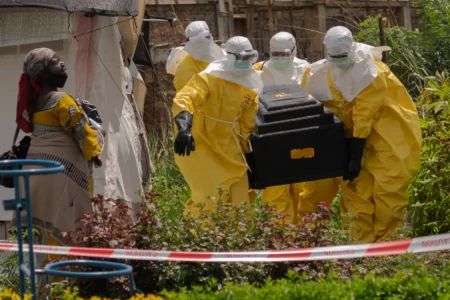
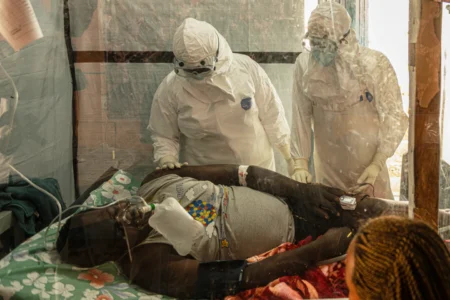
Health authorities across Africa have also raised concern over a worsening Ebola outbreak in the Democratic Republic of Congo (DRC), which experts warn could become one of the most severe outbreaks in recent years if containment measures fail.
The Africa Centres for Disease Control and Prevention (Africa CDC) has reported difficulties in tracing thousands of potential contacts, raising fears of cross-border transmission risks affecting neighbouring West African states.
While West Africa has not yet recorded widespread transmission, public health officials warn that regional travel networks, porous borders and limited surveillance capacity could heighten vulnerability, recalling the devastating 2014–2016 outbreak that killed over 11,000 people across Guinea, Liberia and Sierra Leone.
Regional implications and growing pressure on governments
Analysts say the simultaneous escalation of security and health threats underscores structural weaknesses in governance, coordination and emergency response systems across West Africa.
The Sahel remains the epicentre of militant expansion, while coastal states face rising pressure from spillover risks, including displacement, arms trafficking and potential extremist infiltration.
Also Read: Togo expels ex-Burkina Faso leader Damiba over alleged coup plot against Traoré
At the same time, humanitarian agencies warn that overstretched health systems could struggle to respond effectively if the Ebola outbreak expands beyond Central Africa.
As West Africa enters mid-2026, the region is facing what security analysts describe as a “multi-front crisis”—combining insurgency, organised crime, and public health emergencies.
Governments in the region are expected to intensify military cooperation under regional blocs such as ECOWAS, while health agencies push for expanded surveillance and emergency preparedness.
However, experts caution that without sustained investment in security coordination, governance reforms and public health infrastructure, the region risks further instability in the months ahead.