

ENTEBBE, Uganda — Uganda has unveiled a statue honouring Yonatan Netanyahu, the Israeli military commander who was killed during the historic 1976 Entebbe hostage rescue mission, marking 50 years since one of the most dramatic counter-terrorism operations in modern history.
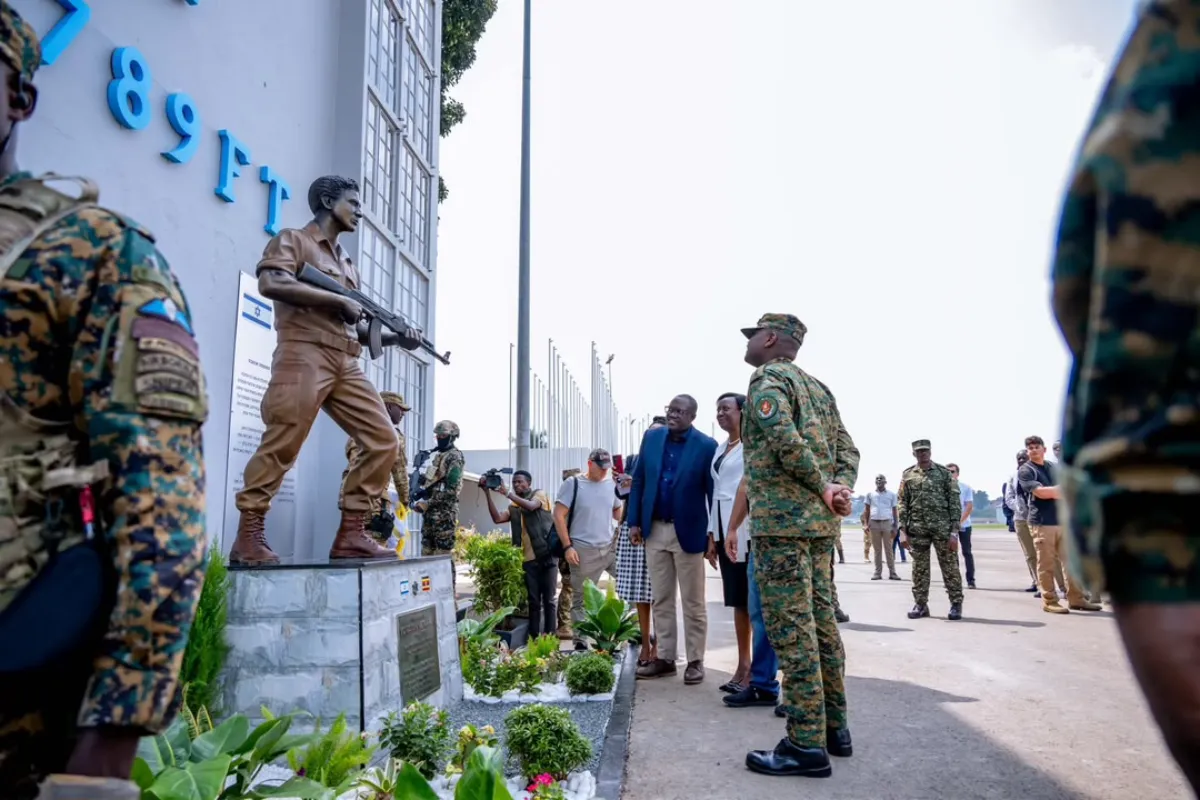
The monument, erected outside the old terminal at Entebbe International Airport, commemorates Netanyahu, the elder brother of Israeli Prime Minister Benjamin Netanyahu, who was the only Israeli soldier killed during the operation.
The bronze statue depicts Yonatan Netanyahu striding forward while carrying a machine gun, symbolising the mission that rescued more than 100 hostages and transformed global approaches to counter-terrorism.
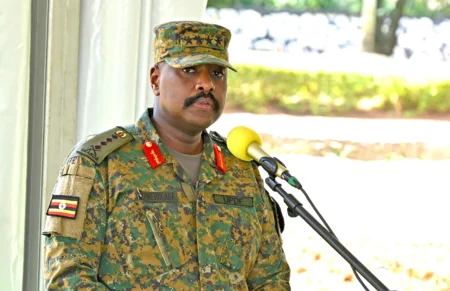
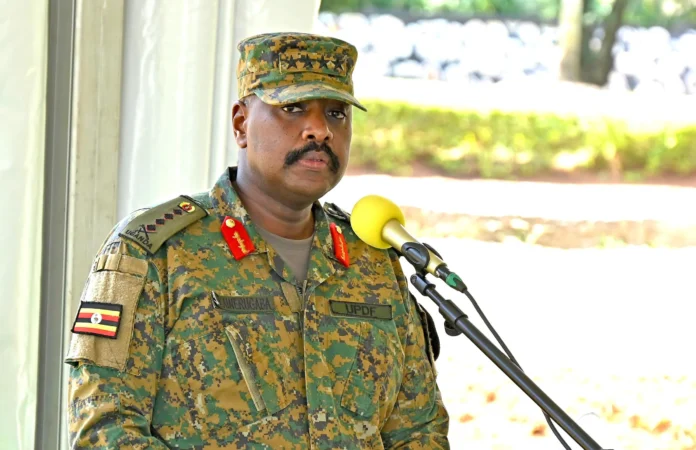
Speaking during the unveiling ceremony, Uganda’s Chief of Defence Forces (CDF), Gen. Muhoozi Kainerugaba, described the operation as one of the most significant episodes in modern history.
He said the memorial honours Netanyahu’s courage and sacrifice while reflecting how relations between Uganda and Israel have evolved over the past five decades.
According to Kainerugaba, the two countries now enjoy a partnership built on mutual trust, respect and cooperation despite the painful circumstances surrounding the 1976 operation.
He described the anniversary as both a moment of remembrance and an opportunity to acknowledge how history can shape stronger diplomatic ties.
The Entebbe raid followed the hijacking of an Air France flight travelling from Tel Aviv to Paris on 27 June 1976.
After stopping in Athens, two Palestinian militants and two German accomplices seized control of the aircraft, forcing it first to Libya before diverting it to Uganda under the rule of former president Idi Amin.
The hijackers demanded the release of 53 imprisoned militants held in Israel, France, Germany, Switzerland and Kenya, alongside a ransom reportedly valued at US$5 million.
Several hostages were released in the days that followed, but Israeli and Jewish passengers remained captive at the old Entebbe airport terminal.
On the night of 3 July 1976, Israeli special forces flew thousands of kilometres via Kenya before launching what became known as Operation Entebbe.
The rescue mission lasted less than 90 minutes.
Israeli commandos killed the hijackers and several armed accomplices while rescuing more than 100 hostages.
Yonatan Netanyahu, who commanded the assault team, was fatally shot during the operation, becoming the only Israeli military casualty.
The raid also claimed the lives of three hostages — Jean-Jacques Mimouni, Pasco Cohen and Ida Borochovitch.
Another hostage, Dora Bloch, who had earlier been admitted to a hospital in Kampala, was later murdered.
During the ceremony, Kainerugaba extended tribute not only to Netanyahu but also to the civilians who died during the crisis.
“May their memories continue to inspire future generations in the pursuit of peace, justice and human dignity.”
He also acknowledged that at least 45 Ugandan soldiers were killed while confronting the Israeli commandos.
The army chief said those soldiers fought according to the orders they had received at the time.
“They fought valiantly… in what they believed was a justified cause.”
However, he added that Uganda now recognises that Amin’s government did not represent the Ugandan people.
“Today, we know that the government of Idi Amin, which they served, was a brutal dictatorship which did not represent the Ugandan people.”
Also Read: Martha Karua recounts Entebbe airport ordeal, says Uganda denied her entry without explanation
The Entebbe raid remains one of the most celebrated military operations in Israeli history but represented a major humiliation for Amin’s regime.
Relations between Uganda and Israel deteriorated after the operation but have steadily improved in recent decades.
During a visit to Entebbe in 2016, Prime Minister Benjamin Netanyahu reflected on his brother’s sacrifice.
“I learned from my brother that you need two things to defeat the terrorists: clarity and courage.”
Kainerugaba said the unveiling of the monument symbolises how Uganda and Israel have moved beyond a difficult chapter in history toward closer diplomatic, security and economic cooperation.
He described the 1976 events as a painful part of Uganda’s past while emphasising that today’s bilateral relationship reflects reconciliation rather than division.
The memorial now stands at the site where one of the world’s most daring hostage rescue missions unfolded, preserving the legacy of a military operation that continues to shape international security history.