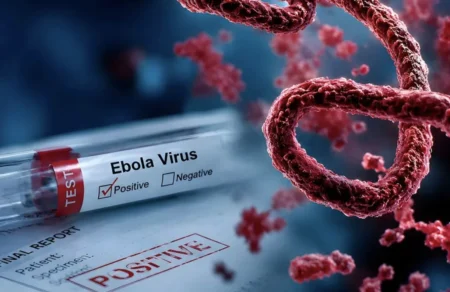


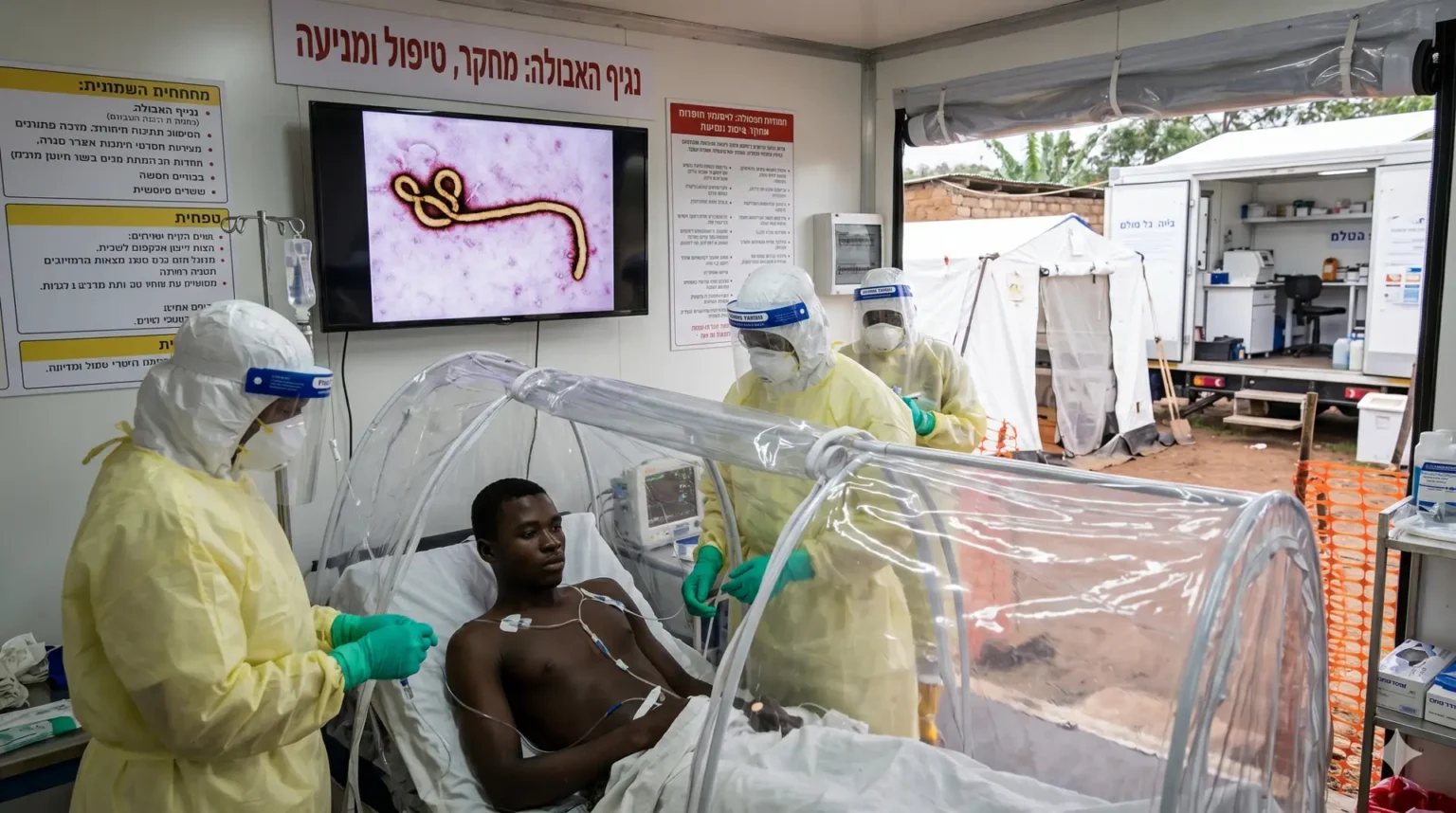
NAIROBI, Kenya — The United States government has authorised the emergency use of an experimental Ebola antibody treatment for individuals exposed to the virus, even as controversy intensifies over plans to establish a U.S.-backed Ebola quarantine facility at Laikipia Air Base in Kenya.
The treatment, known as MBP-134, has been made available under emergency investigational protocols for Americans considered at high risk of infection during the ongoing Ebola outbreak centred in the Democratic Republic of Congo (DRC) and neighbouring Uganda.
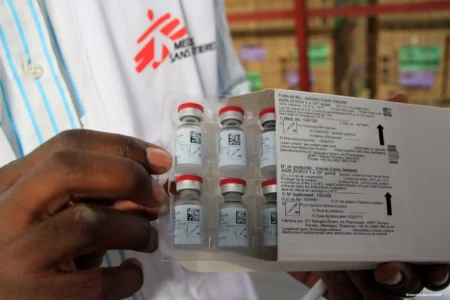
Developed by Mapp Biopharmaceutical, MBP-134 is a cocktail of broadly neutralising antibodies designed to target multiple strains of the Ebola virus.
While the treatment has demonstrated promising results in laboratory and animal studies, it has not yet completed full-scale human clinical trials, meaning it remains an investigational therapy rather than a fully approved medicine.
The decision by the U.S. Department of Health and Human Services (HHS) to authorise its emergency use underscores the seriousness with which Washington views the current outbreak and the risks facing personnel operating in affected regions.
Health officials have indicated that the treatment will be administered through emergency mechanisms that allow access to unapproved medical products during public health emergencies when no fully licensed alternatives are available.
The move comes as the United States continues to expand preparations for potential Ebola exposure among its citizens working in Central Africa, particularly humanitarian workers, medical personnel and diplomatic staff deployed in outbreak zones.
At the centre of those preparations is a controversial plan to establish a 50-bed quarantine and observation facility at Laikipia Air Base in Nanyuki. The proposed centre would be used to monitor Americans exposed to Ebola before symptoms develop.
According to U.S. officials, the facility is intended for quarantine and observation rather than treatment. Individuals who test positive could be transferred elsewhere for specialised care.
However, the project has triggered growing opposition in Kenya, where residents, civil society organisations and medical professionals have questioned both the necessity of the facility and the process through which it was approved.
The controversy escalated after Kenya’s High Court temporarily suspended the project pending legal challenges filed by the Law Society of Kenya and the Katiba Institute.
The petitioners argue that the public was not adequately consulted and have raised concerns about public health risks and constitutional questions surrounding the arrangement.
Despite the court order, reports indicate that U.S. equipment and personnel have continued arriving at the Laikipia facility as discussions between the two governments continue.
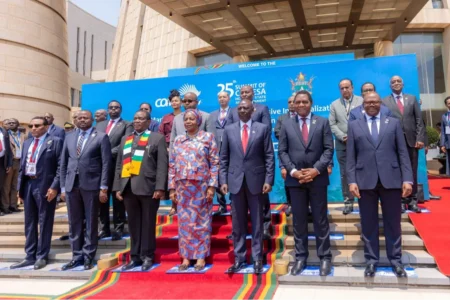
President William Ruto has strongly defended the initiative, describing it as part of Kenya’s broader health security partnership with the United States. He has argued that strengthening regional preparedness against infectious diseases is both responsible and necessary, especially given the country’s proximity to affected areas.
The United States has pledged financial support for Ebola preparedness efforts in Kenya, including funding for surveillance systems, laboratory capacity and emergency response infrastructure.
Yet the debate has exposed a deeper question that extends beyond the proposed facility itself.
Public health experts broadly agree that Ebola outbreaks are best controlled through rapid detection, isolation, contact tracing and international cooperation.
However, critics of the Kenya facility argue that Washington’s decision to establish a quarantine centre thousands of kilometres from U.S. territory appears inconsistent with its own domestic preparedness capabilities.
Several former public health officials and Ebola experts have questioned why exposed Americans are not being monitored in specialised facilities within the United States, as was done during previous outbreaks.
Others have argued that creating a separate quarantine system in Kenya risks fuelling public distrust and political tensions at a time when international cooperation is most needed.
Against this backdrop, the authorisation of MBP-134 highlights another reality: despite major advances in Ebola research over the past decade, significant gaps remain in treatment options.
Also Read: Gachagua alleges Laikipia Ebola facility is Ruto’s plan to wipe out Mt Kenya community
While vaccines and therapies have improved survival rates for some Ebola strains, researchers continue searching for broadly effective treatments capable of combating multiple variants of the virus.
For scientists, the emergency deployment of MBP-134 represents an important test of a potentially transformative therapy.
For policymakers, however, it underscores the challenges of balancing medical preparedness, public confidence and international cooperation during a cross-border health emergency.
As the outbreak continues in Central Africa, the future of the Laikipia facility remains uncertain. What is certain is that the debate has evolved beyond public health alone.
It now touches on questions of sovereignty, transparency, risk-sharing and the responsibilities of wealthy nations in responding to global disease threats.
The coming weeks are likely to determine not only whether the facility proceeds, but also whether Kenya and the United States can convince sceptics that the arrangement serves public health interests rather than political convenience.