



NAIROBI, Kenya — For generations of Kenyan families, admission to university has often been both a triumph and a crisis.
The letter arrives carrying the promise of a future transformed by education. Parents celebrate. Neighbours congratulate. Dreams suddenly feel within reach.
Then comes the question that has haunted thousands of households for decades:
How will we pay for it?
For many families, the answer has meant selling land, taking loans, postponing development projects or relying on contributions from relatives. Others have watched talented children defer studies, abandon university altogether or settle for courses determined less by ambition than by affordability.
President William Ruto now says he wants to change that equation entirely.
In a sweeping policy announcement that could become one of the most consequential education reforms in Kenya’s modern history, Ruto has pledged that every student who qualifies for admission to a university or college will receive full government funding for their studies.
If Parliament approves the proposed legal amendments, the reform would mark a dramatic departure from Kenya’s longstanding approach to higher education financing and place the country among a relatively small group of nations where the state assumes responsibility for funding university education on a near-universal basis.
The announcement has generated excitement among students and parents. It has also raised a more complicated question.
Can Kenya afford it?
The promise that admission should mean opportunity
The politics of education often revolve around access.
The economics of education revolve around cost.
Ruto’s proposal attempts to bridge the gap between the two.
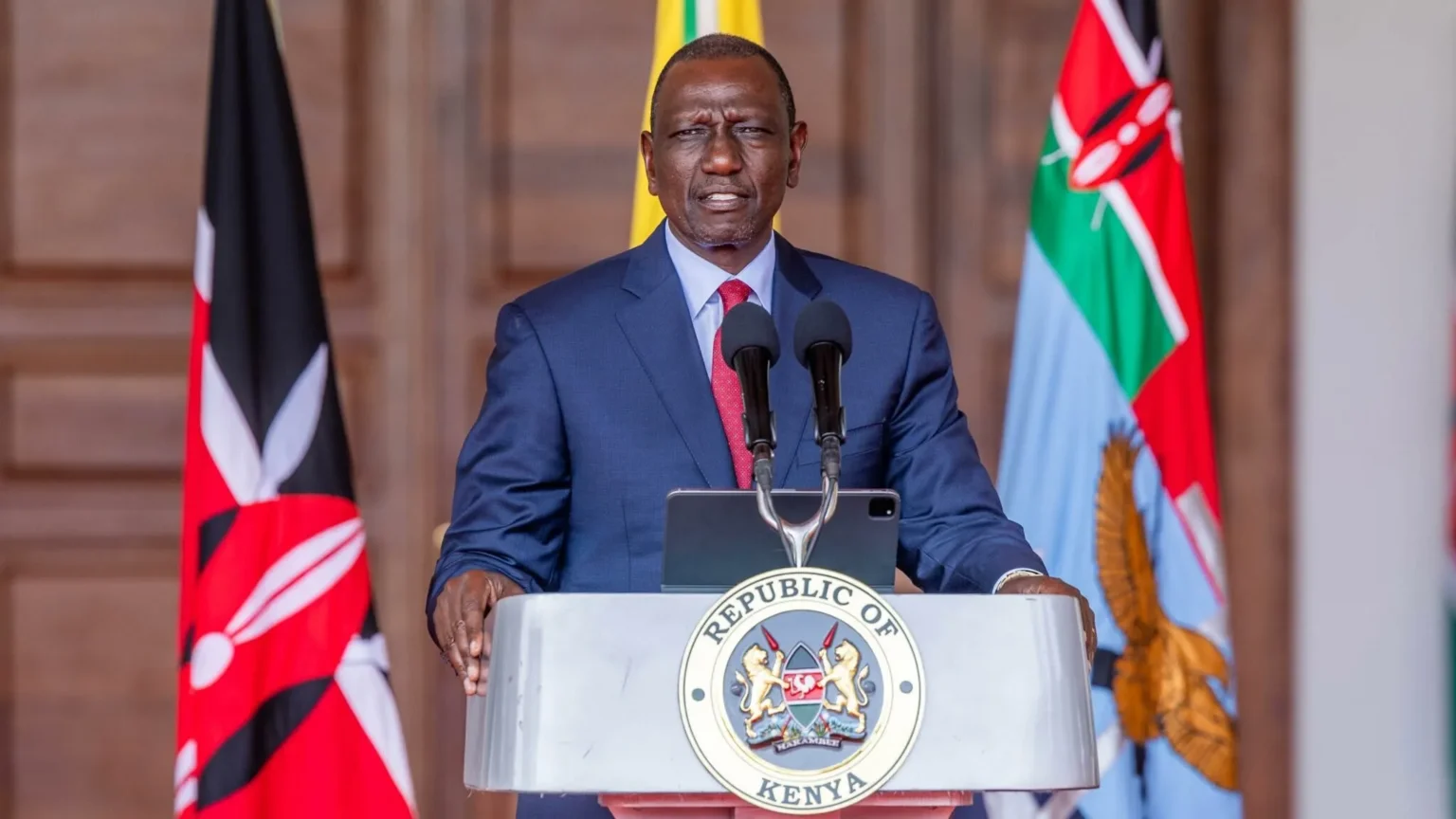
Speaking at State House in Nairobi, the President argued that academic achievement should determine access to higher education, not household income.
“Now we are moving to universal under the amendments we have taken to Parliament. So going forward, any student, so long as they have passed their exam and they have been placed in a college or a university, will get full funding for their higher education,” he said.
The statement represents more than a funding adjustment.
It challenges one of the most enduring realities of education systems across much of Africa: that university admission does not necessarily guarantee university attendance.
Across the continent, millions of students perform well enough to qualify for higher education but struggle to enrol because of financial constraints.
For many, merit opens the door.
Money determines whether they can walk through it.
Ruto’s proposal seeks to remove that second barrier.
An admission of past failures
Perhaps the most striking aspect of the announcement was not the promise itself but the President’s acknowledgment that previous funding models had failed.
Kenya has spent years experimenting with different approaches to university financing.
The government initially relied heavily on direct public funding before shifting toward more complex arrangements involving household contributions, student loans and targeted support.
The differentiated funding model introduced in recent years was designed to allocate resources according to students’ financial circumstances.
The intention was equity.
The outcome proved more controversial.
Universities complained about funding shortfalls.
Students protested over fees.
Parents struggled to navigate a system many considered confusing.
Ruto himself conceded that the approach had not delivered as intended.
“We tried the differentiated model. I think the vice chancellors here know it didn’t work because it made most of our universities almost close down. Because while we promised 80% funding, we went down to 40%, and most universities suffered,” he said.
Those remarks were unusually candid.
Government leaders rarely publicly acknowledge the shortcomings of flagship reforms.
Yet the admission reflects the growing pressure facing Kenya’s higher education sector.
Universities caught in a financial squeeze
Behind the political debate lies a deeper institutional challenge.
Public universities across Kenya have spent years warning about mounting financial difficulties.
Rising enrolment, infrastructure needs, staffing costs and delayed government disbursements have combined to create significant pressure on institutions.
Several universities have reported large debts.
Others have struggled to maintain facilities, recruit academic staff and finance research activities.
Education economist Prof Maurice Amutabi has previously argued that higher education funding in Kenya suffers from a structural mismatch between growing demand and available resources.
The country’s university system has expanded dramatically over the past two decades.
Funding has not always kept pace.
The result has been a sector under increasing strain.
Ruto’s proposal appears partly designed to address that problem by creating a more predictable funding framework.
Yet doing so will require substantial public expenditure.
That reality explains why some economists are already asking whether the promise can be sustained over the long term.
The economics behind the politics
The appeal of universal funding is obvious.
The arithmetic is more complicated.
Every year, tens of thousands of students qualify for placement in Kenyan universities and colleges.
Providing full funding for all of them would require billions of shillings in additional public expenditure.
The government insists that legislative amendments and funding reforms will make the model viable.
Sceptics remain cautious.
Public finance experts note that Kenya already faces competing demands on the national budget, including healthcare, infrastructure, debt servicing and social protection programmes.
Expanding university funding will inevitably require difficult fiscal choices.
Yet supporters argue that the costs should be viewed as an investment rather than an expense.
Studies consistently show that higher education contributes to increased earnings, improved productivity and broader economic growth.
A more educated workforce generally produces stronger long-term economic outcomes.
The challenge for policymakers is balancing those future benefits against immediate financial realities.
A regional debate larger than Kenya
The significance of the proposal extends beyond Kenya’s borders.
Across East Africa, access to higher education remains heavily influenced by economic circumstances.
Uganda faces similar challenges.
Government sponsorship supports a limited number of top-performing students, while the majority rely on private sponsorship, family resources or student loans.
Tanzania, Rwanda and other countries in the region operate variations of loan and scholarship systems that continue to leave significant funding gaps.
As a result, many qualified students either postpone studies or abandon them entirely.
Education specialists frequently describe this as one of the most persistent barriers to social mobility.
Talent exists.
Opportunity exists.
Financing often does not.
If Kenya successfully implements universal funding, it could reshape regional conversations about how governments support higher education.
Other countries may face increasing pressure to examine whether existing systems adequately serve qualified students.
Learning from countries that made university free
Globally, universal university funding remains relatively uncommon.
Countries that have pursued it successfully tend to combine strong public finances with long-term political commitment.
Germany, Norway and Austria are often cited as leading examples.
Students attending public universities in those countries generally pay little or no tuition.
The principle underpinning the system is that higher education should be accessible regardless of financial background.
In Africa, Mauritius remains one of the clearest examples of state-funded tertiary education.
Algeria also heavily subsidises university studies, while Egypt continues to maintain significant public support for higher education.
Most countries, however, rely on mixed systems involving government funding, student contributions and private financing.
Kenya’s proposal would move it closer to the first group.
Whether it can sustain that position remains one of the central questions surrounding the reform.
The bigger question beyond funding
The debate ultimately extends beyond tuition fees.
Expanding access raises another issue: what happens after students graduate?
Across Africa, governments increasingly face pressure not only to expand higher education but also to ensure that graduates can find meaningful employment.
Also Read: HELB opens 2026/27 loan and scholarship applications for university, TVET students
Critics of universal funding programmes often argue that access alone is insufficient.
Supporters counter that lack of opportunity after graduation is not a reason to deny education beforehand.
Instead, they argue that governments should simultaneously invest in education, skills development and job creation.
That balance may ultimately determine whether Kenya’s proposal becomes a transformative success or an expensive experiment.
A promise with enormous stakes
For now, the announcement remains a proposal awaiting parliamentary approval.
The details of implementation, funding mechanisms and institutional oversight are still emerging.
Yet even before becoming law, the plan has already altered the conversation.
For students preparing to enter university, the prospect of full funding represents something many families once considered impossible.
For universities, it offers the possibility of more stable financing.
For policymakers, it presents both an opportunity and a risk.
And for Kenya, it raises a fundamental question about the role of the state in shaping educational opportunity.
If the reforms succeed, university admission may finally mean what generations of students hoped it would mean from the beginning:
That earning a place is enough.
That talent matters more than income.
And that a family’s financial circumstances no longer determine how far a young person’s ambitions can go.