


KAMPALA, Uganda — The Seventh-day Adventist Church in Uganda has formally objected to the government’s newly introduced National Cleaning Days, arguing that the mandatory monthly exercise, scheduled every last Saturday of the month, directly conflicts with its observance of the Sabbath.
The position, communicated by the Uganda Union Mission of Seventh-day Adventists, is not a rejection of environmental conservation or public hygiene. Instead, church leaders say it reflects a deeper constitutional concern about whether civic obligations imposed by the state can override deeply held religious convictions protected under Uganda’s Constitution.
As Uganda prepares to implement one of its most ambitious nationwide sanitation programmes in recent years, the disagreement has shifted the conversation beyond waste management and environmental cleanliness. It now raises broader questions about how governments balance public interest with religious liberty in a diverse society.
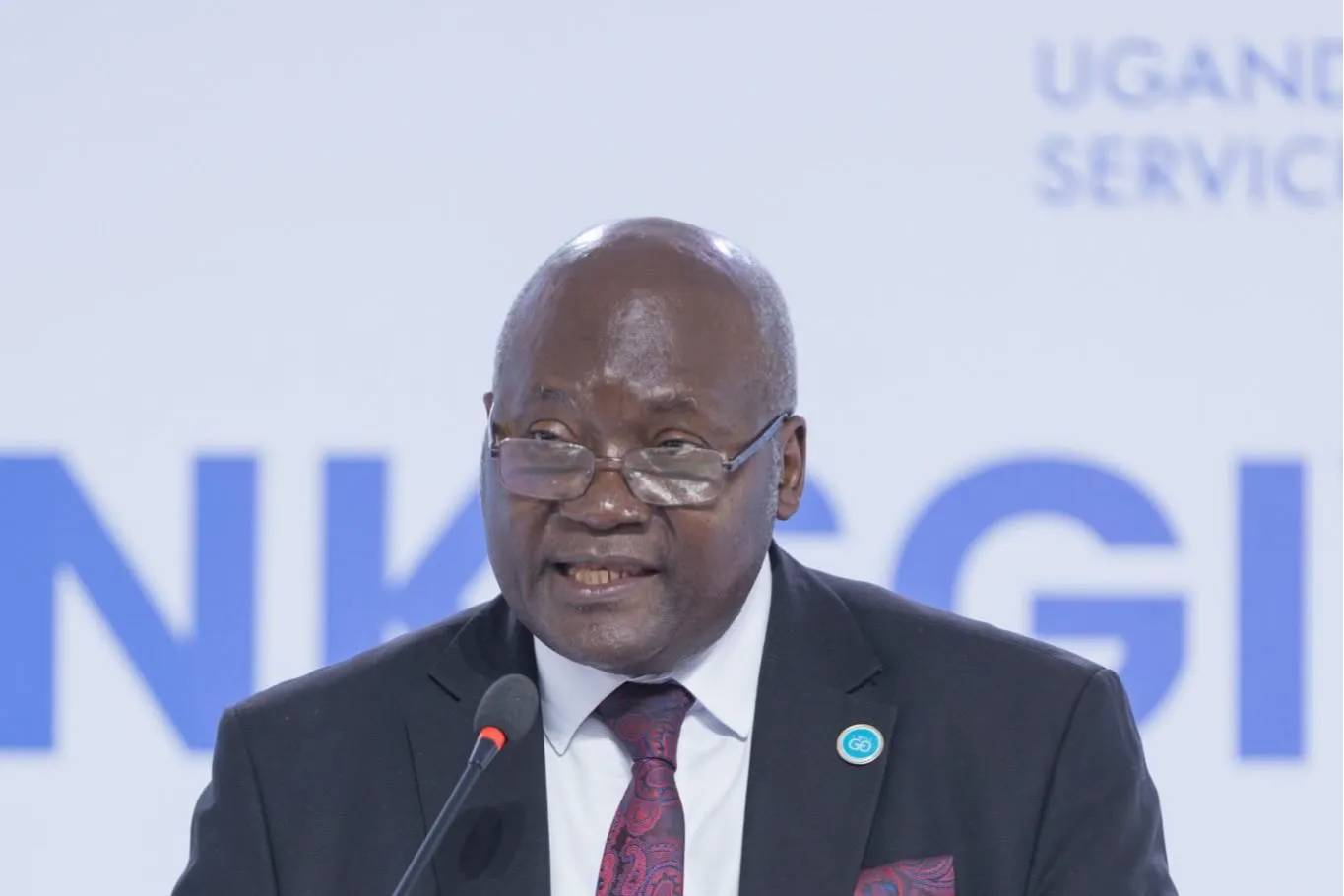
In a letter dated July 24, 2026, addressed to the Adventist community, Uganda Union Mission President Pr Kajoba Samuel reaffirmed the church’s support for initiatives that promote cleaner communities while making clear that Saturday worship remains non-negotiable for Adventists.
“According to Scripture, the Sabbath is God’s holy day, observed from sunset on Friday to sunset on Saturday,” Kajoba said.
“During these sacred hours, God calls His people to cease from their ordinary work and dedicate their time wholly to worship, fellowship and acts of mercy and communion with him.”
Those words underscore what church leaders say is the central issue.
For Seventh-day Adventists, the Sabbath is not simply a preferred day of worship but a fundamental religious obligation. Unlike scheduling conflicts that can be resolved through flexibility, they argue that compulsory participation during Sabbath hours places believers in the impossible position of choosing between obedience to government directives and obedience to their faith.
That distinction has become increasingly important following the government’s announcement that National Cleaning Days will take place on the last Saturday of every month between 8:00 a.m. and 11:00 a.m., beginning July 25, 2026.
The programme, introduced as part of a nationwide campaign to improve sanitation, waste management and environmental cleanliness, requires citizens to participate in organised community cleaning activities coordinated by local governments, public institutions and other agencies.
Police have already indicated that the exercise will be enforced through temporary restrictions on the movement of people and vehicles during the three-hour period, with exceptions applying only to emergency services and other authorised categories.
While the government views the initiative as a public health intervention, the Adventist Church believes the current implementation overlooks the practical realities faced by communities whose religious observance falls within the same timeframe.
Rather than rejecting the programme outright, however, church leaders say they have chosen dialogue over confrontation.
Kajoba revealed that senior church officials are already engaging government authorities in search of a practical solution that respects both the state’s sanitation objectives and constitutional guarantees of freedom of worship.
Among the proposals submitted is allowing Seventh-day Adventist members to participate in organised cleaning exercises on Fridays or Sundays instead of Saturdays.
The suggestion reflects an effort to demonstrate that the church’s objection is not directed at the goal of environmental cleanliness itself but at the compulsory scheduling of the activity during sacred worship hours.
“I kindly appeal to every member to remain calm, prayerful, and steadfast in faith,” Kajoba said.
The measured tone adopted by the church also reflects an awareness that environmental stewardship occupies an important place within Christian teaching itself.
Across many Christian traditions, caring for the environment is regarded as a moral responsibility rather than merely a civic obligation. The disagreement therefore lies not in whether communities should participate in cleaning exercises, but in whether governments should prescribe participation during periods regarded by some faith communities as holy time.
The dispute illustrates a recurring challenge faced by governments around the world whenever public policy intersects with religious practice.
Public health campaigns often depend on broad community participation to succeed. Yet constitutional democracies are equally expected to safeguard individual freedoms, including the right to practise one’s religion without undue interference.
Finding the balance between those competing interests has historically required accommodation rather than uniformity.
Uganda’s Constitution guarantees freedom of conscience, religion, belief and worship, protections that courts have consistently interpreted as fundamental rights within a democratic society.
Legal scholars frequently note that governments retain authority to regulate conduct in pursuit of legitimate public objectives, including public health and environmental protection. However, where less restrictive alternatives exist, accommodation is generally viewed as preferable to compelling citizens to violate sincerely held religious beliefs.
That principle may now become increasingly relevant as discussions between the Adventist Church and government continue.
The National Cleaning Days initiative itself reflects growing concern over sanitation challenges in rapidly expanding urban centres, where poor waste management has contributed to blocked drainage systems, environmental degradation and increased public health risks.
Officials hope regular community clean-up exercises will encourage greater civic responsibility while improving hygiene standards across the country.
Environmental experts have long argued that successful sanitation programmes depend not only on enforcement but also on public trust and voluntary participation.
Where communities perceive policies as inclusive and respectful of diverse social realities, compliance often improves. Conversely, programmes that are seen as disregarding constitutional rights or cultural practices may face unnecessary resistance even when their objectives command widespread public support.
That broader lesson appears to inform the Adventist Church’s approach.
Rather than encouraging members to disregard government directives, church leaders have opted to pursue engagement with authorities while urging believers to remain peaceful and patient as discussions continue.
Whether government accepts alternative participation arrangements remains unclear.
Also Read: Rwanda’s Paul Kagame defends regulation of religious institutions
Officials coordinating National Cleaning Days have yet to publicly respond to the church’s proposals.
For now, the sanitation campaign continues as planned, with implementation scheduled to begin across Uganda on the final Saturday of the month.
Yet beneath what appears to be a dispute over scheduling lies a more enduring question about governance itself.
How should governments pursue legitimate national objectives while respecting the constitutional freedoms of citizens whose religious obligations differ from the majority?
The answer may ultimately shape not only the future of Uganda’s National Cleaning Days but also the broader relationship between civic duty and religious liberty in a constitutional democracy.
As the first nationwide exercise approaches, both government and church leaders now find themselves navigating a delicate balancing act—one that could determine whether a campaign designed to clean public spaces also strengthens public confidence in the country’s commitment to protecting fundamental rights.