


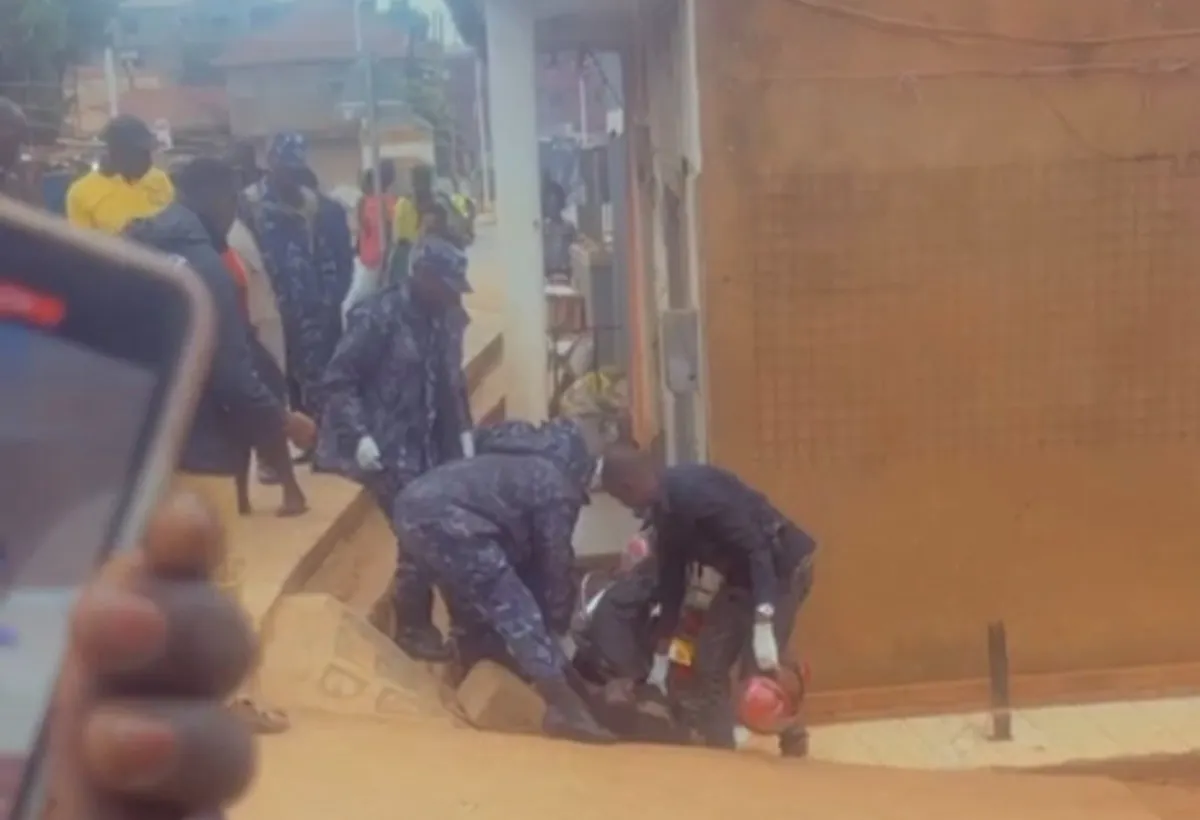
KAMPALA, Uganda — A 38-year-old boda boda rider was shot dead by a police officer in Ndejje Kanaaba, Makindye-Ssabagabo, on Saturday morning as security personnel enforced movement restrictions during Uganda’s second National Cleaning Day.
The deceased was identified by police as Kizito Ronald Jjuuko, 38, who was shot at about 7:30 a.m. on August 29, according to the Uganda Police Force.
Police Constable Allan Okello, attached to Ndejje Police Station, has been arrested over the shooting as investigators seek to establish what led to the discharge of his firearm and whether the force used was lawful and proportionate.
The shooting has raised fresh questions about how the government’s mandatory cleaning exercise is being enforced and whether the restrictions imposed to facilitate it are being applied within the limits of the law.
The Uganda Police Force said officers from Ndejje Police Station had been deployed to provide security during the community cleaning exercise.
According to the police account, Jjuuko was riding his motorcycle and allegedly attempted to force his way through a secured area. In circumstances that remain under investigation, Okello allegedly fired his weapon, killing him.
Police did not say in its initial statement whether the officer had issued a warning before firing, whether Jjuuko had been stopped before the shot was fired or whether there had been a physical confrontation.
The force said those questions form part of the ongoing investigation.
Witness accounts reported by local media, however, provide a different perspective.
Residents told Uganda Radio Network that Jjuuko was riding towards his home when he encountered officers enforcing the movement restrictions and allegedly attempted to flee after being stopped.
Hassan Ssezi, a resident of Kanaaba-Ndejje, said officers were positioned in an area where they were difficult to see and that Jjuuko appeared not to have noticed them until he had already passed their position.
“He had passed them a few metres when the officer shot him from behind,” Ssezi was quoted as saying.
The differing accounts have made the police investigation particularly significant. A determination of whether the shooting was justified will require investigators to establish what happened in the moments immediately before the firearm was discharged.
The Uganda Police Force confirmed that Okello had been arrested following the incident.
The force said the investigation would establish the circumstances in which he discharged his firearm and resulted in Jjuuko’s death.
Police also expressed condolences to Jjuuko’s family, relatives and friends.
The death has therefore not been officially characterised by police as a justified shooting or as an unlawful killing. The investigation is expected to determine the sequence of events, including whether the officer complied with operational procedures governing the use of firearms.
That distinction is important because the Police Act places specific conditions on the use of firearms.
Under Section 29 of Uganda’s Police Act, an officer may use a firearm in specified circumstances involving escape from lawful custody, resistance to lawful arrest or the rescue of someone from custody.
The law further requires reasonable grounds, including circumstances where the officer believes force is necessary to prevent the relevant act or where there is a reasonable belief of danger of grievous bodily harm.
Uganda’s Constitution also protects the right to life under Article 22.
Police themselves acknowledged the legal limits when responding to the Ndejje shooting, saying officers may maintain public order and protect life and property but that any use of force must be lawful, necessary and proportionate and guided by established procedures and the circumstances prevailing at the time.
The shooting occurred against the backdrop of Uganda’s new monthly National Cleaning Day programme.
The government launched the initiative in July, designating the last Saturday of every month as a nationwide cleaning day. The programme was approved by Cabinet and is intended to promote sanitation, prevent disease and encourage community participation in maintaining public spaces.
The first exercise was held on July 25, with activities taking place between 7 a.m. and 10 a.m.
Police announced similar movement restrictions ahead of the second exercise on August 29, saying vehicles, motorcycles, bicycles and other forms of movement would be restricted during the three-hour period.
The intention was to keep people within their communities so they could participate in cleaning activities.
However, police subsequently clarified that the restrictions were not absolute.
Exemptions included people seeking medical services, emergency-service vehicles, medical workers on duty, security personnel, designated cross-border traffic, people travelling to or from international terminals, journalists on duty, diplomats, UN and international organisation staff, and tourists with appropriate documentation.
Police urged members of the public to cooperate with officers and avoid arguments or confrontations during enforcement.
The Ndejje shooting came only a day after police reiterated their warning that the restrictions would be strictly enforced.
Police spokesperson ACP Kituuma Rusoke urged members of the public to cooperate with security personnel and seek clarification from officers or supervisors where they had concerns.
The warnings followed concerns arising from the first National Cleaning Day.
During the July exercise, police stopped people travelling during the restricted hours in several parts of the country. In Greater Iganga, authorities reported arrests of people who failed to comply with the directive. Police said some travellers were stopped and those who ignored instructions were arrested.
Uganda Radio Network reported that the first exercise brought major towns to an unusual standstill, with roadblocks, restricted movement and enforcement operations forming part of the effort to ensure compliance.
Ahead of the second exercise, police expanded the list of exemptions, apparently in an effort to address concerns about people whose movements could not reasonably be suspended for three hours.
The death of Jjuuko has shifted the debate from whether Uganda should participate in a national sanitation campaign to how such a campaign should be enforced.
The government’s stated objective is public health and environmental sanitation. The Ministry of Health says the programme is intended to improve sanitation, prevent disease outbreaks and promote environmental conservation.
The Uganda Police Force has also stressed that its role is to maintain public order and protect life and property.
But those responsibilities do not remove the legal requirements governing the use of force.
The central question in the Ndejje investigation will therefore be whether the circumstances facing the officer justified the use of a firearm.
Simply violating, or allegedly attempting to violate, a movement restriction does not by itself answer that question.
Investigators will need to establish whether there was an immediate threat, whether other lawful means of enforcement were available, whether a warning was given and whether the level of force used was proportionate to the circumstances.
Also Read: Can Uganda National Cleaning Days coexist with constitutional rights?
Those facts have not yet been established publicly.
National Cleaning Day was introduced as a civic initiative intended to bring communities together around sanitation.
The government has presented it as a long-term programme rather than a one-off campaign, with the exercise scheduled for the last Saturday of every month.
The Ndejje shooting, however, means that enforcement will now face closer scrutiny.
For residents, the death of a man during an exercise intended to promote cleaner and healthier communities raises an uncomfortable question: how can the state enforce participation without turning a public-health campaign into a source of fear or confrontation?
For the police, the immediate task is to provide a credible account of what happened at Kanaaba and determine whether the officer acted within the law.
For Jjuuko’s family, the issue is more personal. A 38-year-old man who left home on a motorcycle on Saturday morning did not return.
His death has now become the first major fatality publicly linked to enforcement of Uganda’s new National Cleaning Day movement restrictions.
The investigation into the shooting is continuing, and the Uganda Police Force has not announced any conclusion on whether Constable Okello’s actions were justified.
Until those findings are released, competing accounts of what happened on the road at Ndejje Kanaaba remain allegations rather than established fact.