




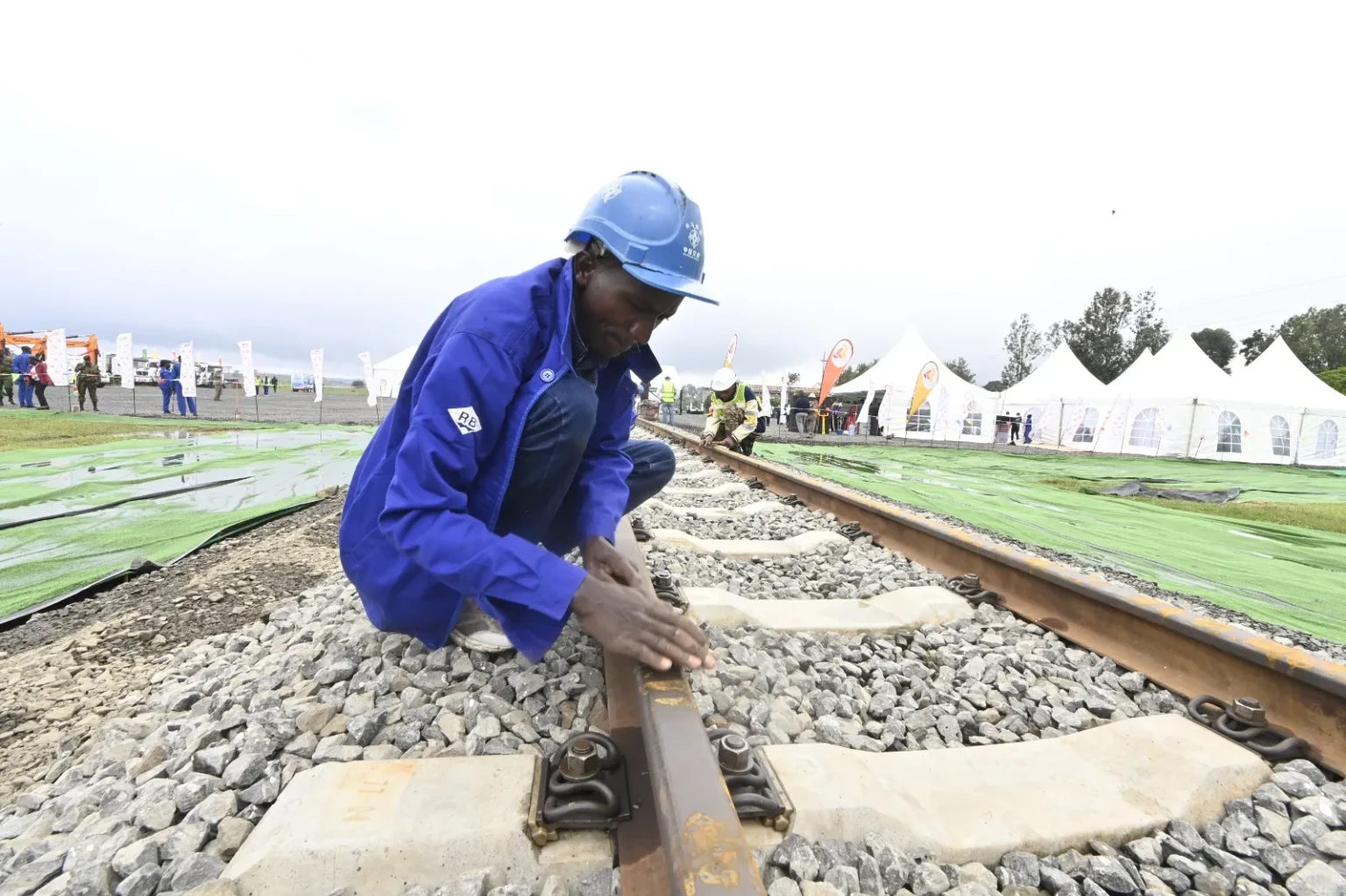
NAIROBI, Kenya — Chinese construction firm China Road and Bridge Corporation (CRBC) has asked the High Court to dismiss a petition seeking to stop the construction of the Riruta–Ngong Commuter Meter Gauge Railway Project, arguing that suspending the works would trigger substantial economic losses and undermine a key transport infrastructure investment.
In submissions filed before the court, the contractor maintained that decisions regarding the allocation of public funds for national infrastructure projects fall within the constitutional mandate of the Executive and Parliament and should not be subjected to judicial interference unless clear legal violations are demonstrated.
The company argued that the petition primarily challenges government policy decisions concerning the financing of the railway through the Railway Development Levy Fund (RDLF), matters it described as non-justiciable and outside the court’s adjudicative role.
According to CRBC, questions surrounding public expenditure priorities and infrastructure financing are policy issues that should be addressed by government institutions responsible for planning and budgeting rather than through the courts.
The contractor further told the court that it entered into a valid commercial agreement with Kenya Railways Corporation and has already committed significant resources toward implementation of the project.
The company said it has mobilised heavy construction equipment, technical personnel and other resources necessary for the railway’s development.
CRBC warned that any order halting the project would expose the government to substantial contractual liabilities and compensation claims, potentially increasing the financial burden on taxpayers.
The contractor also argued that the petitioners, led by Okiya Omtatah, had failed to provide sufficient evidence demonstrating an actual or imminent violation of constitutional rights.
According to the company, several claims contained in the petition rely on media reports, projected economic scenarios and assumptions regarding future debt obligations and taxation rather than verifiable evidence.
CRBC maintained that such assertions do not meet the evidentiary threshold required in constitutional litigation.
The company also disputed allegations that the project lacked adequate public participation and stakeholder engagement.
CRBC told the court that similar concerns relating to environmental approvals and public consultations had previously been considered and determined by the Environment and Land Court in earlier proceedings.
The contractor argued that those issues should not be reopened in the current case.
According to CRBC, construction of the Riruta–Ngong commuter railway has already reached approximately 40 percent completion, with major civil works undertaken along the project corridor.
The company warned that stopping construction at this stage would leave incomplete infrastructure, create potential environmental and safety risks, result in job losses and waste billions of shillings already invested in the project.
Also Read: High Court orders disclosure of key documents in contested Riruta–Ngong railway project
“The public interest favours completion of the railway,” the contractor argued, adding that the project is expected to improve urban mobility, reduce traffic congestion and enhance mass transit services within the Nairobi Metropolitan Area.
CRBC further accused the petitioners of seeking to replace government policy choices with their own preferences, arguing that decisions on whether public funds should be allocated to railway infrastructure, roads or other projects are matters for policymakers rather than the judiciary.
The company therefore urged the High Court to dismiss the petition with costs, maintaining that the railway project is being implemented lawfully and that stopping it would result in significant economic and public harm.
The case challenging the Riruta–Ngong Commuter Meter Gauge Railway Project remains pending before the High Court.