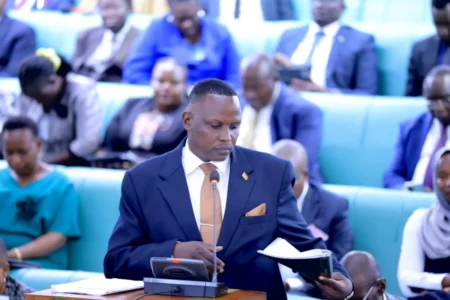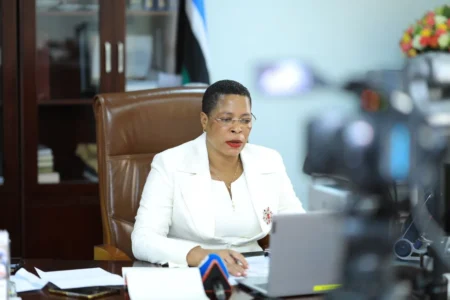




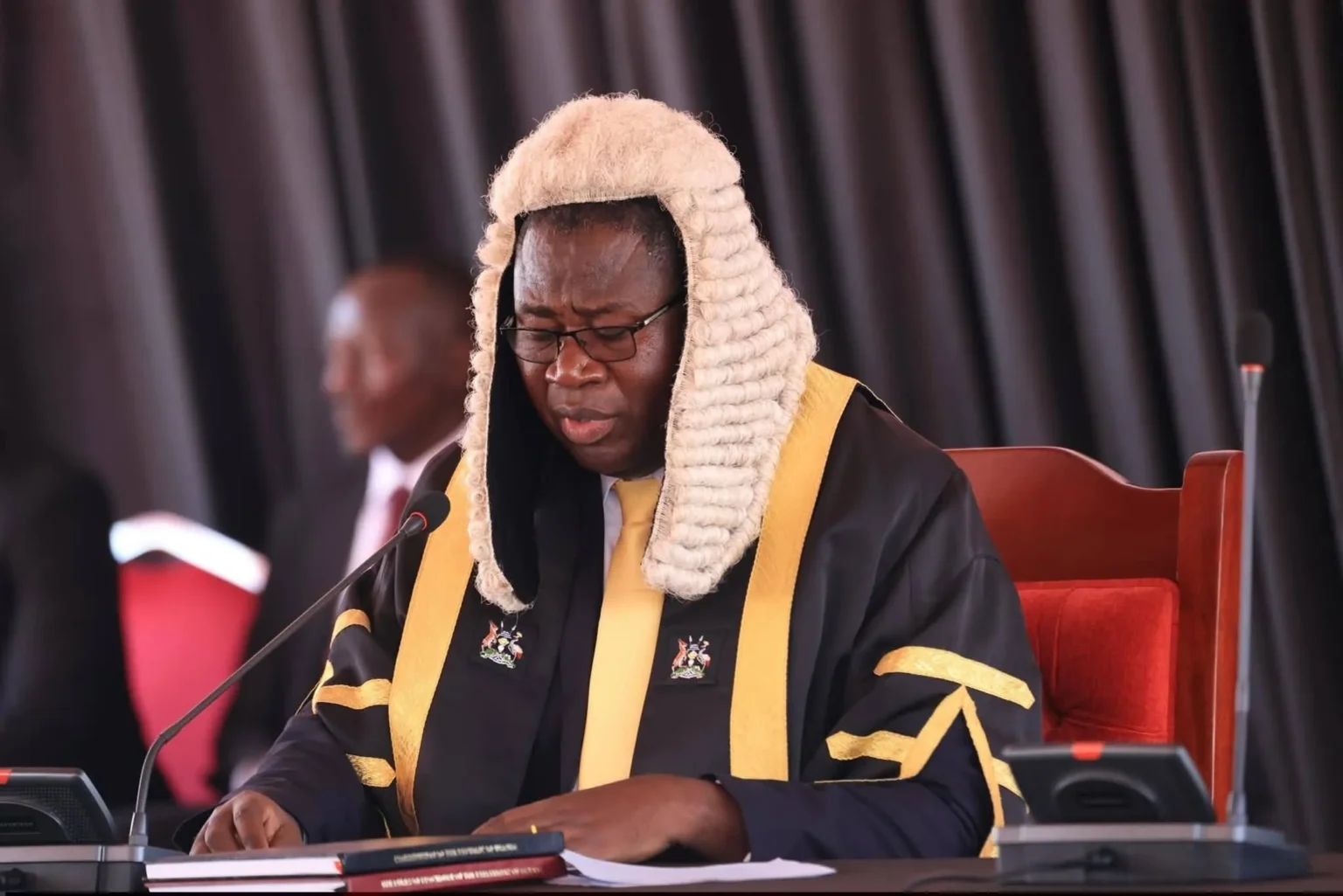
KAMPALA, Uganda — Uganda’s parliamentary speakership race is increasingly being viewed less as a competitive election and more as a carefully managed political succession, after West Budama MP Jacob Oboth-Oboth secured the position in a process that followed decisive behind-the-scenes endorsements from senior figures in the ruling establishment.
By the time MPs convened at Kololo Ceremonial Grounds on May 25 to elect a new Speaker, the outcome had already been largely settled through internal National Resistance Movement (NRM) consultations and high-level political signalling that effectively narrowed the field to a single frontrunner.
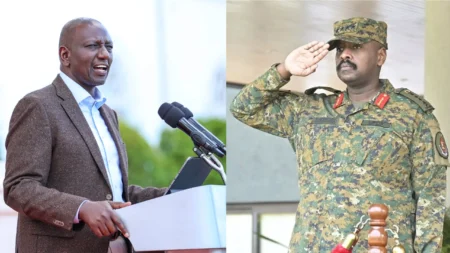
A key turning point in the race came after Chief of Defence Forces (CDF) Gen. Muhoozi Kainerugaba publicly endorsed Oboth-Oboth, a move that consolidated support within the ruling party and accelerated alignment among NRM legislators.
The endorsement, issued in the form of public political messaging on social media and reinforced through internal party consultations, helped reduce uncertainty within the ruling caucus ahead of the vote.
That momentum was further reinforced during an NRM caucus meeting chaired by President Yoweri Museveni at State House Entebbe a day before the election, where party legislators were urged to rally behind agreed candidates for both Speaker and Deputy Speaker positions.
By the time voting took place at Kololo, the process had taken on a largely procedural character, with party consensus already established within the ruling bloc.
Oboth secured 441 votes to become Uganda’s third Speaker in four years, in an election presided over by Chief Justice Flavian Zeija and attended by President Museveni.
His victory was later acknowledged by former Speaker Rebecca Kadaga, who described him as a leader with “professional and legislative experience” suited to the role.
A tightly controlled succession within the ruling establishment
NRM legislators who had initially expressed interest in the speakership reportedly stepped down following internal party consultations, paving the way for Oboth and Deputy Speaker Thomas Tayebwa to sail through as consensus candidates.
Tayebwa retained his position as Deputy Speaker in the same electoral process, consolidating continuity within Parliament’s top leadership.
The consolidation of support around the two candidates has been interpreted by analysts as evidence of increased centralisation of decision-making within the ruling party structure, particularly in parliamentary leadership contests.
Oboth’s pledge: integrity and institutional reform
In his victory speech, Oboth pledged to restore integrity in Parliament and strengthen institutional accountability.
“I pledge a corruption-free Parliament. We will cultivate a culture of absolute integrity and zero tolerance to corruption under my leadership,” he said.
He added that the Speaker’s office should be understood as a position of service rather than authority.
“The Speaker’s chair is not a throne. It is a servant’s post. My role now is to work with you all to ensure that the voices of over 48 million Ugandans are represented and respected,” he said.
His remarks come at a time when Parliament—one of the largest legislatures in Africa with 528 MPs—continues to face scrutiny over absenteeism, financial management and institutional oversight.
Parliament Commission under scrutiny
Oboth assumes leadership of a Parliament still dealing with the political and administrative legacy of the previous leadership, including sustained criticism of the Parliamentary Commission, which manages the institution’s budget and operations.
The Commission—chaired by the Speaker and comprising the Deputy Speaker, Clerk to Parliament, four commissioners and the Leader of Opposition—has faced allegations of financial mismanagement and irregular expenditure in recent years.
One of the most controversial episodes involved service awards worth approximately Sh1.7 billion reportedly paid to former Leader of Opposition (LoP) Mathias Mpuuga and other commissioners, triggering public debate and institutional investigations.
Former commissioners have since been summoned by the Inspector General of Government as part of ongoing inquiries into alleged misuse of public funds.
Oboth has also signalled that his leadership will seek to curb what he described as opaque financial practices in Parliament’s budgeting process, which critics have previously labelled as “financial engineering”.
Political undertones and shifting power dynamics
The speakership election also reflected broader political dynamics within the ruling establishment and opposition landscape.
Oboth was nominated by Vice President Jessica Alupo and seconded by Agriculture Minister Frank Tumwebaze, underscoring strong backing from senior government figures.
He went on to defeat Democratic Party president Norbert Mao and National Unity Platform MP Paul Mwiru, whose bids attracted limited parliamentary support but contributed to a more contested political narrative around the election.
Mwiru secured 60 votes while Mao garnered 15, though his candidacy drew significant attention due to his political stature and symbolic challenge to the ruling party’s dominance in Parliament.
Opposition concerns over separation of powers
Following the election, opposition legislators reiterated concerns about the independence of Parliament and its relationship with the Executive.
Manjiya County MP John Baptist Nambeshe cautioned against executive dominance over legislative processes, urging the new leadership to uphold institutional autonomy.
Also Read: Uganda’s Speaker race is theatre: History suggests nothing will change
“They should stick to the doctrine of separation of powers. They should not be arm-twisted by the Executive because Parliament is an arm of government,” he said.
However, political observers note that the structure of the vote and preceding consultations suggest continued executive influence over parliamentary leadership outcomes.
A Parliament shaped by executive alignment
Former Speaker Anita Among’s tenure remains a reference point in discussions about Parliament’s relationship with the Executive, with critics arguing that institutional independence weakened under her leadership amid expanding budgetary allocations and administrative controversies.
Oboth now inherits a House where expectations for reform coexist with entrenched political interests, raising questions about the extent to which procedural independence can be strengthened within a highly centralised political environment.
As Uganda enters a new parliamentary cycle, attention is likely to focus on whether the new Speaker will assert institutional autonomy or operate within the established patterns of executive-aligned legislative management that have characterised recent Parliaments.