


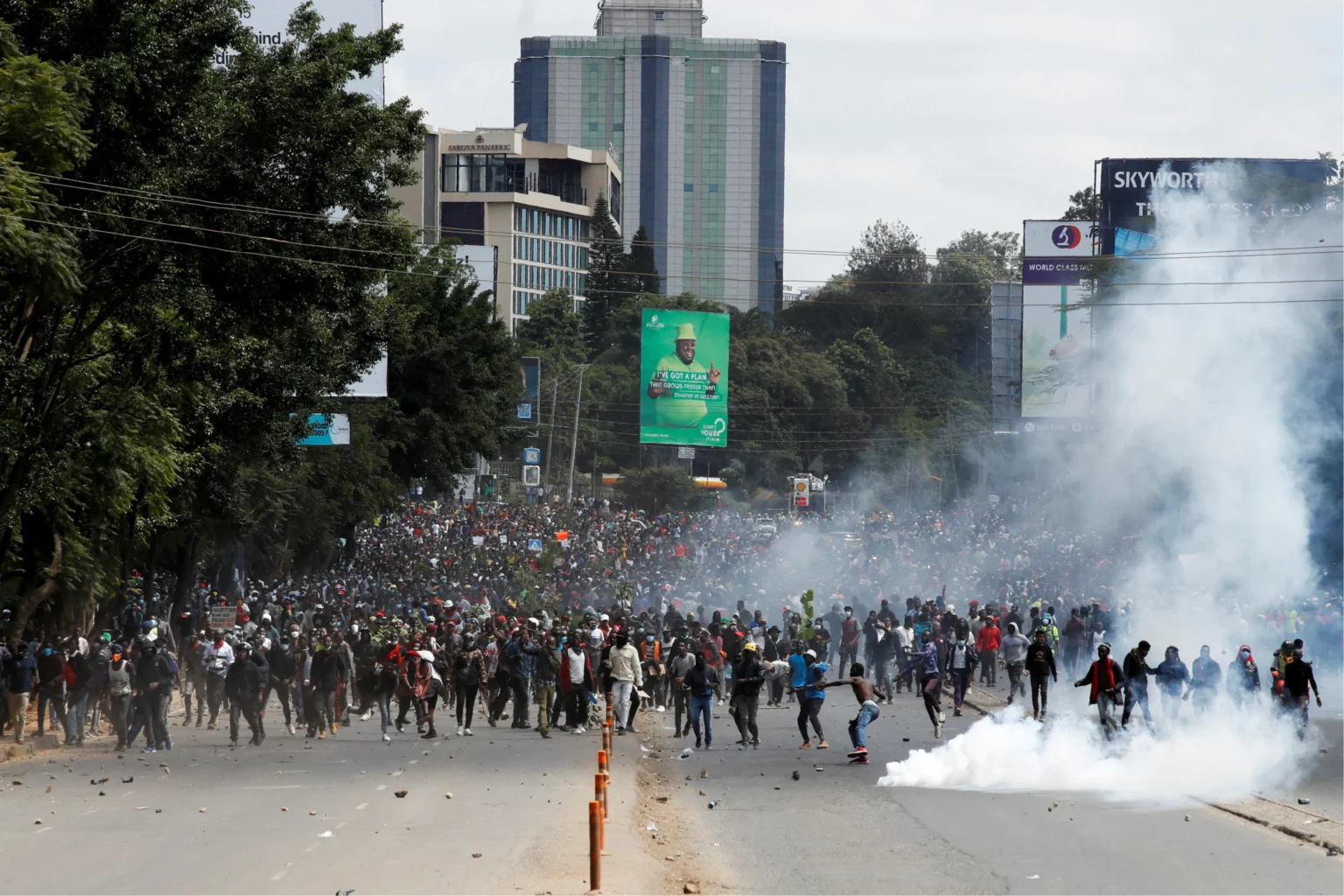
NAIROBI, Kenya — Police in Nairobi have banned planned demonstrations in the Central Business District (CBD), dealing a blow to opposition leaders and activists who had called for protests over rising fuel prices and the cost of living.
The directive was issued by Nairobi Regional Police Commander Issa Mohamud, who warned that any demonstrations deemed unlawful would not be permitted within the city centre.
The announcement comes ahead of protests scheduled for Tuesday, April 21, led by opposition figures including former Deputy President Rigathi Gachagua and Kalonzo Musyoka of the Wiper Democratic Movement.
Authorities said that while Kenya’s Constitution guarantees the right to peaceful assembly, organisers must comply with legal requirements, including notifying the police in advance.
“We are aware of planned protests next week regarding fuel prices, but no notification has been given. This makes the protests unlawful, and we will take appropriate action,” the police chief stated.
“On the conduct and facilitation of protests and public gatherings in Nairobi, we do not oppose picketing, but we facilitate lawful assemblies. This month, we have allowed 18 protests and processions. To protect against criminal infiltration of such events, organizers are required to give a 14-day notice. If notification is given less than the required period, the event will not be allowed.”
Officials indicated that no formal notification had been received from protest organisers, making the planned demonstrations non-compliant with the law.
Police urged organisers to engage with authorities to allow for coordination and security planning.
“Of late, there has been a lot of impunity. We have noted that some organizers either fail to give notification or, if they do, deviate from the agreed route or engage in actions that disrupt peace,” the police chief noted.
“This will not be allowed moving forward. We have also observed incidents where protestors turn violent or engage in theft; such actions will not be tolerated, and arrests will be made. Organizers of political rallies must comply with all requirements.”
On the issue of goons raining terror on Kenyans, the Nairobi police chief noted that they have intensified intelligence-led patrols to curb the crime space within the city.
“In Nairobi, we have arrested a total of 84 suspected gang members and goons. These include different types of criminal groups: 48 are linked to motorcycle gangs and goons, while 11 are land-based gangs, some of whom were found with weapons, including bows and arrows. We have also recovered 124 motorcycles, 48 of which are associated with these criminal groups,” he noted.
The planned protests were sparked by public anger over rising fuel costs and the broader cost-of-living crisis, which has seen increased pressure on household budgets across the country.
Many Kenyans say the rising cost of transport, food, and essential goods has become increasingly difficult to sustain.
Despite the police directive, some activists and members of the public have signalled their intention to proceed with the demonstrations, arguing that economic pressures justify public action.
Opposition leaders have accused the government of attempting to suppress dissent, maintaining that citizens have a constitutional right to express grievances.
Speaking at a press briefing in Nairobi on April 15, 2026, Gachagua called on President William Ruto to direct Moses Wetang’ula to convene a special parliamentary sitting within seven days to address the fuel crisis.
Also Read: Kenya cuts fuel VAT to 8% as Ruto signs urgent Tax Amendment Law
He also called for the abolition of the National Infrastructure Fund, recently approved by Parliament, suggesting that proceeds from government asset sales should instead be used to cushion Kenyans from rising fuel costs.
President Ruto has dismissed calls for mass protests, urging Kenyans to pursue what he described as more practical solutions to economic challenges.
Speaking at a public rally in Suneka, Kisii County, the Head of State questioned the effectiveness of demonstrations in addressing fuel price concerns.
The developments highlight growing political and economic tensions in Kenya, as the government faces increasing pressure to respond to rising living costs while balancing fiscal and policy considerations.
Analysts say the coming days could test the balance between constitutional freedoms and public order, particularly if protests proceed despite the police directive.