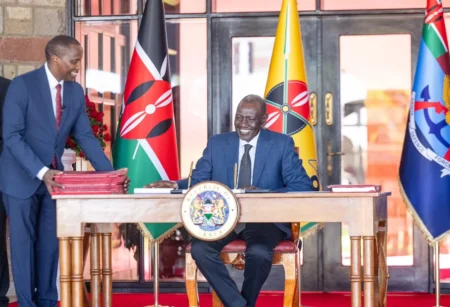




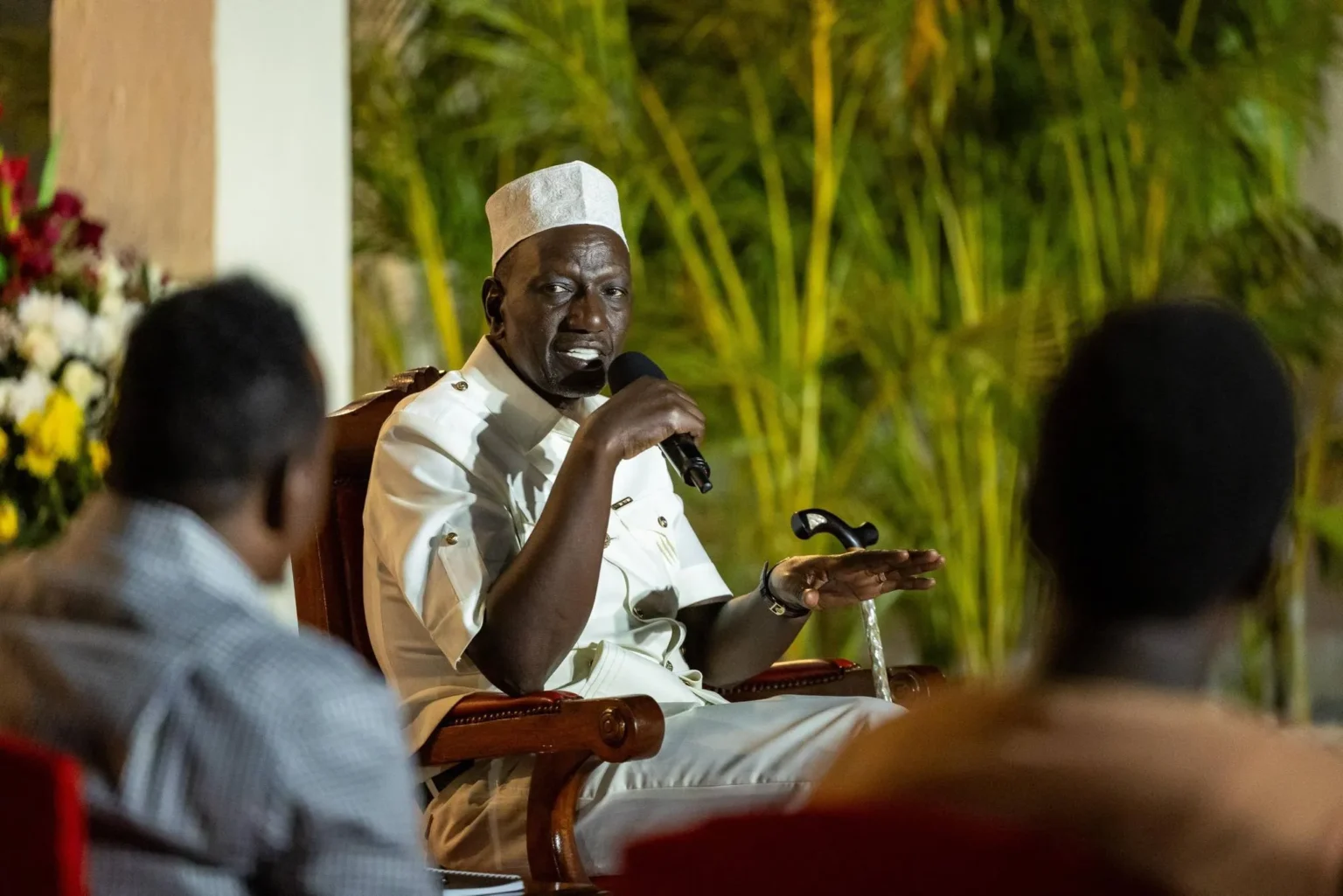
NANYUKI, Kenya — President William Ruto has defended his decision to allow the establishment of a U.S.-linked Ebola quarantine and emergency response facility at Laikipia Air Base in Nanyuki, saying the move is part of Kenya’s long-standing cooperation with Washington on global health and security issues.
Speaking on Monday evening, the President said the arrangement followed a request from U.S. President Donald Trump, which Kenya accepted as part of broader bilateral collaboration in managing high-risk disease outbreaks.
President Ruto said the decision was not unilateral, but based on a long-standing partnership between Kenya and the United States in health and emergency response programmes.
“Our partnership with the American government is a mutual agreement. When President Trump asked Kenya to support them by having a centre in Laikipia Air Base, I gave the okay because it was an agreement with friends who have walked with Kenya for 30, 40 years,” he said.
He added that the United States has historically supported Kenya’s health sector, particularly in programmes targeting infectious diseases.
“The American government has deployed huge resources in Kenya on HIV/AIDS, on Ebola and other diseases,” he said.
The President dismissed concerns over the facility, saying Kenya already has multiple emergency response and isolation centres across the country capable of handling infectious disease outbreaks.
He argued that the Laikipia facility was not an isolated or unusual arrangement but part of a wider national preparedness system.
“The facility is not different from all the others we have across Kenya. We have 23 other facilities set up in Kenyatta National Hospital, the Police Hospital in Nairobi, Moi Teaching and Referral Hospital in Eldoret, Kenyatta Hospital in Thika, Alupe Hospital in Busia and many others,” he said.
“These facilities are meant to ensure proper screening and that if there is any positive identification of Ebola, patients are immediately isolated and treated so there is no spread.”
Ruto said Kenya cannot ignore the risk of cross-border transmission from the Democratic Republic of Congo (DRC) and Uganda, where confirmed cases have been reported.
He stressed that preparedness measures were necessary to protect both citizens and Kenyans living in affected regions.
“Those questioning our preparedness, are they telling us that we should not be ready? The fact that we could end up with a case is not far-fetched,” he said.
“We have many Kenyans in DRC and if they were to become victims of Ebola, we would have a responsibility to take care of them.”
He urged political leaders to avoid what he termed as alarmist commentary on the issue, insisting the government remains confident in its public health readiness.
The remarks come amid rising tension in Nanyuki, where residents staged protests on Monday opposing the planned facility at Laikipia Air Base, citing health and security concerns.
Security officers blocked demonstrators from accessing the military installation as hundreds marched through town demanding the project be relocated.
At the same time, Health Cabinet Secretary Aden Duale defended the initiative, saying the facility will serve both Kenyan and American personnel operating in high-risk zones and is part of Kenya’s broader epidemic preparedness strategy.
The High Court has temporarily suspended the establishment of the facility, issuing conservatory orders that bar Kenya from proceeding with any arrangement involving the U.S. or other foreign agencies on Ebola quarantine or treatment operations.
The orders followed a petition filed by the Katiba Institute, which raised constitutional and public health concerns over the arrangement.
The court also prohibited the admission, transfer or facilitation of entry of individuals exposed to or infected with Ebola under the proposed framework, pending determination of the case.
According to health data cited by authorities, more than 1,000 cases have been recorded in the Democratic Republic of Congo since mid-May, with hundreds of deaths reported, underscoring continued regional risk.
Health officials say the outbreak remains concentrated in parts of eastern DRC, with cross-border surveillance intensified in neighbouring countries including Uganda and Kenya.
Also Read: Two killed in Nanyuki protests over US Ebola facility plan in Kenya
The Laikipia Air Base proposal has triggered a broader national debate on Kenya’s role in regional epidemic response, balancing international cooperation with domestic public concerns over safety, sovereignty and transparency.
Government officials maintain the facility is part of a preventive strategy, while critics argue more clarity is needed on the terms and scope of the arrangement.
As legal proceedings continue, the High Court orders remain in force, effectively freezing implementation of the project until the matter is resolved.