

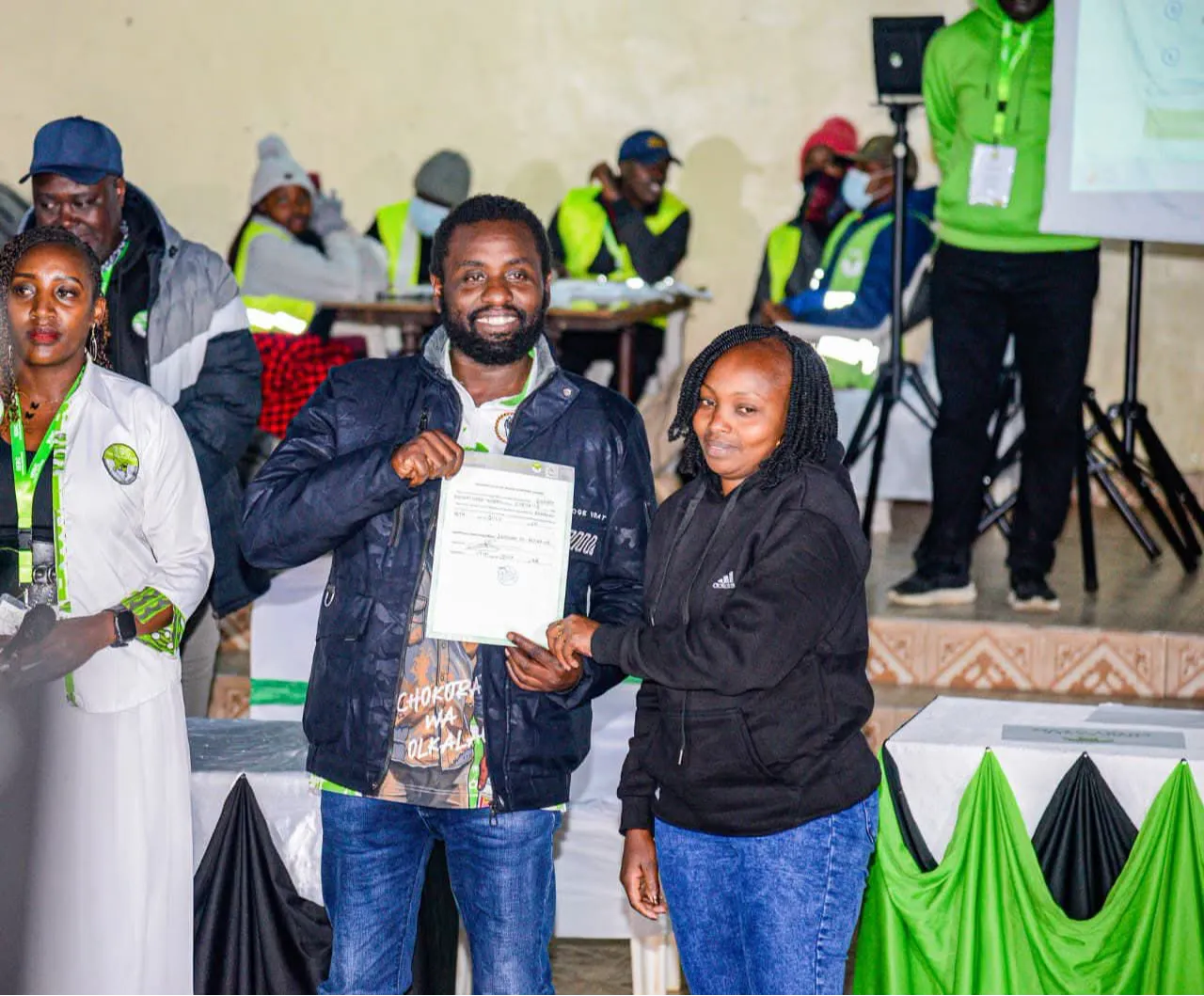
NYANDARUA, Kenya — On Thursday 16, July 2026 evening, as election officials at Ol Kalou Senior School worked through the final tally sheets under tight security, the mood outside began to shift.
For much of the campaign period, politicians from across the country had descended on the Nyandarua constituency armed with competing promises, rival narratives and vastly different visions for Kenya’s political future.
Government leaders had spoken of development projects and continuity. Opposition figures had framed the contest as a referendum on economic hardship and public dissatisfaction.
Now, as the numbers emerged, residents appeared to be delivering a verdict of their own.
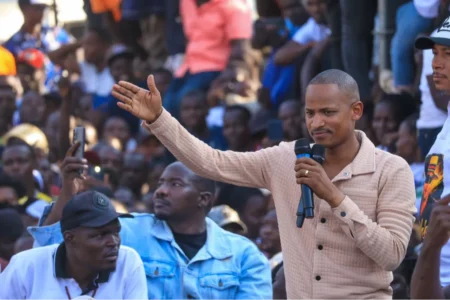
Supporters of Democracy for the Citizens Party (DCP) candidate Sammy Douglas Waweru Kamau gathered outside the tallying centre, breaking into songs and prayers as it became increasingly clear that the race was no longer competitive.
“Ametenda maajabu na siwezi kueleza,” they sang repeatedly.
Hours later, the Independent Electoral and Boundaries Commission (IEBC) confirmed what had already become apparent throughout the constituency.
Waweru had won by a margin few analysts predicted.
Official results showed the DCP candidate securing more than 35,440 votes against approximately 5,450 votes for United Democratic Alliance (UDA) candidate Samuel Muchina Nyagah.
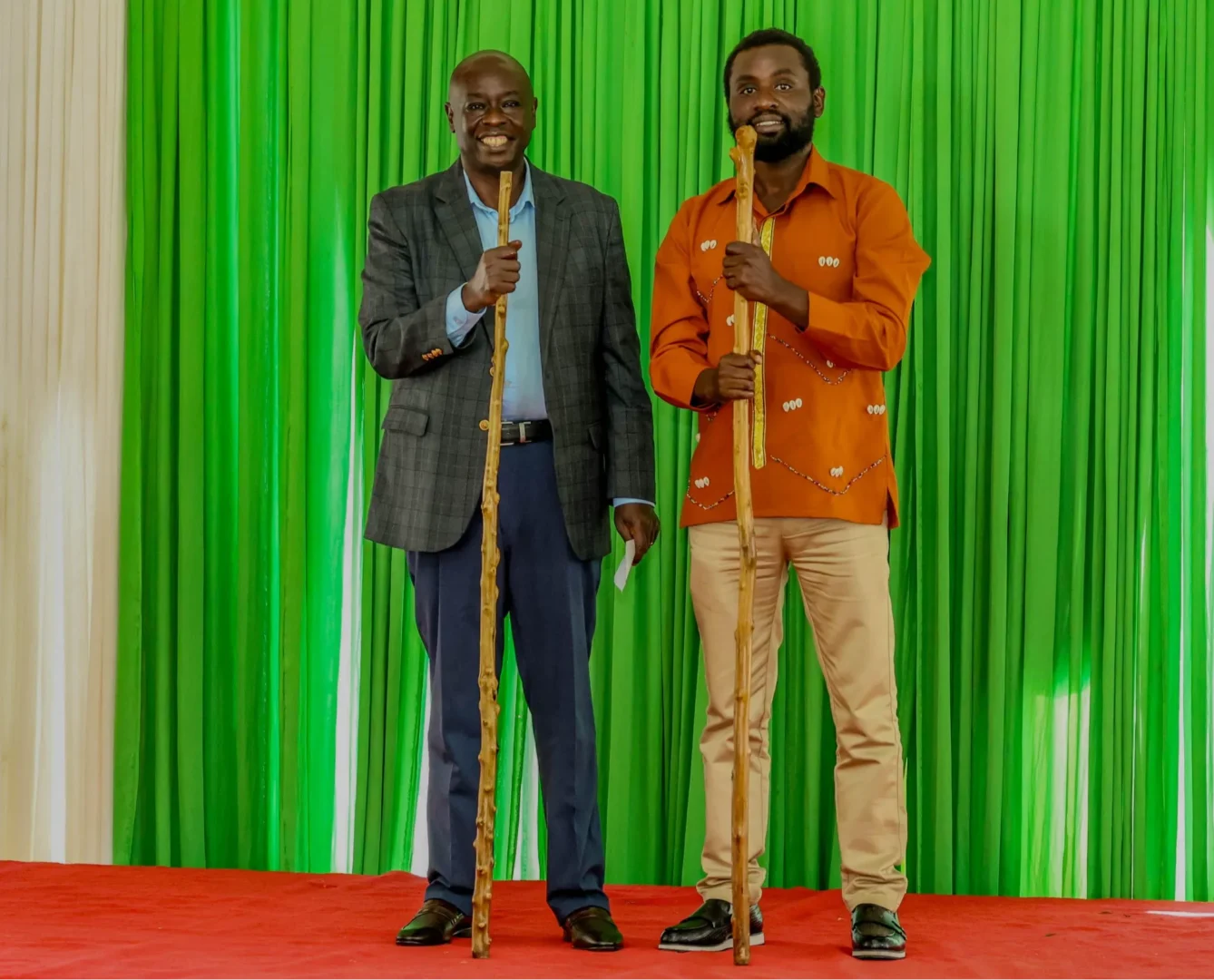
The remaining seven candidates collectively attracted only a fraction of the vote, underscoring how decisively the contest had crystallised into a battle between two political camps.
But beyond the numerical scale of the victory lies a more consequential question.
What exactly were voters in Ol Kalou voting for?
And what does the result reveal about Kenya’s political landscape as the country moves towards the 2027 General Election?
More than a constituency election
On paper, Ol Kalou was a parliamentary by-election.
In reality, it became something much bigger.
From the moment the campaign began, both the ruling Kenya Kwanza administration and the opposition treated the contest as a symbolic political battlefield whose significance extended far beyond Nyandarua County.
Senior government officials campaigned extensively for the UDA candidate.
Cabinet Secretaries, Principal Secretaries, governors and Members of Parliament traversed the constituency, highlighting government programmes and urging voters to support the ruling party’s candidate.
The campaign coincided with the distribution of mattresses, water tanks, gas cylinders and boats, which government leaders described as part of ongoing development initiatives.
Opposition leaders saw it differently.
To them, the by-election represented an opportunity to test public sentiment amid growing concerns over the cost of living, taxation, unemployment and economic pressures facing households across the country.
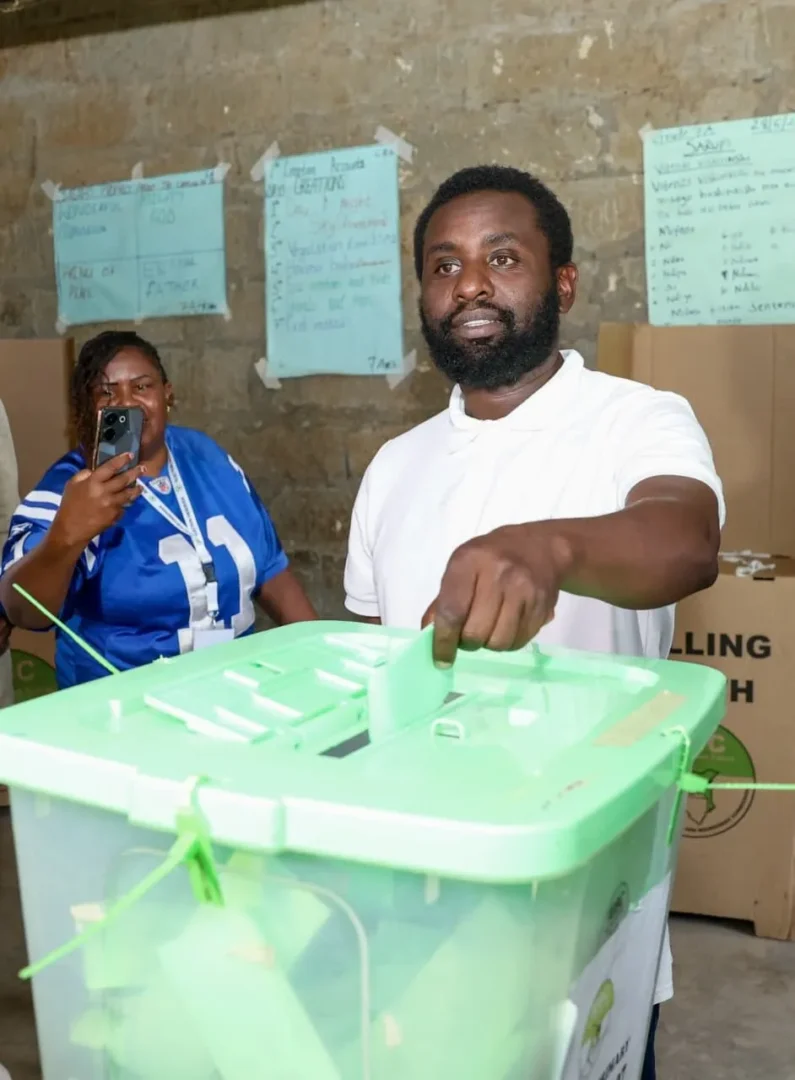
As a result, the race gradually evolved into a contest between two competing political messages.
One centred on government performance.
The other centred on public frustration.
By polling day, many observers believed the election had become a proxy battle over the broader political direction of the country.
The return of the Mt Kenya political question
For years, Mt Kenya has been among Kenya’s most influential political regions.
Its voting patterns have frequently shaped national outcomes, determining which coalitions gain momentum and which lose ground.
That reality helps explain why the Ol Kalou result is attracting national attention.
The constituency sits within a region that has experienced growing political realignments since the fallout between President William Ruto and former Deputy President Rigathi Gachagua.
Following his dramatic departure from the centre of government power, Gachagua has increasingly positioned himself as an alternative political voice within the region.
The Ol Kalou campaign became one of the clearest tests yet of whether that influence remains intact.
Rather than merely endorsing a candidate from a distance, Gachagua personally led rallies throughout the constituency alongside Nyandarua Senator John Methu, Woman Representative Wanjiku Muhia and other opposition leaders.
Their message consistently focused on economic grievances, rising living costs and calls for political change.
The scale of Waweru’s victory will inevitably strengthen perceptions that Gachagua continues to command significant political goodwill within sections of the Mt Kenya electorate.
Whether that support can be sustained until 2027 remains uncertain.
But the result undoubtedly provides him with an important political victory.
The economy behind the politics
While political personalities dominated campaign headlines, conversations among voters frequently returned to more immediate concerns.
Across Kenya, households continue to navigate rising food prices, fuel costs, housing expenses and broader economic uncertainty.
Political analyst Dr Joseph Mwangi says such conditions often transform local elections into platforms for expressing wider frustrations.
“When voters feel economic pressure in their daily lives, they sometimes use by-elections to send signals that extend beyond the immediate contest,” he says.
“People may be voting for a candidate, but they may also be expressing opinions about governance, affordability and their expectations of leadership.”
That dynamic appears particularly relevant in Ol Kalou.
Although development projects featured prominently in government campaigns, opposition leaders consistently framed the election around household economic realities.
The overwhelming margin suggests that message resonated strongly with a significant portion of the electorate.
Whether it reflects a temporary protest vote or a deeper political shift remains one of the key questions emerging from the election.
A campaign marked by tension
The significance attached to the race was also evident in the intensity of the campaign itself.
Allegations of voter bribery, violence, intimidation and destruction of campaign materials surfaced repeatedly throughout the contest.
The IEBC Electoral Code of Conduct Enforcement Committee summoned several politicians over alleged violations of campaign regulations, imposing fines and directing some leaders to recommit themselves to peaceful campaigns.
The election period also drew concern from media organisations after journalists covering campaign activities were reportedly attacked by suspected goons.
The incidents triggered condemnation from media stakeholders and human rights advocates, who warned against growing hostility towards journalists during political events.
By polling day, authorities appeared determined to prevent any escalation.
More than 1,000 police officers drawn from the General Service Unit (GSU), Anti-Stock Theft Unit (ASTU), Directorate of Criminal Investigations (DCI) and regular police were deployed across the constituency.
The heavy security presence underscored how seriously the state viewed the contest.
DCP’s first major breakthrough
For Democracy for the Citizens Party, the significance of the result extends beyond the constituency itself.
The victory delivers the party’s first parliamentary seat since its formation, providing it with both legislative representation and increased political visibility.
New political parties often struggle to establish credibility within Kenya’s highly competitive political environment.
Winning elections is ultimately what transforms a political movement from an idea into a serious electoral force.
By securing such a commanding victory, DCP has achieved precisely that.
Political strategist Peter Kamau argues that the symbolic value may prove as important as the parliamentary seat itself.
“Momentum matters in politics,” he says.
“When voters see a party winning, it changes perceptions about viability. People become more willing to associate with it, support it and potentially vote for it in future elections.”
The victory therefore offers DCP something every emerging political party seeks: legitimacy.
What the result means for UDA
For UDA, the outcome presents a more uncomfortable challenge.
The ruling party invested considerable political capital in the race.
Senior leaders campaigned extensively, government achievements were heavily promoted and significant organisational resources were deployed throughout the constituency.
Despite those efforts, the party suffered a decisive defeat.
One by-election rarely determines the outcome of a future general election.
Also Read: Can William Ruto win in 2027 if Mt Kenya voters abandon him?
Kenyan politics remains fluid, alliances evolve rapidly and voter priorities can change significantly over time.
Nevertheless, losses of this magnitude inevitably generate political reflection.
Questions are likely to emerge about campaign strategy, voter sentiment and the effectiveness of current messaging within parts of the Mt Kenya region.
Perhaps most importantly, the result may intensify debate about whether the political loyalties that helped deliver victory in 2022 are beginning to shift.
The verdict beyond Ol Kalou
Every by-election tells a local story.
Some, however, reveal something larger.
The Ol Kalou contest appears destined to fall into the second category.
The victory was not merely about one parliamentary seat.
It became a contest over political influence, economic narratives, regional loyalties and the direction of Kenya’s opposition politics.
For DCP, the result represents a breakthrough.
For Rigathi Gachagua, it provides evidence that his political voice still carries weight in a region central to Kenya’s electoral arithmetic.
For UDA, it serves as a reminder that political dominance is never permanent.
And for the rest of the country, it offers an early glimpse into the arguments, alliances and battles that may define the journey to 2027.
The voters of Ol Kalou were choosing a Member of Parliament.
But their verdict is likely to echo far beyond the boundaries of the constituency.
Official Ol Kalou by-election results
| Position | Candidate | Party | Votes |
|---|---|---|---|
| 1 | Sammy Douglas Kamau Waweru | DCP | 35,440 |
| 2 | Samuel Muchina Nyagah | UDA | 5,450 |
| 3 | Wilson Mwaniki Kigwa | Jubilee | 198 |
| 4 | Stephen Wanyoike Waithaka | NLP | 103 |
| 5 | Timothy Kamau Kariuki | PM | 51 |
| 6 | Edwin Kariiri Muchiri | PNU | 28 |
| 7 | Abdifatah Hussein Abdullahi | FPK | 19 |
| 8 | Edward Mathenge Mwaniki | KMM | 16 |
| 9 | Rachael Wangui Njoroge | PDP | 11 |
Election statistics
| Item | Figure |
|---|---|
| Registered Voters | 73,480 |
| Total Votes Cast | 41,656 |
| Voter Turnout | 57% |
Key takeaway
| Metric | Figure |
|---|---|
| Winner | Sammy Douglas Kamau Waweru (DCP) |
| Winning Votes | 35,440 |
| Runner-up | Samuel Muchina Nyagah (UDA) |
| Runner-up Votes | 5,450 |
| Winning Margin | 29,990 votes |
| Vote Ratio (Winner vs Runner-up) | 6.5:1 |
Source: Independent Electoral and Boundaries Commission (IEBC) official results for the Ol Kalou parliamentary by-election.