

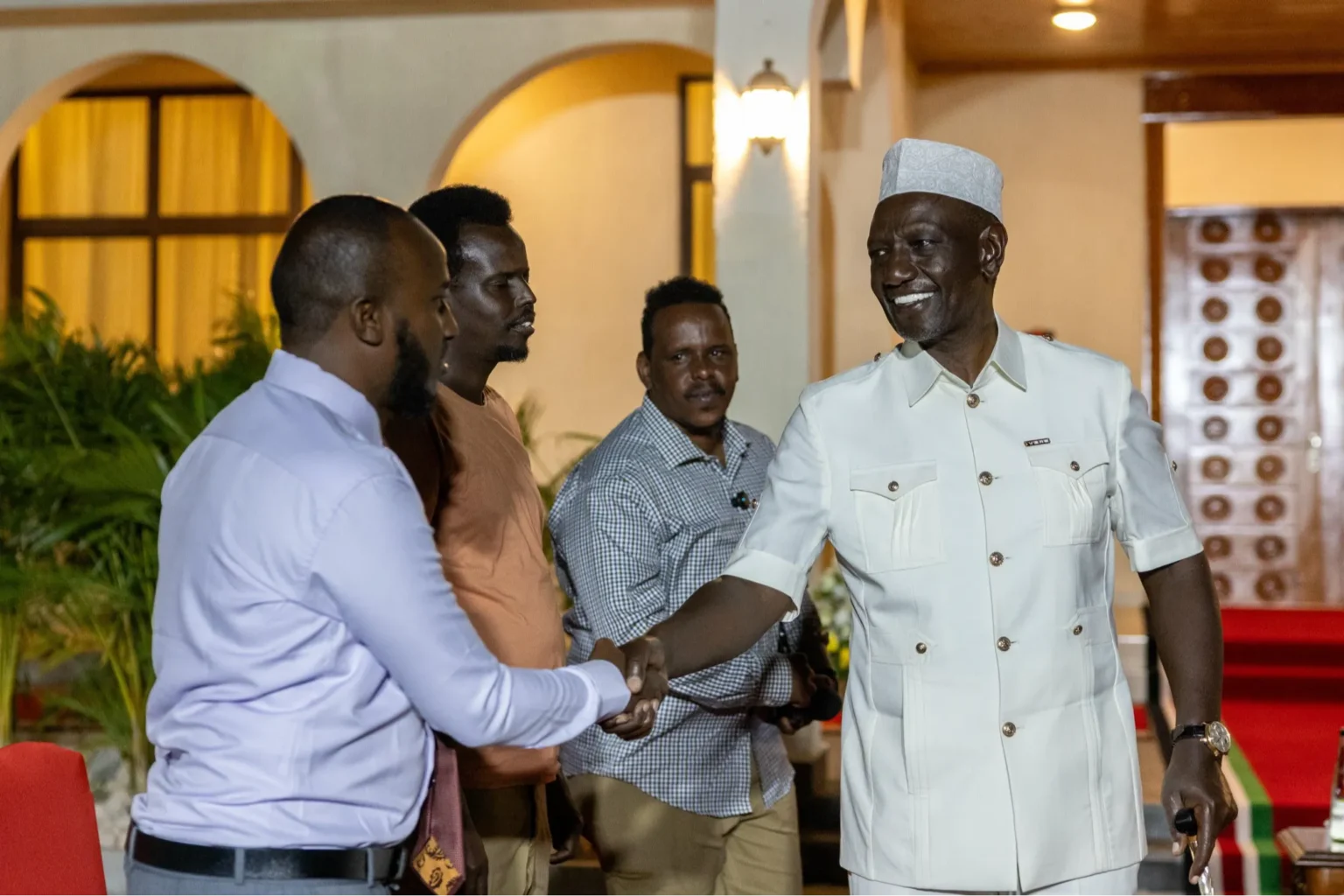
WAJIR, Kenya — President William Ruto has dismissed concerns over the growing popularity of the “Ruto Must Go” and “One Term” slogans, saying the chants do not trouble him and are a normal part of democratic expression.
Speaking during a media roundtable in Wajir on Monday, the President said Kenyans have a constitutional right to express their views and political opinions, even when those views are critical of his administration.
“Must go, must come, must whatever, that is the beauty of democracy, you can say whatever you want. You can chant whatever you want, one term, Kasongo and all the others, but they do not bother me one bit,” Ruto said.
The remarks come amid continued political debate over the anti-government slogans that gained prominence during the 2024 anti-Finance Bill protests before evolving into a broader expression of dissatisfaction among sections of the public.
Performance, not slogans, will decide elections
While acknowledging the growing visibility of the chants at political gatherings and public events, Ruto argued that Kenya’s future leadership would ultimately be determined by voters evaluating leaders based on their performance, vision and ability to deliver results.
According to the President, political slogans alone cannot substitute for governance, policy implementation or tangible development outcomes.
“The people of Kenya will assess every leader on account of their track record, of their vision for the nation and of their plan for the future of Kenya,” he said.
Ruto maintained that when the country heads to the next election, voters will focus on issues that directly affect their lives, including jobs, education, healthcare, security and economic opportunities.
“Kenyans are not going to judge anybody on account of how much you shout one slogan or the other,” he said.
President highlights economic reforms
The Head of State used the platform to defend his administration’s record, particularly in managing the economy.
Ruto said his government had made significant progress in stabilising key economic indicators, including inflation, exchange rates and interest rates, which have been among the most closely watched issues during his tenure.
“Today I can face the people of Kenya and tell them, when I told you about the economy, I have sorted out inflation, I have dealt with exchange rates, interest rates, and today we have saved more money than ever,” he said.
The President argued that economic reforms undertaken by his administration had laid the foundation for long-term growth despite criticism from opponents.
Agriculture reforms and farmer earnings
Ruto also pointed to reforms in the agricultural sector, describing them as among the government’s major achievements.
He cited reduced fertiliser prices, interventions in the sugar sector and efforts to eliminate cartels in agricultural value chains as measures that have improved returns for farmers.
“Today farmers are earning more money in sugar and coffee. Our meat export has gone up by 80 per cent, so I have transformed agriculture, and I am ready for the exam on what I committed and what I have done,” he said.
Agriculture remains one of the key pillars of Kenya’s economy and has been central to the President’s economic agenda since taking office.
Defence of SHA and healthcare reforms
On healthcare, the President defended the transition from the defunct National Health Insurance Fund (NHIF) to the Social Health Authority (SHA), a reform that has attracted both support and criticism since its implementation.
Ruto said the new system was expanding healthcare access and improving funding for health facilities across the country.
“Yesterday, just yesterday, SHA disbursed 12.7 billion Kenya shillings to all our facilities in Kenya,” he said.
The President argued that universal healthcare remains a critical component of his administration’s development agenda.
Housing and education among key achievements
The President also highlighted progress under the Affordable Housing Programme, describing it as one of the administration’s flagship projects.
According to Ruto, ongoing housing developments are already transforming urban centres while creating employment opportunities for thousands of young people.
“My housing plan was not talk. It wasn’t just a promise. Today, I can face the people of Kenya and show them what I have done,” he said.
In the education sector, Ruto cited the recruitment of teachers, implementation of the Competency-Based Curriculum (CBC) and reforms in university financing as evidence of his government’s commitment to improving learning outcomes.
“Today, we have hired 100,000 teachers, the highest in the history of the Republic of Kenya,” he said.
‘Judge me by my record’
Despite continued criticism from opponents and the persistence of anti-government slogans, the President said he remains focused on delivering on his promises and is prepared to have his performance assessed by voters.
He challenged political rivals to present their own achievements and policy proposals instead of relying on slogans.
Also Read: ‘Ruto must go’ slogans lead nowhere, President tells opposition
“Those people, I will challenge them to come and compete with me on my track record, my commitment to the people of Kenya, and the plan I have for this nation,” he said.
Ruto insisted that meaningful national transformation requires concrete plans, implementation and measurable results rather than political rhetoric.
“You don’t transform a nation by, you know, must go, one term, and all the other sloganeering,” he said.
As political activity begins to intensify ahead of future electoral contests, the President’s remarks signal a strategy centred on defending his administration’s record while framing the political debate around performance and service delivery rather than protest slogans.