

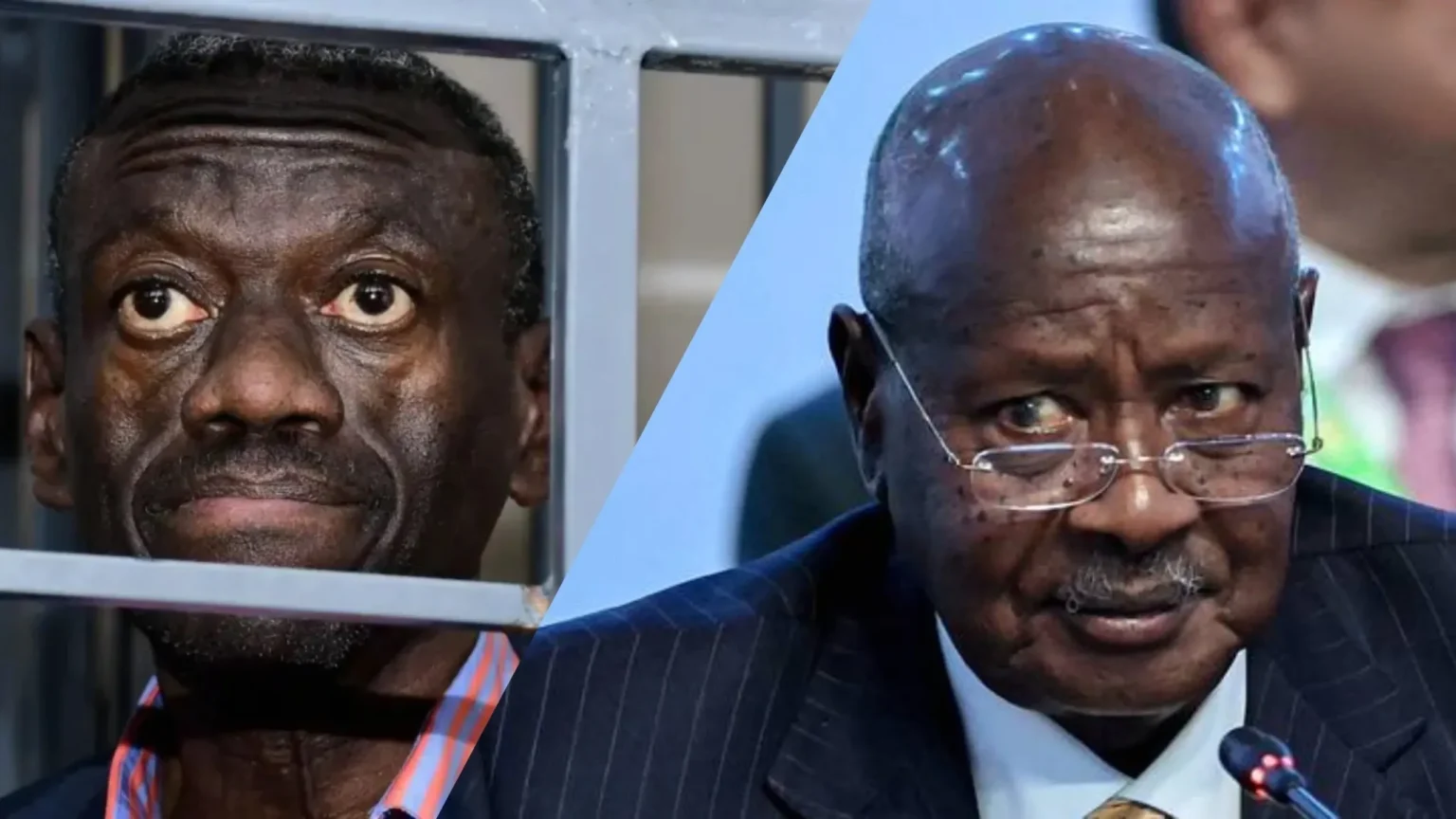
KAMPALA, Uganda — President Yoweri Museveni intervened to stop a planned prayer mass for detained opposition figure Dr. Kizza Besigye at Lubaga Cathedral, after intelligence agencies warned the gathering could spark nationwide church-based political mobilisation, according to senior sources within the Catholic Church and State House.
The service, organised by Dr. Besigye’s family, had been scheduled for Monday but was abruptly cancelled.
Speaking outside the cathedral, Winnie Byanyima said she was informed by Paul Ssemogerere that he had received a direct call from the president requesting the cancellation.
“I was called here yesterday by the Archbishop His Grace Paul Ssemogerere, and he told me that he had received a call from President Museveni asking him to cancel the mass,” Byanyima said.
She added that the Archbishop explained the service was intended as a Lenten family prayer in keeping with Catholic tradition.
“He pleaded with him not to cancel the mass, and explained to him that we were married here, myself and my husband, and we were prayed for here. I came to ask for prayers for him during Lent — that that is the tradition.”
Security calculations behind the decision
Multiple senior sources familiar with the exchange said the president’s objection was driven primarily by security concerns rather than theological considerations.
Intelligence briefings reportedly suggested that if the Lubaga mass went ahead, it could become a template for synchronised prayer gatherings across dioceses nationwide, potentially turning churches into platforms for political mobilisation at a sensitive moment following violent election-related tensions.
“The President was briefed that once Lubaga happened, it would not stop there,” one State House source said.
“The concern was that similar services would spread across the country, and security would struggle to contain them because they would be organised through churches.”
Byanyima said Museveni asked the Archbishop to postpone the service and investigate what he believed were its “true intentions,” suspecting political motives.
“So we are here, unable to have the mass that we wanted because of the order of our president,” she told journalists.
Longstanding church–state friction
The episode highlights enduring tensions between the government and sections of the Catholic Church.
Museveni has previously voiced unease over what officials describe as clerical sympathy toward opposition politics, particularly during the 2021 elections when parts of the church were perceived by authorities as supportive of Bobi Wine, leader of the National Unity Platform (NUP).
Relations deteriorated further in December 2025 following the arrest of Deusdedit Ssekabira, a priest from Masaka Diocese accused by the military of involvement in “violent subversive activities” and money laundering.
Authorities alleged he concealed substantial funds and worked with opposition actors, claims church lawyers criticised as politically motivated.
The priest was later granted bail by the High Court on February 10, 2026.
Government insiders say that case deepened security concerns that religious platforms could be used for political coordination.
Church officials, however, argue that religious services are protected expressions of faith and should not be conflated with partisan activity.
Besigye’s detention and political stakes
Dr. Besigye, a former personal doctor to Museveni and one of his most persistent political challengers, has been in detention since November 2024 facing treason-related charges that carry the death penalty upon conviction.
He denies the accusations, describing the case as politically motivated.
Also Read: The betrayal of a comrade: Why Museveni must end the ‘endless injustice’ against Besigye
Analysts say the halted mass illustrates how religious spaces in Uganda increasingly intersect with political contestation, particularly when opposition figures become focal points for public sympathy.
Security agencies appear wary that symbolic gatherings, including prayer services, could evolve into broader demonstrations.
The decision also raises wider questions about the balance between national security considerations and the constitutional protection of religious expression, an issue likely to remain contentious as Uganda navigates a tense political climate.