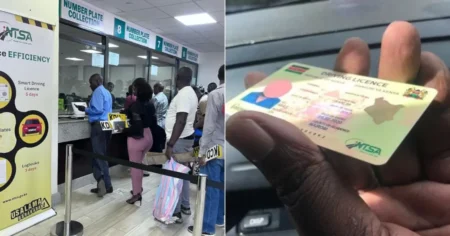




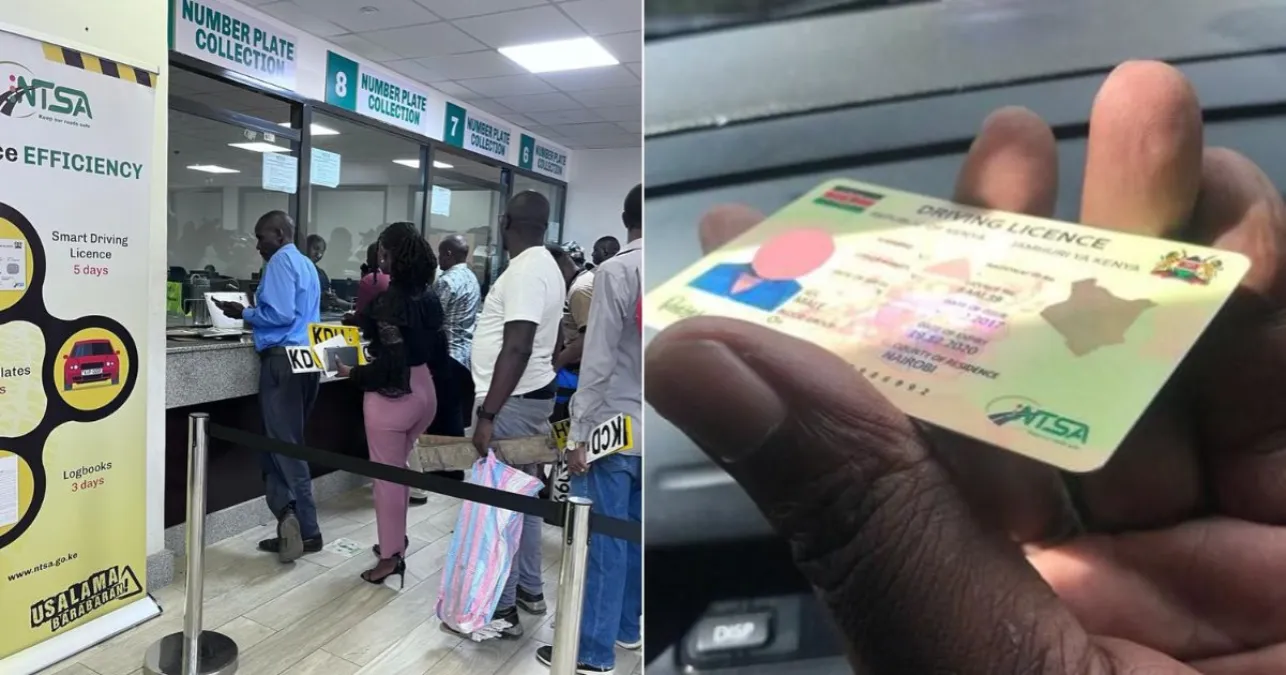
NAIROBI, Kenya — Kenya’s National Transport and Safety Authority (NTSA) has entered a public-private partnership aimed at modernising the country’s smart driving licence system, in a move expected to reduce production timelines and expand digital road safety enforcement.
In a notice issued on Tuesday, February 24, the authority said the partnership would enable smart driving licences (Smart DLs) to be produced within 48 hours, a significant improvement from previous delays that have slowed driver enrolment nationwide.
The agreement brings together NTSA and financial service providers including Kenya Commercial Bank (KCB) and Pesa Point, which will facilitate the acquisition of three specialised production machines to accelerate issuance.
Under the new framework, smart licences will be issued as five-layer polycarbonate smart cards. Drivers will pay KSh3,000 for issuance, duplication or replacement.
NTSA said the redesigned licences will go beyond identity documentation by integrating a comprehensive driver record covering driving history and lifecycle data.
Drivers will also gain access to a mobile driving wallet embedded within the licence ecosystem, allowing users to deposit funds for fines, licence renewals and related payments.
“The PPP will incorporate the deployment, implementation, and operationalisation of the instant fine infrastructure, including mobile driving licence wallet, driver merit and demerit point system, driver history, driver life cycle management and general information,” the Safety Authority explained.
Analysts view the system as part of a broader shift toward digital enforcement, where driver behaviour is tracked through merit and demerit points, a model used in several advanced transport systems globally.
To address slow uptake, NTSA plans to establish 102 enrolment centres and deploy 392 enrolment kits across the country.
“There is low driver enrolment due to inadequate enrolment kits and centres. Out of the estimated 5 million drivers, only 1,3 million have acquired smart driving licenses,” the notice read in part.
Expanding enrolment infrastructure is expected to be central to achieving universal adoption of smart licences, particularly in rural and underserved areas.
The initiative also includes the installation of 1,000 speed enforcement cameras linked to a National Control Command Centre, where traffic violations will be processed and fines issued digitally.
Also Read: NTSA faces criticism over delays in issuing smart licences and number plates
Officials say this integrated enforcement framework is designed to strengthen compliance and reduce human discretion in traffic policing, a long-standing concern among motorists and governance experts.
The PPP is valued at approximately Sh42 billion and is structured to support the production of five million smart licences every three years over a 21-year period.
NTSA estimates that road crashes cost Kenya about Sh450 billion annually in medical care and related losses, roughly five percent of the country’s gross domestic product, highlighting the economic urgency behind technology-driven road safety reforms.
Policy experts say the success of the programme will depend on affordability, data protection safeguards and the reliability of enforcement systems. Questions around privacy, revenue sharing within the PPP model and implementation capacity are also likely to shape public debate as rollout progresses.