


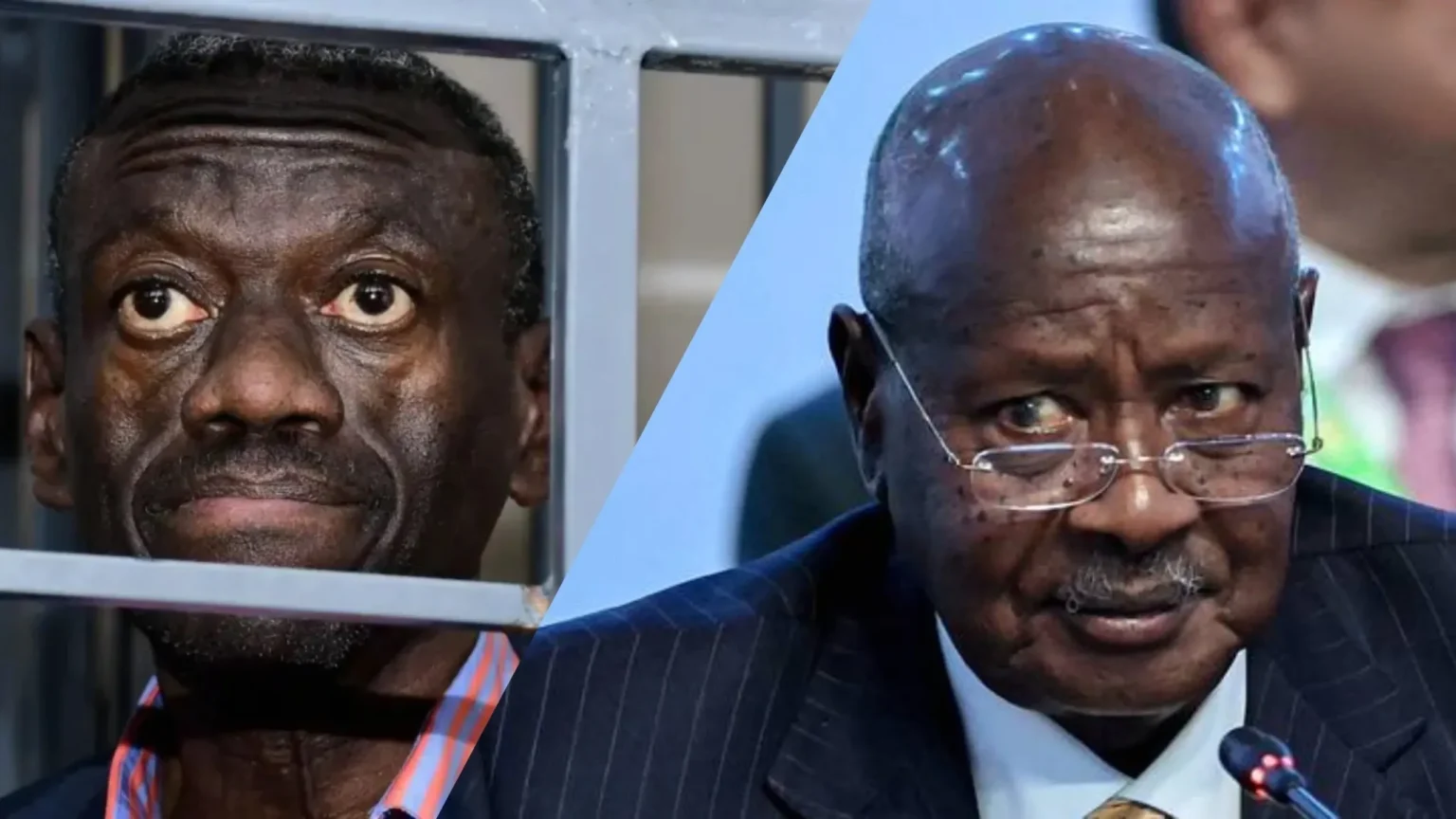
KAMPALA, Uganda — There is a tragic irony in the history of revolutions: they often end up devouring their own children. But in Uganda, the revolution is not just eating its children; it is cannibalizing the very doctor who kept the revolution alive.
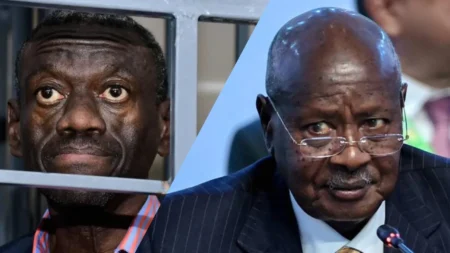
The abduction and detention of Dr. Kizza Besigye, from Nairobi, Kenya on 16 November 2024, trafficked across borders, and arraigned before a military court in Makindye, has persisted for over a year and is not merely a legal procedural anomaly. It marks the nadir of President Yoweri Kaguta Museveni’s 39-year rule.
It represents the final shedding of the “fundamental change” promised in 1986, replaced by a brazen display of raw, unadulterated power and selective enforcement of law.
It is high time President Museveni ends this “endless injustice.” Not just for the sake of human rights, but for the sake of history, decency, and the memory of the Luweero Triangle struggles that shaped Uganda’s modern identity.
The doctor and the patient: A debt unpaid
To understand the gravity of Dr. Kizza Besigye’s persecution, one must look back to the dense bush of the early 1980s. Dr. Besigye was not just a soldier; he was Museveni’s personal physician.
When the guerrilla leader fell gravely ill, it was Besigye’s hands that administered treatment. When the revolution was fragile, Besigye was the custodian of the commander’s life, ensuring the survival of the very movement Museveni now commands.
For a leader who prides himself on African values and loyalty, the relentless hounding of the man who ensured he lived to see the presidency is a profound moral failing. That the hands which once healed the President are now routinely placed in handcuffs on the President’s orders is a stain that no infrastructure development or GDP growth can wash away.
Besigye’s crime is not treason; his crime is consistency. He reminds Museveni of the ideals they once shared—ideals that the President abandoned somewhere between the enactment of term limits and their subsequent removal.
The constitution of the gun
Museveni’s modus operandi has crystallized into a single, undeniable strategy: the militarization of civilian politics.
The arraignment of Dr. Besigye—a civilian—in a military court is the ultimate symbol of this strategy.
It is a judicial mockery designed to bypass the safeguards of the civil courts, which have occasionally shown a spine against state excess. By subjecting his political opponents to martial law, Museveni is effectively declaring that opposition is not a democratic right, but an act of war.
This reliance on the gun has turned the Uganda People’s Defence Force (UPDF) from a people’s army into a regime protection unit.
The military, which should be the shield of the nation, has become the hammer used to crush political dissent, surveil activists, and intimidate opposition communities across the country.
The rise of the son and the death of meritocracy
Perhaps the most explosive element of the current political dispensation is the blatant dynastic ambition playing out in broad daylight.
While historical generals—men of valor who stood in the trenches—are sidelined, silenced, or forced into retirement, President Museveni has engineered the meteoric rise of his son, Gen. Muhoozi Kainerugaba.
Now sitting as the Chief of Defence Forces (CDF), Gen. Muhoozi’s command is the clearest indicator that the “Republic” of Uganda is operating like a monarchy in all but name.
Other generals, who possess decades of strategic experience and discipline, must now salute the “First Son,” whose primary qualification appears to be his DNA and familial loyalty.
This promotion sends a chilling message to the rank and file: Meritocracy is dead. Loyalty to the family supersedes loyalty to the state. Museveni controls the board, and his son is the queen piece, positioned to checkmate any internal dissent before the old king finally leaves the table.
The illusion of the ballot
The regime argues that it has legitimacy because elections are held every five years. But to call what happens in Uganda a “democratic election” is to insult the intelligence of the electorate.
Elections under Museveni have become a ritualistic exercise in gaslighting. The playing field is not just uneven; it is mined.
The opposition is denied access to media, their rallies are tear-gassed, their funding is choked, and their supporters are abducted by “drones” (unmarked vans).
When the state controls the Electoral Commission (EC), the police, the military, and the treasury, the ballot paper becomes a mere suggestion, while the gun remains the final arbiter.
Dr. Kizza Besigye has reportedly won the moral vote for two decades, but the military vote—commanded by the Commander-in-Chief—has always declared the winner.
The verdict
Dr. Kizza Besigye, and hundreds of young supporters of the National Unity Platform (NUP) and other political detainees rotting in Kitalya and Luzira prisons, are hostages of a regime fearful of its own shadow.
President Museveni, now in the twilight of his years, has a choice. He can continue to rule by the iron fist, detaining his former doctor and paving the way for his son, cementing a legacy of tyranny. Or, he can end this endless injustice, free political prisoners, and allow the country to breathe.
The continued detention of Besigye proves one thing: Museveni does not fear Besigye the man; he fears Besigye the mirror. When he looks at the Doctor, he sees the reflection of the freedom fighter he used to be, and the dictator he has become.
Free Besigye. Free Uganda!