


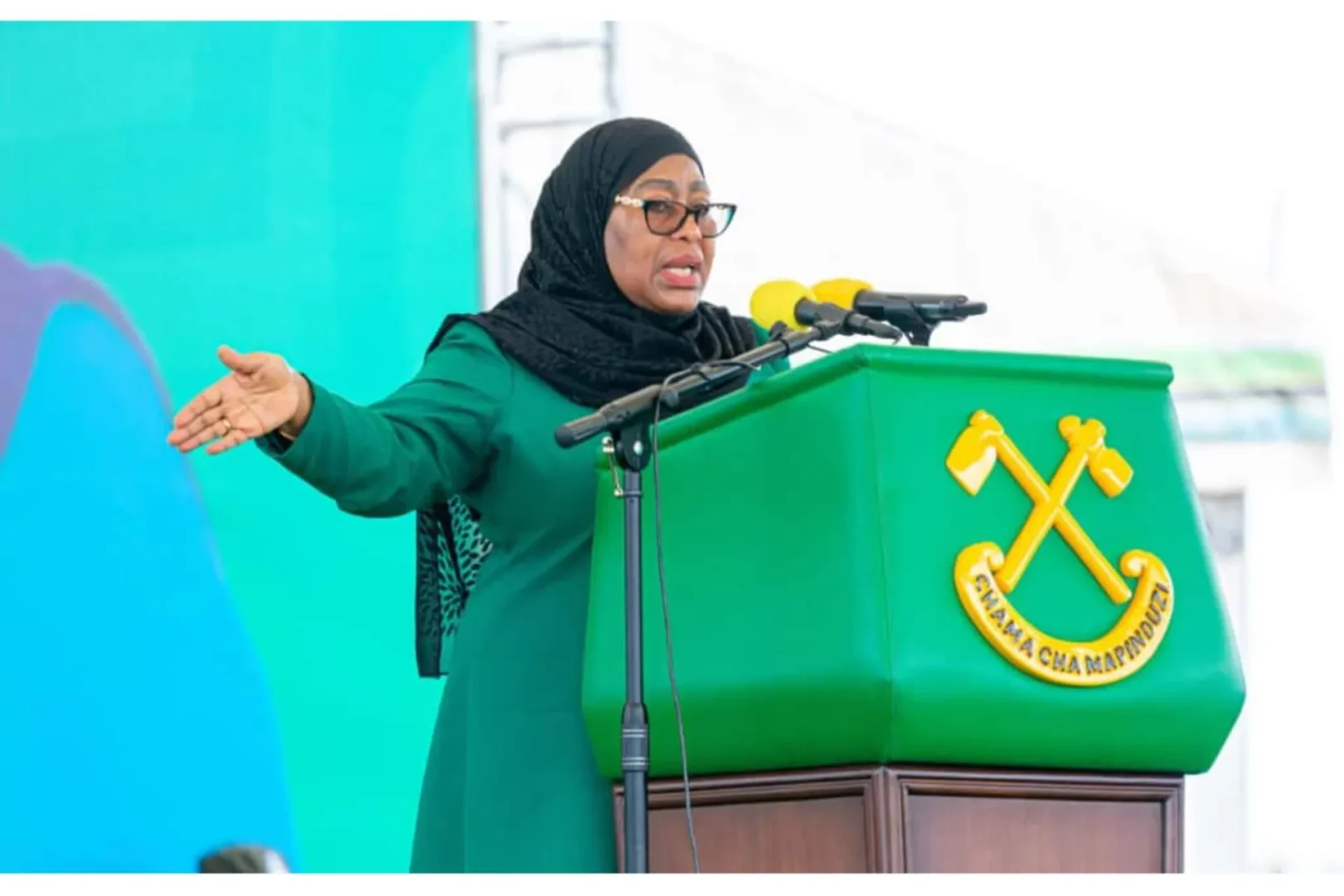
DODOMA, Tanzania —President Samia Suluhu Hassan has been sworn in for a second term under tight security in the capital, Dodoma, following a controversial election that has been marred by violent protests and outright rejection from the opposition.
The inauguration ceremony took place at a military parade ground, marking a departure from previous years when it was held in a public stadium. While the event was closed to the general public, it was broadcast live by the state-run Tanzania Broadcasting Corporation (TBC).
President Hassan was declared the winner on Saturday with 98% of the vote by the electoral commission.
Her path to victory faced minimal electoral resistance, as key rival candidates were either imprisoned or barred from running.
Wearing a red headscarf and dark glasses, President Samia took her oath of office in an event that featured the Presidents of Somalia, Zambia, Mozambique, and Burundi, among other high-profile guests.
In her inaugural speech, President Samia extended her gratitude to the electoral body, thanking the commission for running the elections with “unquestionable efficiency.”
However, she immediately addressed the violence that has plagued the nation since the October 29 vote, expressing sadness over the civil unrest that had resulted in “loss of lives and destruction of public property,” and describing the events as a blot on Tanzania’s image.
Addressing the claims of arrests made during the unrest, she further hinted at external interference in the protests. She stated that “it was not surprising” that some of those detained were not Tanzanians, adding that security agencies were actively investigating the matter.
Her remarks underscore the government’s official position, which attributes much of the post-election chaos to external influence and foreign actors.
Escalating violence and disputed casualty figures
The election’s aftermath has triggered major international concern and civil unrest. While the government has imposed a nationwide internet shutdown since election day, making independent information difficult to verify, reports of deaths and injuries are widespread.
The main opposition party, CHADEMA—which was disqualified from participating—rejected the results, stating they had “no basis in reality as the truth is that no genuine election took place in Tanzania.” The party has called for a fresh election.
Opposition groups claim that the clashes with security forces following the vote have resulted in hundreds of deaths. CHADEMA told Vivid Voice News that it had recorded “no less than 800” deaths by Saturday.
Separately, a diplomatic source in Tanzania told the BBC there was credible evidence that at least 500 people had died.
In contrast, the UN human rights office stated earlier that it had received credible reports of at least 10 deaths in three cities.
In her victory speech, President Hassan defended the poll as “free and democratic” and described the protesters as “unpatriotic.”
Blame and regional tensions
As the unrest continues to impact daily life—with food, fuel, and other essential prices doubling or tripling, and schools, colleges, and public transport halted—authorities have sought to blame external elements.
Police spokesman David Misime on Sunday blamed the violent demonstrations and vandalism on individuals operating motorcycles (boda bodas) and foreign nationals. He claimed there were individuals who had “entered the country illegally with the intention of causing chaos” in several provinces near the borders with Kenya, Uganda, Zambia, and Malawi.
Also Read: Ugandan Gen David Sejusa calls on Tanzanian army to take over amid post-election violence
Misime has urged Tanzanians to report “any foreigner who is unknown or whose activities in Tanzania are unclear” to the authorities. These remarks come amid reports that several Kenyan nationals have gone missing in Tanzania, with one activist claiming to have received reports of a Kenyan teacher being killed and others unaccounted for.
The situation has drawn strong condemnation from the international community:
UN Secretary-General António Guterres expressed that he was “deeply concerned” about the situation “including reports of deaths and injuries.”
Pope Leo XIV called for prayers, noting that post-election violence had erupted “with numerous victims.”
EU foreign affairs chief Kaja Kallas urged Tanzanian authorities to exercise restraint to preserve lives.
