

KIAMBU, Kenya — President William Ruto has intensified his political battle with former Deputy President Rigathi Gachagua, challenging his claimed influence over Mt Kenya voters and insisting that residents will determine their political choices without seeking permission from regional political kingpins.
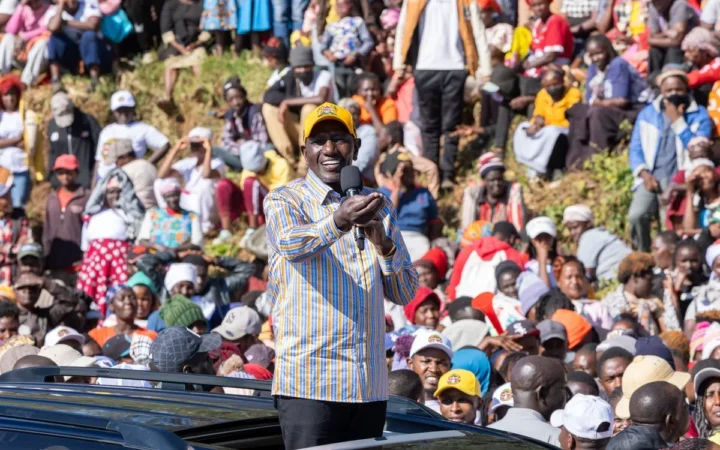
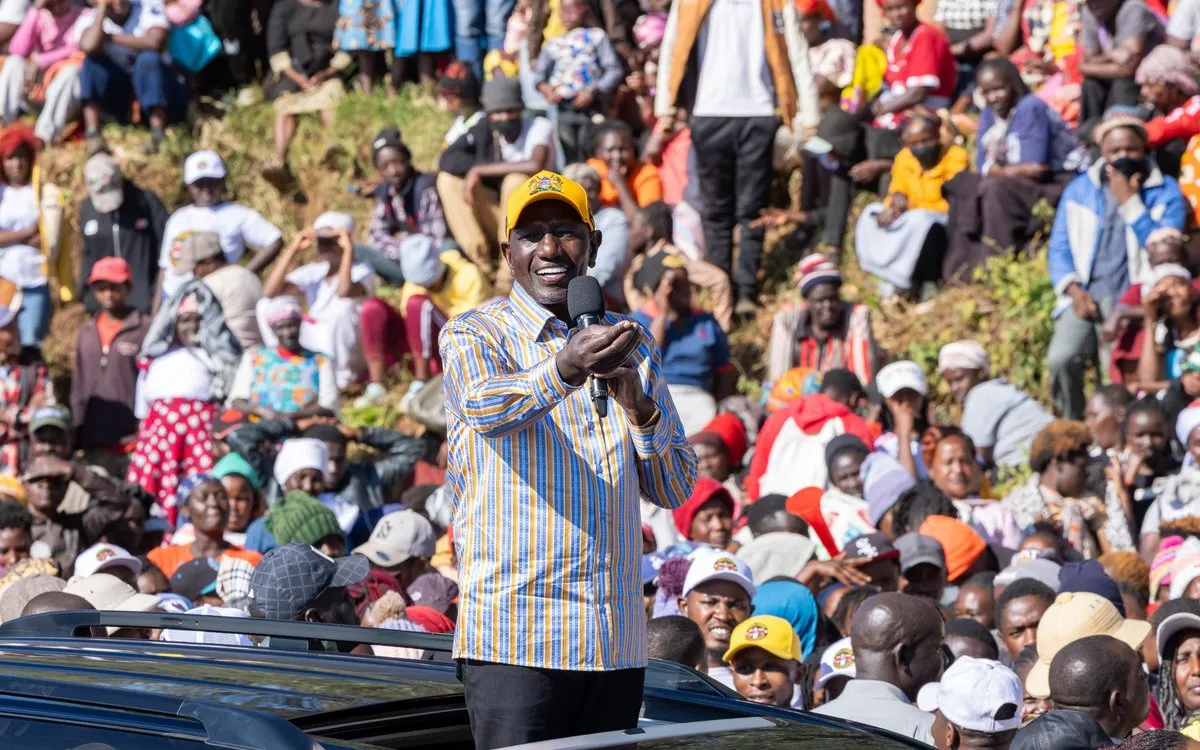
Speaking during a development tour in Lari, Kiambu County, on Friday, November 27, 2026, Ruto questioned whether voters in the region independently choose their leaders or allow influential politicians to dictate their electoral decisions.
In remarks widely interpreted as directed at Gachagua, the President challenged the notion that any individual could claim ownership of the region’s voting bloc or demand political allegiance from its residents.
“Ni nyinyi ndo mnachagua rais? Wakati mnachagua kiongozi mnampima na sura ama kazi? Na makelele ama kazi? Kila mtu anapimwa na kazi yake. Nyinyi ndo mnaamua ama kuna mtu amewabebea kura zenu? Mnabebewa akili ama kila mtu akona akili yake?” he posed.
Ruto went further, questioning why he should negotiate with an individual claiming to control votes in Kiambu instead of appealing directly to the electorate.
“Kuna mtu ananiambia ati kama nataka Kura za Lari na Kiambu lazima niende nipige magoti kwake. Niende nipige magoti kwa nyumba ya mtu ama niongee na nyinyi?” he asked.
The remarks amounted to a direct challenge to Gachagua’s political strategy, which has increasingly centred on consolidating Mt Kenya voters under his Democracy for the Citizens Party (DCP) ahead of the 2027 General Election.
Ruto challenges claims of ownership over Mt Kenya votes
The political confrontation reflects a deeper struggle over who will speak for the Mt Kenya region and influence its voting decisions in the next presidential election.
Gachagua, who served as Ruto’s deputy before his removal from office in October 2024, has positioned himself as the region’s leading political mobiliser.
He has repeatedly argued that his support was instrumental in securing Ruto’s victory in the 2022 presidential election, claiming he delivered approximately four million votes from Mt Kenya.
The former deputy president has subsequently used that electoral contribution to justify his claim to political influence, maintaining that leaders seeking elective positions in the region should align themselves with DCP.
Ruto’s latest remarks challenge that political calculation by shifting the focus from regional endorsements and individual political influence to the independent choices of voters.
The President’s argument is that electoral support cannot be transferred or controlled by political personalities, regardless of their previous positions or perceived influence.
However, the battle for Mt Kenya is not simply about who commands the loudest political following. The region remains a critical electoral constituency whose support could significantly influence the outcome of the 2027 presidential race.
President defends development record amid political criticism
Beyond the political confrontation, Ruto used his address to defend his administration’s development record, insisting that his government had sought to distribute national resources and projects across the country without favouring particular regions.
He argued that previous administrations had been criticised for concentrating development in certain areas while leaving others behind.
“Zamani watu walikuwa wanasema maendeleo inaendelea huku milimani, lakini wengine wananyimwa maendeleo. Mimi sasa nimetoshanisha na hakuna sehemu ya Kenya imebaguliwa. Nimefanya hivyo ndo tuondoe lawama kutoka wakenya wengine ijulikane ya kwamba inawezekana kuendelea maendeleo katika kila sehemu ya Kenya,” he stated.
The President pledged to continue implementing projects across the country, presenting equitable development as part of his administration’s commitment to national unity.
“Nitakuwa na mpango ya kujenga sehemu zote za Kenya, kuondoa ubaguzi na kufanya Wakenya wote wasikie sisi wote tuko sawa,” he added.
The remarks come as the government faces growing political scrutiny over its economic policies, cost of living and delivery of campaign promises.
For Ruto, demonstrating development achievements in Mt Kenya could be particularly important as he seeks to rebuild political support in a region that overwhelmingly backed his presidential bid in 2022.
The President also announced plans to return to the region the following Friday for further engagements with residents, signalling that his administration intends to maintain a sustained political and development presence there.
Ruto issues warning to political opponents
The President also adopted a more confrontational tone when addressing politicians seeking to challenge his leadership.
“Wale watu ni useless wanajaribu kushindana na mimi, nitawanyorosha asubuhi na mapema,” he said.
The remarks added a combative dimension to an address that had largely centred on voters’ independence, development delivery and political accountability.
They also illustrated the increasingly aggressive language emerging as political leaders position themselves for the 2027 contest.
Kindiki joins Ruto in challenging opposition leaders
Deputy President Kithure Kindiki, who accompanied Ruto during the Kiambu engagements, also criticised opposition politicians, challenging them to demonstrate what they achieved while holding public office.
Kindiki accused some political opponents of relying on political theatrics and perceived superiority rather than presenting concrete development records.
“Usawa ni sawa. Kuna watu wanazurura huku wako na maringo mengi ni kama hao ndio waliumba hii dunia lakini hata sisi tuko area na Mheshimiwa Rais, endelea kuchapa kazi mtihani ni next year,” he said.
He further challenged opposition leaders to prepare for political scrutiny ahead of the next election rather than spend their time criticising the government.
“Wale wa siasa tukutane next year. Kwa sasa Rais nitaendelea kukusaidia maendeleo iendelee. Next year wale wanaume tupatane, watoe track record yao waseme wakati walikuwa kwa kiti walifanya nini,” Kindiki added.
His remarks reinforced the government’s emerging political message that the 2027 election should be decided by competing records of performance rather than political mobilisation and rhetoric.
Kindiki’s presence in the Mt Kenya political campaign is also significant because he has increasingly become one of the administration’s principal figures in engaging the region following Gachagua’s departure from the Deputy President’s office.
Gachagua’s DCP strategy faces a test ahead of 2027
Gachagua has made the Mt Kenya voting bloc central to his political ambitions, arguing that the region should negotiate its position in the next government rather than automatically support presidential candidates.
Through DCP, he has sought to consolidate the region’s political support while building alliances with other opposition figures seeking to challenge Ruto.
Also Read: Gachagua accuses Ruto, Kindiki of plot to divide Mt Kenya ahead of 2027
He has also maintained that the community should determine its political direction collectively, warning against leaders who support the government while claiming to represent Mt Kenya interests.
His strategy is built partly on the argument that the region’s contribution to Ruto’s 2022 victory gives it considerable bargaining power in national politics.
However, the assumption that Mt Kenya voters will move as a single political bloc remains a major question ahead of the next election.
The region has several influential political figures, competing party interests and leaders with ambitions that may not necessarily align with Gachagua’s political plans.
Ruto, meanwhile, appears determined to prevent his former deputy from becoming the sole political gatekeeper in a region that was central to his rise to power.
The President’s latest visit to Lari therefore carries significance beyond the development announcements. It represents another attempt to appeal directly to voters while challenging Gachagua’s claim to political authority.
Ultimately, the contest will be decided not by claims of owning millions of votes, but by whether either political camp can translate its mobilisation efforts, development promises and political alliances into actual support at the ballot box in 2027.