


NAIROBI, Kenya — The Independent Electoral and Boundaries Commission (IEBC) has rejected claims that it has cleared former Deputy President Rigathi Gachagua to contest the 2027 presidential election, saying his eligibility remains undecided.
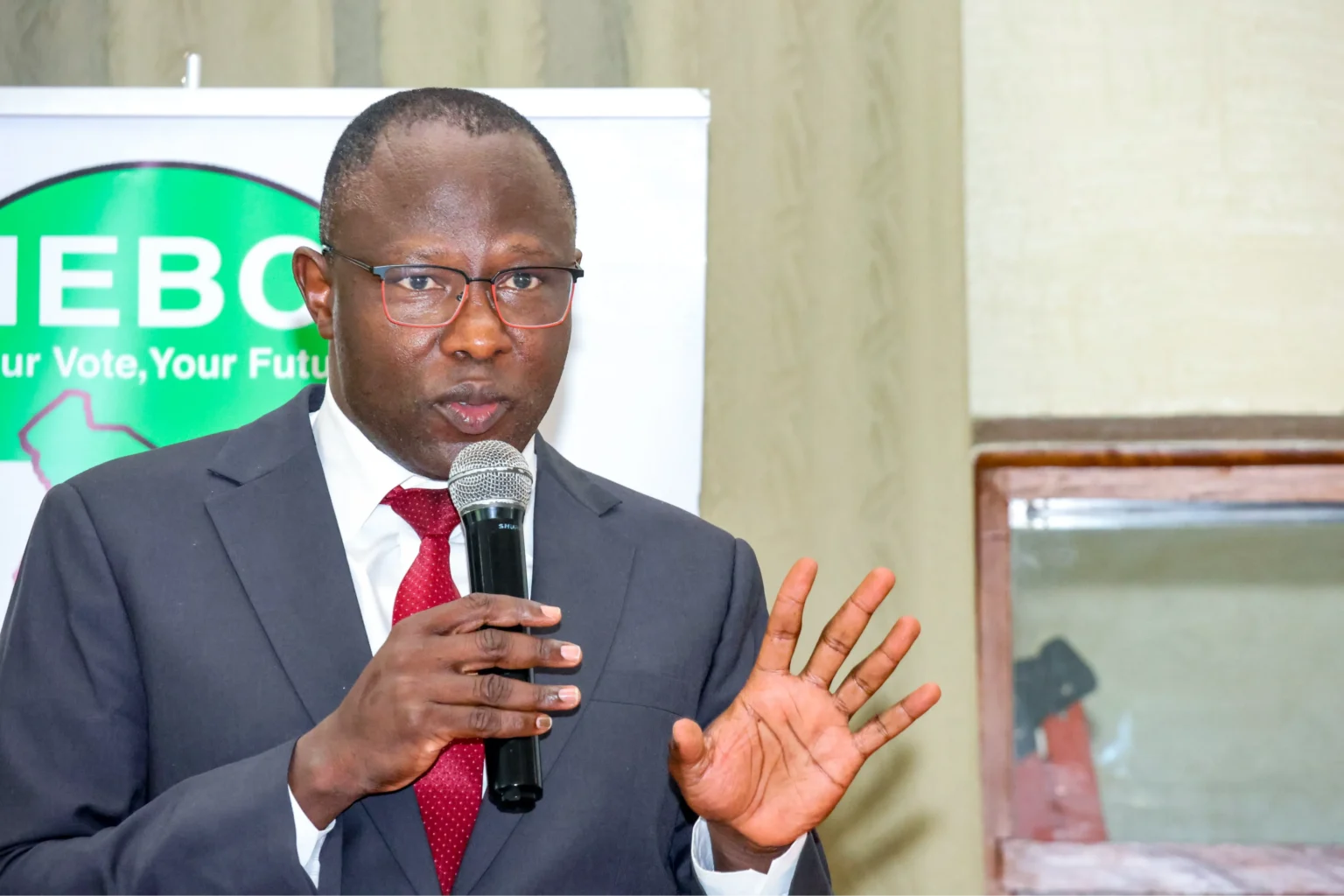
In a clarification issued on Wednesday, November 25, IEBC Chairperson Erastus Ethekon said reports suggesting the electoral agency had approved Gachagua’s presidential bid misrepresented comments made by the Commission’s Director of Legal Services, Chrispine Owiye, during a meeting with political journalists in Nairobi a day earlier.
Ethekon stressed that Owiye had been explaining general constitutional provisions on electoral qualifications and disqualifications, not making a ruling on the political or legal future of the former Deputy President.
“For the avoidance of doubt, the Commission has neither cleared nor made any determination regarding Hon. Rigathi Gachagua’s eligibility to contest the 2027 Presidential Election,” Ethekon said.
The clarification followed media reports interpreting Owiye’s remarks on appeals and reviews as an indication that Gachagua could remain eligible to seek the presidency despite his impeachment and removal from office in October 2024.
What triggered the IEBC clarification?
The controversy arose after Owiye explained that individuals facing certain disqualifying decisions may retain their eligibility to contest elections while pursuing legally recognised appeals or review applications.
He cited constitutional provisions under Articles 99 and 193, which address qualifications and disqualifications for parliamentary and county assembly elections.
“We have seen that even for a person who has been convicted, as long as that person can demonstrate that he is pursuing an appeal or review of that decision, he is qualified to contest,” Owiye was quoted as saying.
His explanation prompted speculation that the same constitutional protection could apply to Gachagua, whose removal from office has become a significant legal and political issue ahead of the next General Election.
However, Ethekon said the presentation had not examined the constitutional consequences of impeachment or removal from office under Article 75.
The chairman maintained that Owiye’s remarks were limited to the relevant provisions governing parliamentary and county assembly elections and did not amount to a determination on whether an impeached politician could seek another elective position.
Why Article 75 matters in Gachagua’s case
Gachagua’s eligibility question is more complicated than whether he has an appeal pending.
The former Deputy President was removed from office by the Senate in October 2024 after senators upheld impeachment charges against him. His removal raised questions about the constitutional consequences of impeachment, particularly where allegations involve violations of the standards of leadership and integrity under Chapter Six of the Constitution.
Article 75(3) provides that a person removed from office for contravening the provisions governing leadership and integrity is disqualified from holding any other State or public office.
That provision is central to the debate because it raises a separate question from the appeal protections cited by Owiye: whether an impeached office-holder can rely on an ongoing legal challenge to avoid the consequences of removal when seeking another elective position.
The IEBC has not resolved that question in Gachagua’s case.
Ethekon said the constitutional requirements for presidential nomination are set out under Article 137, read together with the applicable provisions governing eligibility to stand for election.
Under Article 137, a presidential candidate must be a Kenyan citizen by birth, qualify to stand for election as a Member of Parliament, be nominated by a political party or run as an independent candidate, and secure nominations from at least 2,000 voters in a majority of the counties.
The Constitution also sets out circumstances in which a person is disqualified from nomination.
Because presidential eligibility is linked to the qualifications for parliamentary election, the relationship between these provisions and the constitutional consequences of impeachment remains an important legal consideration.
Gachagua’s 2027 presidential ambitions
Gachagua has consistently maintained that he intends to challenge President William Ruto in the 2027 presidential election.
His political ambitions have remained in focus since his removal from office, with the former Deputy President positioning himself as a leading opposition figure.
He has challenged the impeachment process in court, arguing that his removal was unlawful. However, the existence of a legal challenge should not be confused with a judicial decision restoring his eligibility to contest.
The IEBC’s latest statement therefore leaves the central question unresolved: whether the constitutional consequences of his impeachment will prevent him from seeking the presidency, or whether the outcome of his legal proceedings could alter his position.
Mike Sonko’s case offers a legal precedent
The debate also recalls the case of former Nairobi Governor Mike Sonko, whose impeachment affected his attempt to contest the Mombasa gubernatorial seat in the 2022 General Election.
Sonko initially secured a court decision allowing his candidature to proceed while challenging his removal from office. However, the Supreme Court overturned that position on July 15, 2022, upholding the decision that barred him from contesting.
The case remains relevant to discussions about the relationship between impeachment, constitutional eligibility and electoral disputes.
Also Read: Impeached leaders can still contest in 2027 elections, IEBC clarifies
However, Gachagua’s circumstances must be assessed on their own legal facts, including the specific grounds of impeachment and the status of his court challenges. The Sonko ruling should not automatically be treated as determining every future impeachment-related eligibility dispute.
IEBC says no candidate has been cleared yet
Ethekon further clarified that the Commission had not begun registering candidates for the 2027 General Election.
He said decisions on the eligibility of prospective presidential candidates would be made at the appropriate stage of the electoral process, in accordance with the Constitution and applicable laws.
The chairman also criticised the reporting of the earlier remarks, urging media organisations to exercise caution when interpreting constitutional and electoral matters.
“The Commission regrets the misrepresentation of facts and urges media houses to uphold accuracy, fairness and due diligence when reporting on sensitive constitutional and electoral matters,” he said.
He encouraged members of the public to rely on official IEBC communications for information about electoral processes.
The Commission reiterated its commitment to transparency, impartiality and the consistent application of electoral laws.
For Gachagua, the clarification is neither a political victory nor a formal disqualification. It simply means the electoral agency has not yet made a decision on his eligibility.
With the 2027 election approaching, the constitutional question surrounding impeached leaders could become a major test for Kenya’s electoral institutions and courts, particularly as prospective candidates seek clarity on the legal boundaries governing their return to elective politics.