


NAIROBI, Kenya — Kenya and Germany have moved to deepen their economic partnership, with President William Ruto highlighting a €52.5 million (approximately Ksh7.8 billion) development cooperation package for 2026–2028 as the two countries seek to expand employment opportunities, trade and investment.
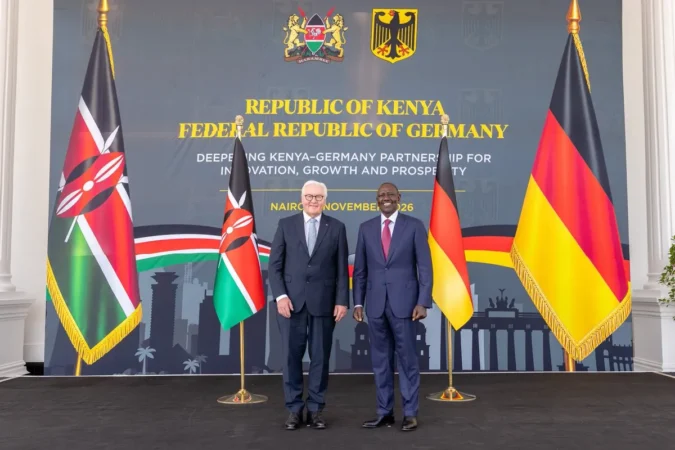
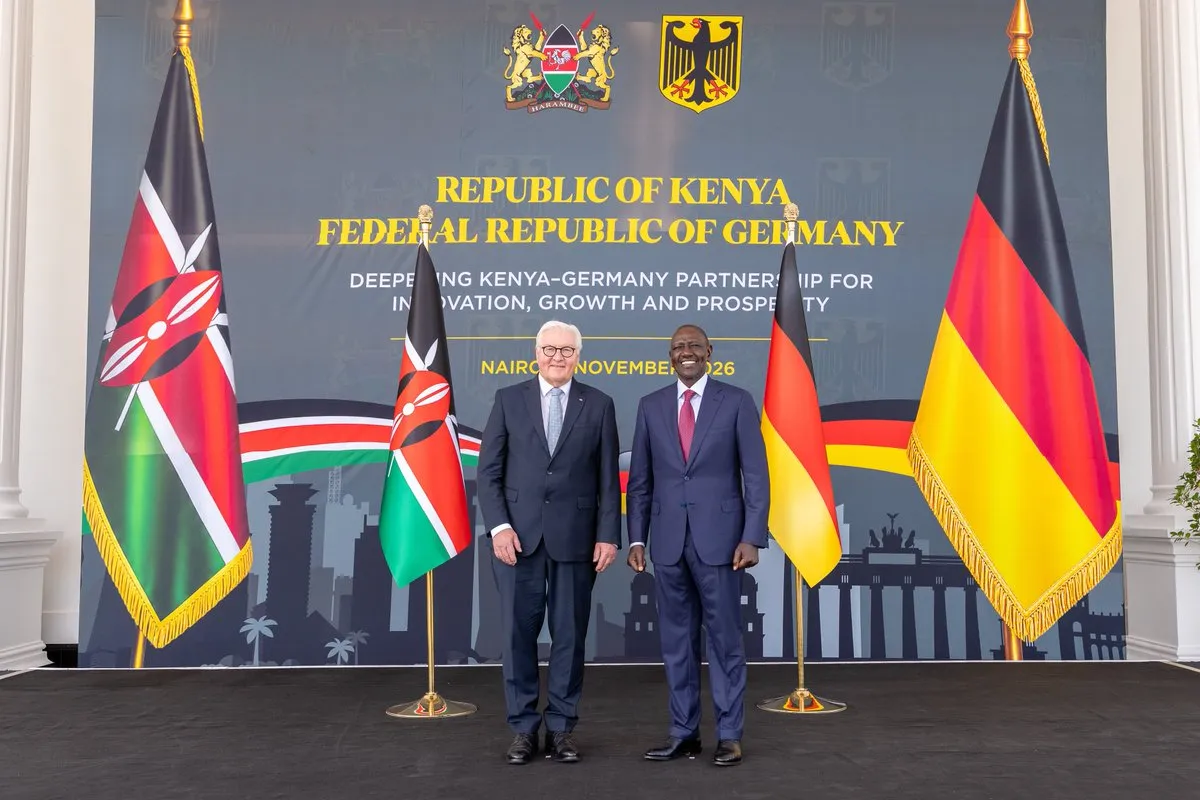
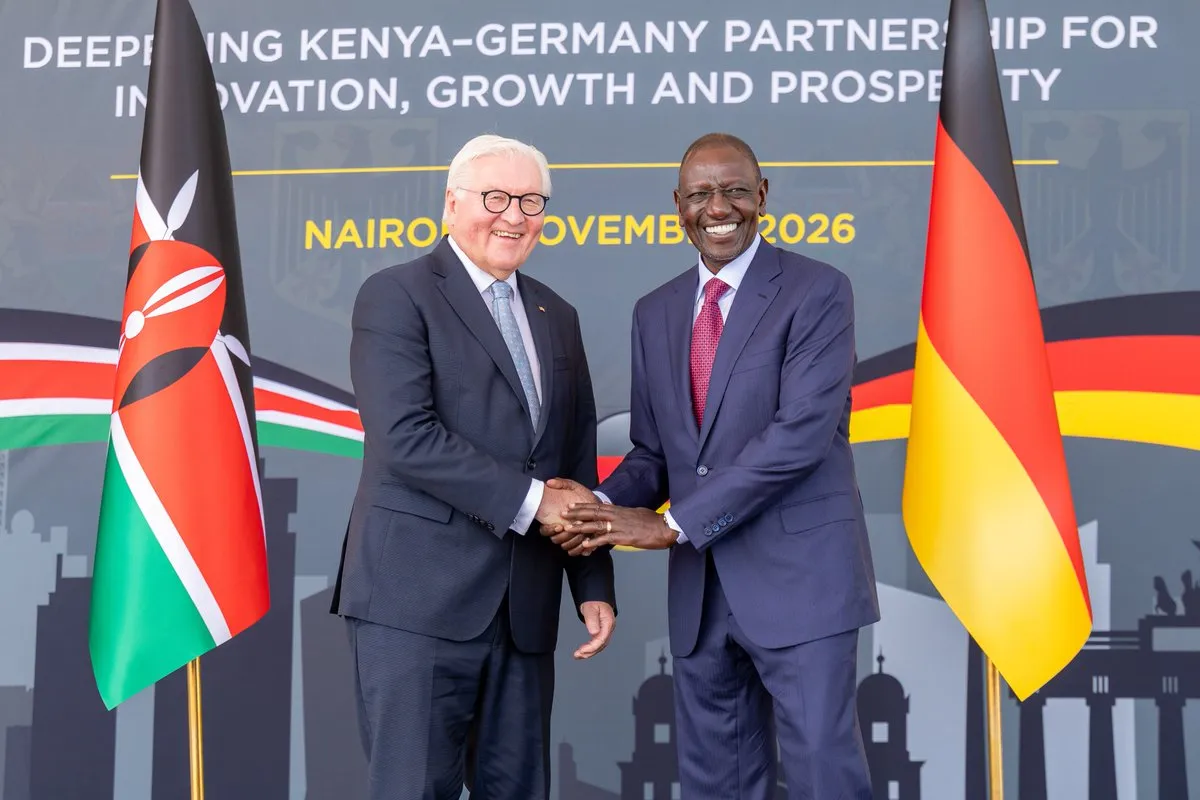
Ruto announced the funding commitment after holding bilateral talks with German President Frank-Walter Steinmeier at State House, Nairobi, on Wednesday, November 25, 2026.
The discussions focused on strengthening economic and diplomatic relations, with particular attention to skilled labour mobility, investment, vocational training, renewable energy and digital technology.
However, the funding package is not entirely new. It follows Kenya-Germany government-to-government development cooperation negotiations concluded in Berlin in June 2026, with the November meeting providing an opportunity to reaffirm the partnership and advance its implementation.
The package is expected to support programmes covering private-sector development, trade and investment, digital transformation, technical and vocational education, renewable energy, e-mobility, climate action, irrigation, climate-smart agriculture and food systems.
The commitment comes as Kenya seeks to attract more foreign investment, create employment for its growing workforce and strengthen economic links with European markets.
Kenyans working in Germany increase to 9,500
Employment opportunities for Kenyans featured prominently in the discussions, reflecting growing cooperation between Nairobi and Berlin over the recruitment and placement of skilled workers.
Ruto said the number of Kenyans employed in Germany increased from 7,170 in March 2024 to 9,500 by March 2026, representing growth of approximately 32 per cent over two years.
The number of Kenyan trainees contributing to Germany’s social security system also increased from 820 to 1,260 over the same period, according to figures reported during the bilateral engagement.
The progress is linked to the Comprehensive Migration and Mobility Partnership Agreement signed by Kenya and Germany in September 2024, which provides a framework for cooperation in employment, vocational training, skills development and the protection of migrant workers.
Germany has been seeking skilled workers to address labour shortages in several sectors, creating opportunities for qualified Kenyans interested in working abroad.
Despite the increase in placements, the two governments recognise that administrative barriers can slow down recruitment and prevent qualified applicants from accessing available opportunities.
Ruto and Steinmeier therefore agreed to pursue measures to simplify visa processing, improve recruitment procedures, expand German-language training and accelerate the recognition of professional qualifications.
These changes could make it easier for Kenyan professionals to meet German employment requirements without facing unnecessary delays during the application and placement process.
New language certification agreement targets job seekers
A key development during the State House meeting was the signing of a Memorandum of Understanding (MoU) between Kenya and telc, a German language examination and certification institution.
The agreement is intended to improve access to internationally recognised German-language examinations and certification, helping Kenyan job seekers demonstrate the language proficiency required for employment and training opportunities in Germany.
Language competence is an important requirement in several German professions, particularly healthcare and other occupations involving direct interaction with patients, customers and colleagues.
By improving access to recognised certification, the partnership could address one of the practical barriers facing Kenyans seeking to enter the German labour market.
However, language certification alone does not guarantee employment or a visa. Applicants must still meet the relevant professional, immigration and recruitment requirements for their chosen occupations.
The discussions also covered cooperation between Kenyan technical and vocational education institutions and German industries to develop skills that match labour-market demand.
The two countries explored additional opportunities for Kenyan seafarers through specialised training, sea-time placements and partnerships with German shipping companies.
They also discussed sustainable shipping, maritime logistics and investment opportunities drawing on Germany’s industrial expertise and Kenya’s strategic position along the Indian Ocean.
Germany invited to invest in key Kenyan sectors
Beyond overseas employment, Kenya is seeking to attract more German companies into its domestic economy.
Ruto invited German investors to explore opportunities in manufacturing, agro-processing, infrastructure, healthcare, renewable energy and digital technology.
The German President’s visit was accompanied by a business delegation representing major companies and medium-sized enterprises interested in exploring commercial opportunities in Kenya.
The delegation’s presence highlighted the importance of converting diplomatic engagement into private-sector partnerships, investment and employment.
Germany is already an established economic partner for Kenya, with cooperation spanning development assistance, industrial investment, education, clean energy and technical training.
In October 2026, Prime Cabinet Secretary and Foreign Affairs Cabinet Secretary Musalia Mudavadi said bilateral trade had grown by 23 per cent in 2025 to approximately €590 million.
Kenya is also seeking to expand exports to Germany, particularly agricultural products such as flowers, avocados and fresh vegetables.
Increasing trade will, however, require exporters to meet European market standards, improve product quality and address logistical and market-access challenges.
The government hopes that stronger commercial partnerships will encourage local value addition rather than leave Kenya dependent primarily on exporting raw agricultural products.
Steinmeier visits Kenyan businesses and development projects
Steinmeier arrived in Nairobi on Tuesday night, November 24, 2026, for an official visit and was received by Prime Cabinet Secretary and Foreign Affairs Cabinet Secretary Musalia Mudavadi.
Before his meeting with Ruto, the German President visited several institutions and businesses involved in healthcare, digital services and skills development.
At Tatu City, he toured a mobile medical clinic operated by Zuri Health, highlighting cooperation in healthcare innovation and service delivery.
His programme also included visits to Call Centre International Kenya (CCI Kenya), a digital services provider, and CareerBox, a non-profit organisation involved in skills development and training.
The engagements offered an opportunity to examine Kenya’s growing business-process outsourcing sector and the potential for cooperation in digital employment and workforce development.
Steinmeier also visited Anno’s One Fine Day Art Centre, which provides artistic and cultural programmes for children and young people.
The visits reflected the broader scope of the Kenya-Germany relationship, extending beyond government-to-government agreements to include private enterprise, social development and cultural exchange.
What remains on the German President’s itinerary?
Steinmeier’s visit to Kenya forms part of a five-day African tour running from November 22 to 26, 2026, which has also taken him to Côte d’Ivoire and Ghana.
On Thursday, November 26, he is scheduled to travel to Naivasha, where he will visit Crescent Island nature reserve on Lake Naivasha.
His programme will also include discussions with representatives of Kenyan civil society before his departure for Germany.
Also Read: Germany opens its job market to skilled Kenyans through new labour agreement
The visit is his final official tour of Africa as German President, with his second five-year term scheduled to end in March 2027.
Speaking in Berlin in October, Steinmeier highlighted the economic potential of the three African countries included in his itinerary, particularly their opportunities for young people.
The visit comes as Germany seeks to strengthen partnerships with African economies while Kenya looks to diversify its international economic relationships and attract investment to support its development priorities.
For Kenya, the significance of the Ksh7.8 billion cooperation package will ultimately depend on how effectively the agreed programmes are implemented.
Equally important will be whether the expanding employment partnership translates into accessible, transparent and properly protected opportunities for Kenyan workers, while German investment generates jobs and strengthens productive capacity at home.
The challenge for both governments is to turn decades of diplomatic friendship into measurable economic benefits for businesses, workers and households in the two countries.