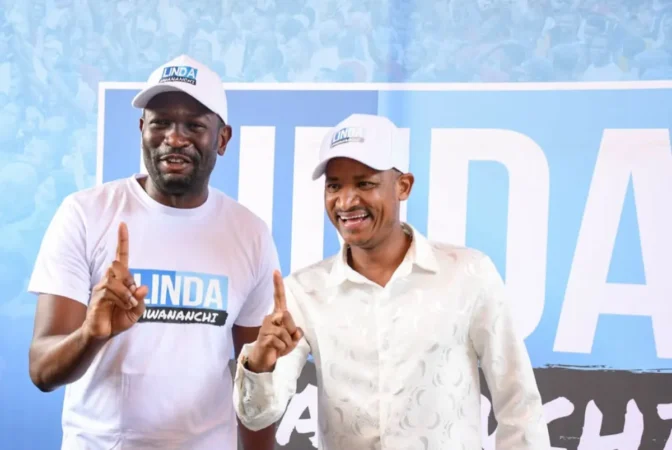



NAIROBI, Kenya — Embakasi East MP Babu Owino has outlined a proposed 100-day action plan for Nairobi, placing garbage collection, corruption, alleged ghost workers and poor street lighting at the centre of his campaign to become the capital’s next governor.
Owino says his immediate priority, if elected in the 2027 General Election, would be to tackle problems that residents encounter in their neighbourhoods rather than wait for long-term development projects to produce results.
“There are so many things to be done within 100 days in office,” Babu said during a media interview.
He identified persistent garbage accumulation as one of the first challenges his administration would seek to address, alongside corruption within Nairobi City County Government.
“We have the menace of garbage to deal with. The corruption too, we will work on ghost workers,” he said.
The MP also pledged to investigate alleged ghost workers on the county payroll, arguing that public resources should be directed towards genuine employees and the delivery of services.
However, removing fictitious or improperly registered employees from a public payroll would require a credible staff audit, verification of employment records and due process.
Owino has yet to provide details of how such an exercise would be conducted, how much it could save the county or the safeguards he would put in place to protect legitimate employees.
Call centre proposed to improve county response
Beyond the proposed crackdown on corruption and payroll irregularities, Owino wants to establish a dedicated call centre through which Nairobi residents could report service delivery problems and seek assistance.
The proposed facility would receive complaints involving sewer line blockages, water shortages and emergency situations, creating a direct communication channel between residents and county service providers.
“We will set up a call centre where, whenever any Nairobian has an issue, sewerline issue, water shortages, distress calls, they will just call, and we fix them,” he said.
If implemented effectively, the system could help residents report problems without having to visit county offices or navigate multiple departments to find the responsible officials.
But a call centre’s effectiveness would depend on more than receiving complaints. It would need a functioning response team, clear referral procedures, adequate field personnel and a system for tracking cases until they are resolved.
Residents would also need to know whether their complaints had been acted upon, how quickly the county was expected to respond and where to escalate unresolved cases.
Owino further identified street lighting as an area where his administration could deliver visible improvements within a relatively short period.
“Things like streetlighting are things we can fix, and you see serious changes,” he stated.
Improved lighting can contribute to safer streets, better visibility for motorists and pedestrians, and more accessible public spaces at night.
However, meaningful improvements would require identifying faulty infrastructure, maintaining existing installations and ensuring that repairs are sustained.
Nairobi’s service delivery challenge
The issues raised by Owino touch on some of the most visible responsibilities of county government.
Under the Fourth Schedule of Kenya’s Constitution, county governments are assigned responsibility for refuse removal and solid waste disposal, county roads and street lighting, as well as water and sanitation services.
However, Nairobi’s service delivery arrangements also involve coordination between the two levels of government.
A cooperation agreement signed by the national government and Nairobi City County in February 2026 provides for collaboration in areas including water and sewerage, roads and street lighting, solid waste management and related infrastructure.
The agreement was presented as a framework for national government support, rather than a transfer of the county’s legal mandate.
That arrangement makes coordination, accountability and clarity over implementation particularly important for any incoming governor seeking to improve services.
Owino’s proposals therefore raise practical questions about how his administration would work with national government agencies, county departments and service providers to deliver on its promises.
The test for Babu’s 100-day pledge
The proposed first-100-days programme gives Owino a clear campaign message, but it does not yet provide measurable targets, implementation timelines, budget estimates or details of the teams that would oversee the interventions.
For example, a credible garbage collection plan would need to explain how waste would be collected across different neighbourhoods, how collection schedules would be enforced, and how the county would manage disposal and recycling.
A corruption strategy would need transparent procurement processes, independent audits and investigations capable of supporting disciplinary or legal action where wrongdoing is established.
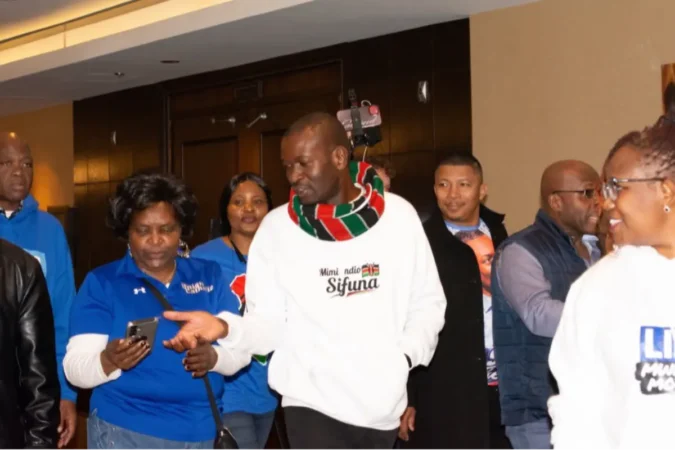
Also Read: Sifuna breaks silence on Babu Owino fallout, reveals Linda Mwananchi power-sharing deal
Similarly, tackling ghost workers would require a properly documented payroll verification exercise, while street lighting improvements would need a published repair and maintenance programme.
The proposed call centre would also need publicly available performance standards, including response times and the number of complaints resolved.
These details will matter as Nairobi voters assess competing candidates’ promises ahead of the 2027 elections.
The difference between a campaign pledge and a workable county programme will ultimately be measured by funding, institutional capacity and the ability to deliver services consistently.
Owino’s latest proposals add to his efforts to position himself as a candidate promising a more responsive administration as he seeks to succeed Governor Johnson Sakaja.
Whether the MP can turn his 100-day priorities into a detailed, costed and achievable programme is likely to become an important part of the debate over who should lead Nairobi after the 2027 polls.