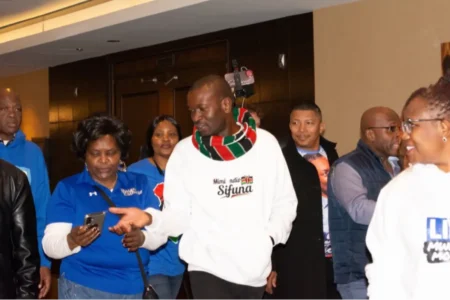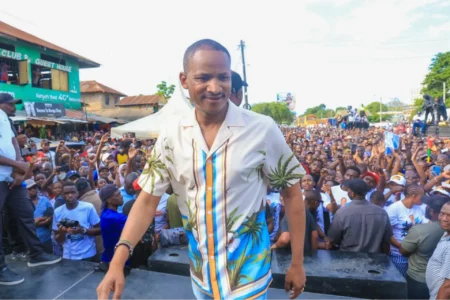

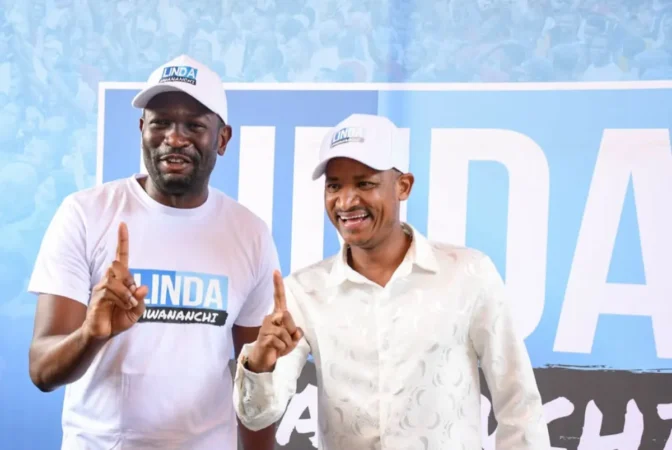


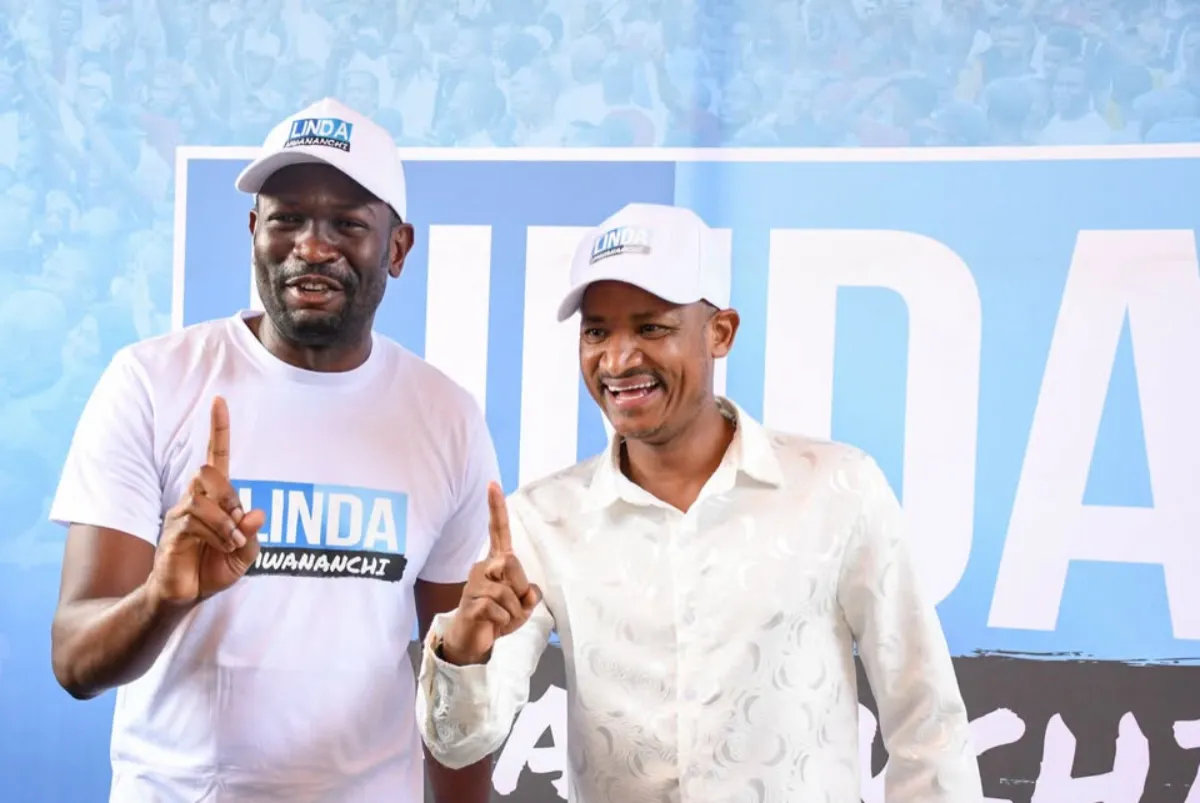
NAIROBI, Kenya — Embakasi East MP Babu Owino has sought to dispel speculation of a political fallout with Nairobi Senator Edwin Sifuna, insisting the two leaders can pursue different leadership ambitions under the Linda Mwananchi Movement without undermining their relationship.
Speaking during a media interview on the Mwananchi Party, Owino described Sifuna as his brother and reaffirmed his support for the senator’s presidential ambitions, while maintaining that he remains focused on becoming Nairobi governor in the 2027 General Election.
The MP also claimed to have played a major role in Sifuna’s political development, saying he had contributed 99.9 per cent to the senator’s growth and still wanted to see him advance politically.
“Edwin Sifuna is my brother. I have contributed 99.9 per cent in his growth, and I still want him to grow,” Babu Owino stated.
Owino dismissed suggestions that their respective ambitions could place them on opposing sides, arguing that the movement could accommodate leaders seeking different elective positions.
“Within Linda Mwananchi movement, he’s our presidential candidate. Babu is the next governor of Nairobi. There’s no problem if we both grow,” he said.
His remarks appear intended to reassure supporters that the relationship between the two politicians remains intact, even as questions emerge over leadership positions, party structures and the movement’s political direction ahead of the next election.
Mwananchi Party and the Linda Mwananchi connection
Owino also defended the relationship between the Mwananchi Party and the Linda Mwananchi Movement, arguing that the two should not be viewed as competing political organisations.
He described the wider movement as a political initiative built through the sacrifices of ordinary Kenyans and said the party was part of that broader arrangement.
“Mwananchi Party is part of Linda Mwananchi movement. It’s been built through sweat, tears and blood of Kenyans,” he said.
The MP further described himself as a key stakeholder in the movement, insisting that his association with the Mwananchi Party did not amount to a political separation from Sifuna or the wider outfit.
“Babu is a key stakeholder of Linda Mwananchi movement. You can’t separate the two,” he stated.
The distinction is politically significant because the movement’s ability to accommodate different political vehicles and leaders could shape its organisation, candidate selection and negotiations with other opposition formations.
Owino suggested that the question of having a political party associated with him remained open to negotiations and could help strengthen the movement’s bargaining position.
A strategy to accommodate different support bases
Explaining why separate political vehicles could be useful, Owino argued that the two leaders attract different groups of supporters.
He said some Kenyans identify with Sifuna, others support him, while another section backs both politicians. In his view, a separate political platform could provide an entry point for supporters who may not necessarily identify with every leader within the movement.
“There are people who like Sifuna and don’t like Babu and vice versa. Some like both of us. People who don’t like him, won’t they go to him through Babu Owino? And they need a vehicle,” he stated.
The argument suggests that Owino sees political diversity within Linda Mwananchi as a potential source of strength rather than an automatic cause of division.
Also Read: Babu Owino outlines 100-day plan for Nairobi as he eyes 2027 Governor seat
However, maintaining multiple political vehicles within one movement could also create questions about leadership authority, party membership, candidate nominations and how competing interests would be resolved.
Those questions are likely to become more pressing as the 2027 election approaches and politicians begin positioning themselves for nominations and coalition negotiations.
Leadership questions remain ahead of 2027
Owino’s latest remarks come against the backdrop of earlier differences in how the two politicians have publicly described the leadership arrangements agreed upon when the political outfit was being organised.
Sifuna had previously presented himself as the movement’s party leader and presidential candidate, while Owino’s account placed Sifuna in the presidential role and himself in the party leadership position. The distinction highlights the importance of clarifying how the movement intends to distribute leadership responsibilities.
Owino’s latest interview does not, on its own, settle those organisational questions. Instead, it presents a public show of unity and an argument that both politicians can pursue their ambitions without competing for the same position.
For Sifuna, the challenge will be to translate his presidential ambitions into a wider national political organisation capable of competing beyond his Nairobi political base. For Owino, the task will be to turn his Nairobi gubernatorial ambitions into a convincing countywide campaign.
Their ability to maintain a common political platform while managing separate ambitions could become an important test of the Linda Mwananchi Movement’s cohesion as the 2027 General Election draws closer.