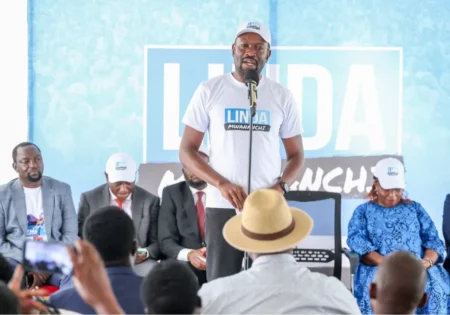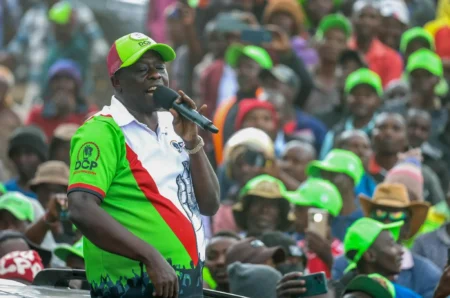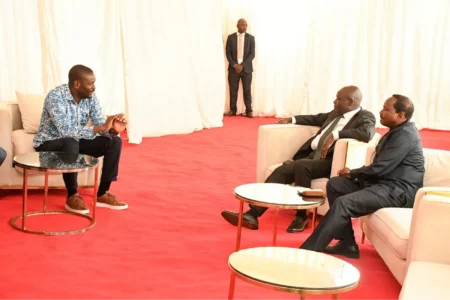
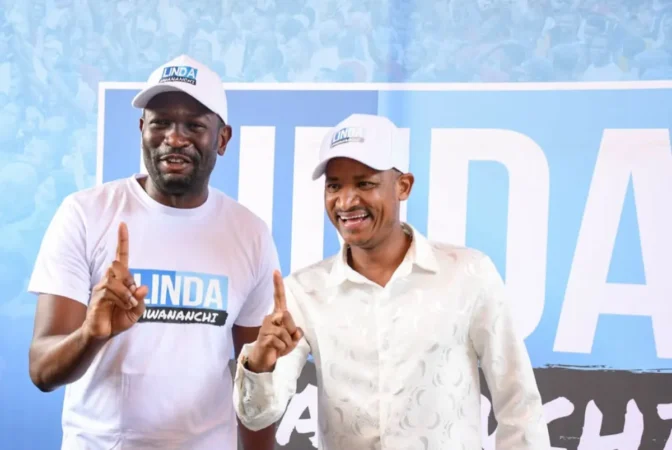

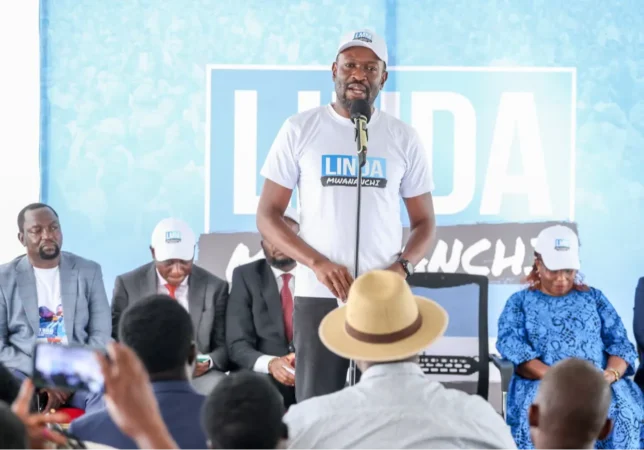


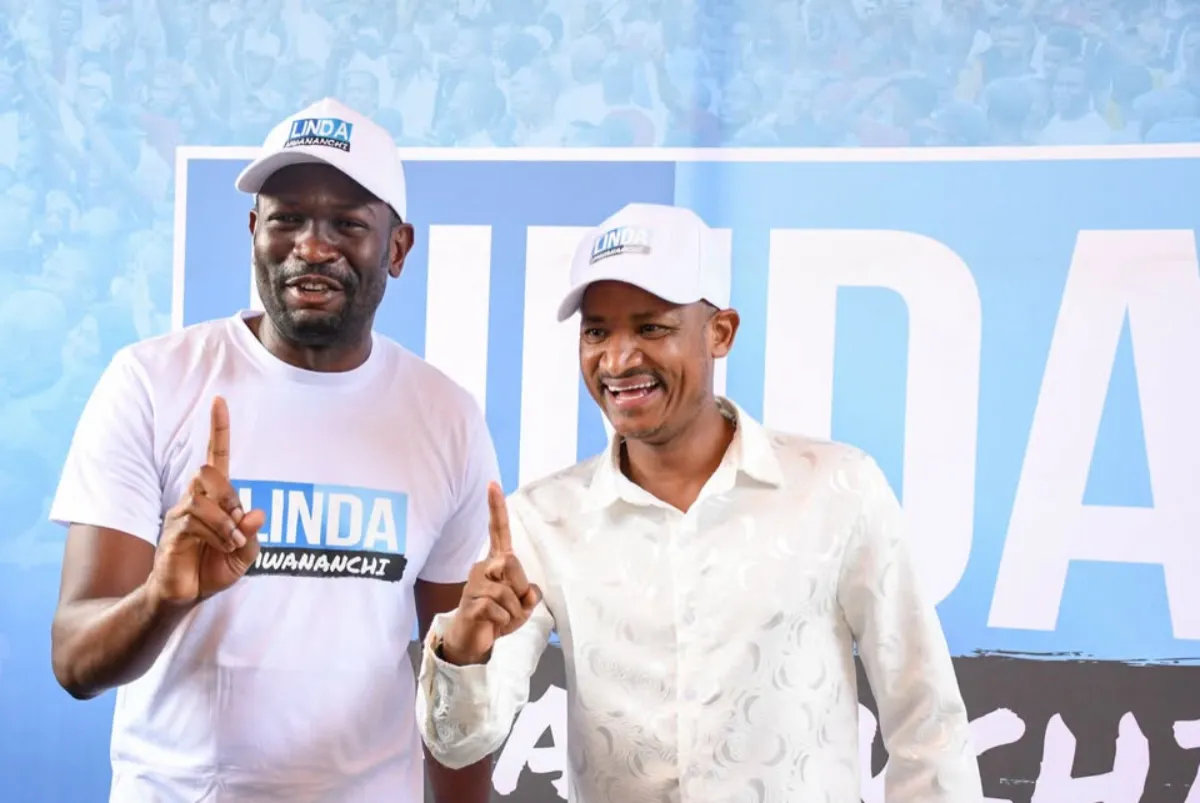
NAIROBI, Kenya — Nairobi Senator Edwin Sifuna has challenged accusations that he betrayed his political allies, offering a detailed account of the leadership agreement he says brought together the founding members of the Linda Mwananchi Movement.
In a Thursday interview with Radio Citizen, Sifuna disputed Embakasi East MP Babu Owino’s claims that he had abandoned an earlier understanding over the distribution of leadership positions in the emerging political outfit.
At the centre of the disagreement is a question that could determine the movement’s political direction: who was supposed to lead the party, and who was expected to carry its presidential ambitions?
Sifuna maintained that the original agreement was for the founding members to abandon their individual political parties and join The Equitable Party (TEP), which has since been rebranded as the Linda Mwananchi Movement (LMM).
Under the arrangement, he said, members had agreed to appoint him as both party leader and presidential candidate.
To reinforce his account, the senator made an unusual appeal during the interview, asking presenters to bring him a Bible as he insisted that he was telling the truth.
“Please bring the Bible so that I can hold it. The agreement that was there is that all of us would join a party that had no many issues. Bring that Bible!” he said.
“May God deal with me if I tell lies.”
How the Linda Mwananchi political arrangement emerged
Sifuna explained that the movement’s formation followed consultations among politicians who were initially affiliated with different political parties but shared an interest in establishing an alternative political platform.
The original group brought together Sifuna, Babu, Saboti MP Caleb Amisi, Suba South MP Caroli Omondi, Trans Nzoia Governor George Natembeya and Vihiga Senator Godfrey Osotsi.
According to Sifuna, the group established a subcommittee comprising lawyers and other members to examine available political parties and determine which could accommodate their collective ambitions.
The search was intended to identify a political vehicle with fewer legal and administrative complications, rather than immediately establishing a new party from scratch.
He cited the United Democratic Party (UDP), reportedly proposed by Natembeya, as one of the options that encountered obstacles during the process.
“When, for instance, Natembeya said we would use UDP, there were blocks,” Sifuna claimed.
The group eventually settled on The Equitable Party, with members expected to leave their existing political affiliations and join the new political arrangement.
Sifuna pointed to the subsequent decisions by several politicians to change their political vehicles as evidence that the agreement was collective.
Among those he cited were Caroli Omondi, former Meru Governor Kawira Mwangaza and Mavoko MP Patrick Makau, who had previously been elected on a Wiper Democratic Movement ticket.
For Sifuna, these political moves demonstrated that the arrangement was not designed around his individual ambitions but was part of a broader agreement among the founding members.
Babu Owino disputes Sifuna’s account
Babu, however, has offered a substantially different version of the negotiations, accusing Sifuna of departing from an understanding reached before the group embarked on its political project.
In a recorded interview with a local media outlet on Friday, November 13, the Embakasi East MP said the initial arrangement was for Sifuna to become the movement’s presidential candidate while he would take charge as party leader.
Babu argued that separating the two positions was deliberate, allowing both politicians to occupy influential roles without creating unnecessary competition over political authority.
“Initially, we had agreed with Sifuna and other members that the moment we got the party out, Sifuna was to be the presidential candidate and I was to be the party leader, but things changed. I also don’t know how things changed,” Babu said.
He further argued that the arrangement would have protected both politicians’ political interests, particularly if Sifuna eventually won the presidency.
Under his explanation, a president would exercise executive authority as Commander-in-Chief, leaving the party leader with a different and potentially limited position in the political hierarchy.
“So, if Sifuna was to be the presidential candidate and Babu was to be the party leader, if Sifuna, by God’s grace, becomes the president, what can a party leader do to a commander-in-chief? Nothing, right? But again, Babu would also be secure. Because there are a lot of insecurities when people get seats,” he added.
Babu also claimed that some participants in the negotiations questioned whether a presidential candidate could contest without simultaneously serving as the party leader.
He nevertheless maintained that the original understanding was to separate the two positions.
Why the party leadership dispute matters
Sifuna has rejected that interpretation, questioning why his colleagues would agree to entrust him with the responsibility of pursuing the presidency but deny him leadership of the political party through which that ambition would be realised.
He argued that the two responsibilities traditionally go together in Kenyan political parties, challenging his critics to identify an arrangement that would support their position.
“Tell me of any political party whose party leader is not the presidential candidate,” he posed.
The senator also insisted that the leadership agreement had been reached collectively during discussions involving the original members, not imposed unilaterally by him.
He questioned why politicians had abandoned their former political parties and joined the new arrangement if there had been no common understanding about its leadership structure.
“In that contest, who is the traitor?” he asked.
Returning to his Bible appeal, Sifuna questioned the logic of entrusting him with the country’s highest political office while supposedly denying him authority within the party.
“Before God, how can you trust me with the country’s leadership, but not with a party’s leadership?” he said.
He further accused his critics of portraying him as the source of the movement’s divisions despite what he described as the collective agreement that brought its founding members together.
“If Sifuna is the evil one, why did other leaders leave their parties and join me in Linda Mwananchi? That was the agreement,” he said.
What the fallout means for Linda Mwananchi
The disagreement exposes a potentially significant weakness in the movement’s attempt to establish itself as a credible alternative political force: the challenge of reconciling individual ambitions with collective leadership.
Although the founding members appear to have shared an interest in creating a new political platform, their competing accounts suggest that there may not be a common understanding of how authority and political influence were supposed to be distributed.
The distinction between party leadership and presidential candidacy is particularly important. Beyond the personal ambitions of Sifuna and Babu, it touches on who controls party structures, influences candidate selection, shapes political strategy and ultimately speaks for the movement.
Also Read: Babu Owino dismisses claims of dropping Nairobi Governor bid after Gachagua meeting
A disagreement over these positions could complicate efforts to build a unified national political organisation, especially as the group seeks to attract supporters and politicians from established parties.
It also raises questions about whether the movement has sufficiently defined its internal decision-making procedures and leadership succession arrangements to prevent personal disagreements from escalating into organisational divisions.
For now, Sifuna and Babu remain divided over what was agreed during the movement’s formation. Neither man’s account, as presented in the interviews, independently establishes the precise terms of the original agreement.
The key test will be whether the founding members can reconcile their differences through a clearly documented leadership arrangement or whether the dispute will deepen divisions within a political movement that was formed around the promise of offering Kenyans an alternative political direction.