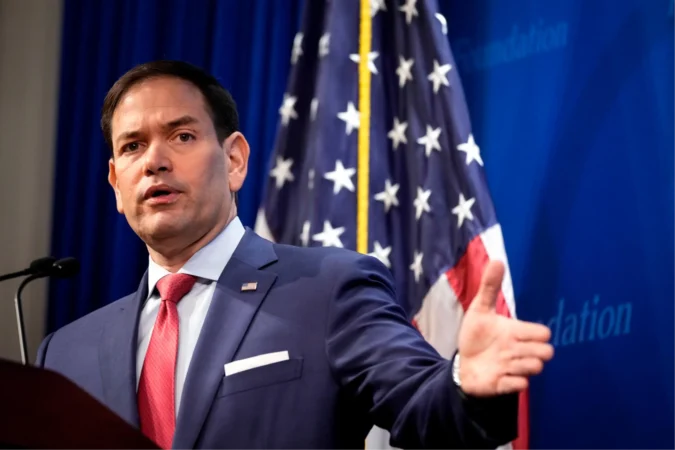




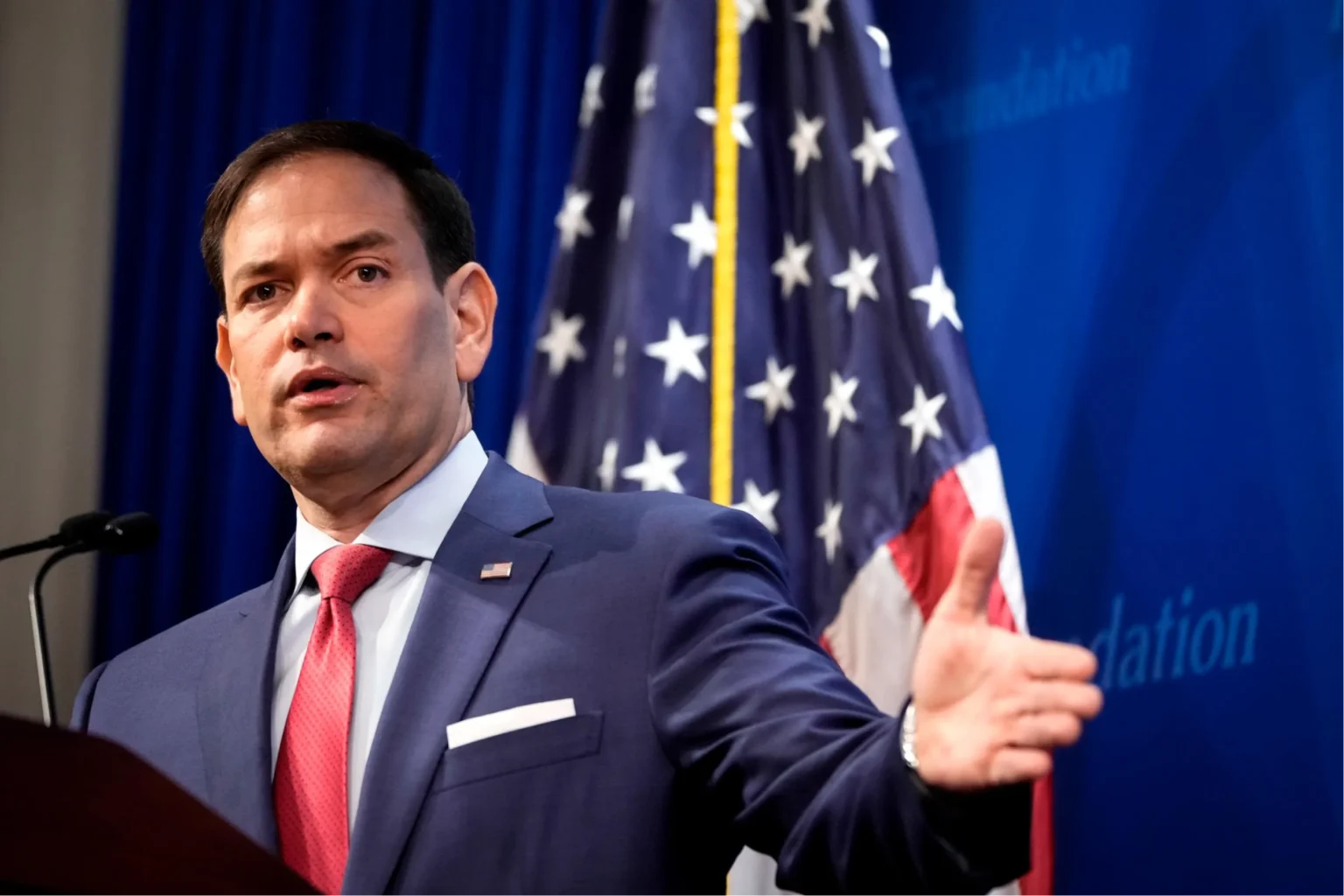
WASHINGTON, D.C., United States — US Secretary of State Marco Rubio has rejected speculation that a series of technology disruptions affecting airlines, banks, major technology companies and a classified government network are part of a coordinated cyberattack, saying investigators have found no evidence linking the incidents.
Rubio sought to reassure Americans after several high-profile outages disrupted essential services over consecutive days, raising concerns about the vulnerability of the country’s digital infrastructure and prompting theories of possible foreign interference.
The incidents affected Microsoft services, US air traffic control systems, major banks, United Airlines, Apple’s online services and an internal communications network used by the National Security Agency (NSA).
However, the Trump administration insists the disruptions were separate technical failures rather than evidence of a wider attack against the United States.
“We are not under systemic attack,” Rubio told reporters during a visit to the Philippines.
He acknowledged that the succession of incidents had made people anxious, particularly given their impact on services used by millions of Americans.
But he dismissed suggestions that the timing of the outages pointed to a common cause or a deliberate operation by hostile actors.
“We have zero evidence or any reason to believe that any of these isolated or individual instances have anything to do with nefarious actors, with cyber hackers, with criminals, with another nation state, with a malign actor of any kind,” he said.
His remarks came as the administration faced growing pressure to explain why disruptions had affected several critical sectors within such a short period.
How a week of outages disrupted essential services
The incidents began with a major Microsoft disruption on Thursday, November 12, affecting services including Outlook and Teams.
The outage disrupted access to workplace communication and productivity tools relied upon by businesses, government institutions and individuals across different countries.
Microsoft attributed the incident to a technical problem associated with an earlier network capacity upgrade, rejecting suggestions that it resulted from malicious activity.
The following day, the United States experienced a major aviation disruption after the Federal Aviation Administration (FAA) ordered a nationwide ground stop, temporarily preventing departing flights from taking off.
The interruption lasted more than four hours and affected thousands of flights, leaving passengers stranded and disrupting airline operations.
US Transportation Secretary Sean Duffy said the problem emerged during work to replace ageing copper telecommunications lines with fibre-optic connections at an FAA facility.
According to the department, a router-related problem during the transition generated an unusually high volume of connection attempts, affecting communications and radar systems used by air traffic controllers.
The FAA grounded flights as a precaution while technicians worked to isolate the problem and restore normal operations.
The disruption highlighted the risks associated with maintaining critical services on ageing infrastructure, particularly when upgrades to one part of a network can affect other connected systems.
The following Monday, United Airlines experienced a separate technology failure that delayed approximately 150 flights.
JPMorgan Chase also reported a software-related problem that disrupted some banking services, while customers of other financial institutions reported difficulties accessing online services and making transactions.
Apple users encountered further disruption on Tuesday, with problems affecting services including iCloud and Apple Pay.
The company attributed the incident to an internal update and said it was not caused by a cyberattack.
The same day, a highly classified internal communications network used by the NSA also experienced a temporary disruption.
The agency attributed the problem to scheduled maintenance, while indicating that its national security capabilities remained operational.
The incidents raised concerns because they affected sectors that underpin everyday economic activity, from air travel and financial transactions to workplace communications and intelligence operations.
Intelligence chief also rules out cyberattack
Rubio’s remarks followed comments by US Director of National Intelligence Jay Clayton, who also rejected suggestions that the disruptions were caused by a coordinated cyber operation.
Clayton said many institutions were undertaking software patches, security improvements and infrastructure upgrades, some of which had encountered unexpected problems.
His explanation pointed to the challenges facing organisations attempting to modernise systems that have accumulated years of technical complexity.
The concern is that upgrades intended to improve security and performance can themselves introduce vulnerabilities or trigger failures when systems are poorly integrated or insufficiently tested.
The administration has therefore urged the public not to interpret the close timing of the incidents as proof that they share a common cause.
Rubio was also asked whether the disruptions could trigger panic among Americans, including fears that banking services might become unreliable and prompt customers to withdraw or stockpile cash.
He argued that transparency was the best way to address public anxiety, saying the government should share the information it has about the incidents.
“Every indicator we have is that every single one of these events has an explanation or a cause that has nothing to do with a cyber-criminal, has nothing to do with a hostile actor or another country,” he said.
Cybersecurity experts point to ageing infrastructure
Cybersecurity specialists have also cautioned against connecting the incidents without evidence, arguing that the problems reflect the growing complexity and fragility of digital infrastructure.
Kris Beevers, chief executive and co-founder of network infrastructure management company NetBox Labs, said the outages should be understood in the context of the rapid changes taking place across critical technology systems.
“There is no conspiracy here,” he told the BBC.
Beevers argued that many of the networks supporting modern economies were built decades ago and now face increasing pressure as organisations attempt to upgrade them to meet contemporary demands.
He said some infrastructure was 30 to 40 years old and carried decades of accumulated technical debt, making modernisation increasingly complicated.
The growing adoption of artificial intelligence is adding another dimension to the challenge, according to Beevers.
AI is increasing pressure on existing networks while also creating urgency for companies to identify and address security weaknesses.
He said teams responsible for maintaining networks across airlines, banking, energy and retail were effectively carrying out highly complex upgrades while trying to keep essential services running.
Sherrod DeGrippo, vice-president of threat intelligence at Palo Alto Networks’ Unit 42, warned that the incidents demonstrated how closely connected and vulnerable critical digital systems had become.
“What this week really underscores is how tightly coupled, and fragile, our core digital infrastructure is, where a single software bug or router failure can cascade nationwide,” she said.
Her warning highlights an important distinction: a disruption does not necessarily require a sophisticated cyberattack to cause widespread damage.
A software defect, failed update, network configuration problem or malfunctioning piece of equipment can interrupt services relied upon by millions of people.
Why the incidents matter beyond the United States
Although US officials have dismissed the possibility of a coordinated attack, the disruptions have wider implications for countries and businesses increasingly dependent on digital infrastructure.
Modern economies rely on interconnected systems to process payments, manage air traffic, communicate with customers, coordinate logistics and maintain government operations.
A failure in one system can affect services elsewhere, particularly where organisations depend on shared technology providers or interconnected networks.
For consumers, the consequences can include delayed flights, inaccessible bank accounts, failed payments and interrupted access to work platforms.
Also Read: President Ruto’s official website hacked, attackers demand KSh41m in Bitcoin
For governments, the stakes are even higher because communication networks, intelligence systems and transport infrastructure are essential to national security and public safety.
The recent incidents also raise questions about how organisations manage software updates, test infrastructure upgrades and maintain backup systems capable of keeping services operational during technical failures.
The absence of evidence linking the outages does not mean that cyber threats have disappeared. Rather, it underscores the need to distinguish between malicious attacks and failures caused by the technology itself.
For the Trump administration, the immediate task is to reassure the public while ensuring that the organisations involved establish precisely what went wrong and prevent similar disruptions.
Rubio’s message is that the United States is not facing a coordinated assault on its digital infrastructure. But the succession of failures has exposed a different vulnerability: the growing dependence of modern society on technology systems that can be disrupted by seemingly isolated technical problems.