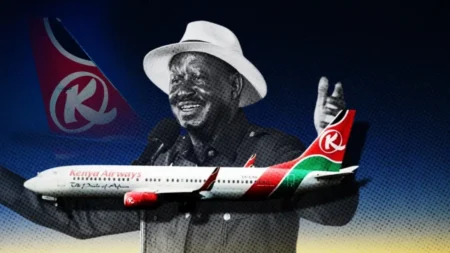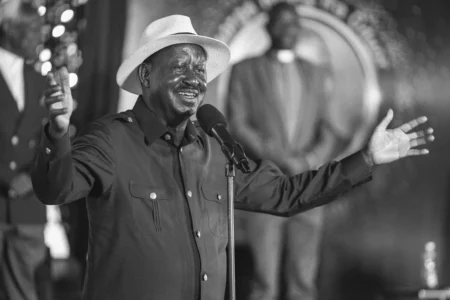

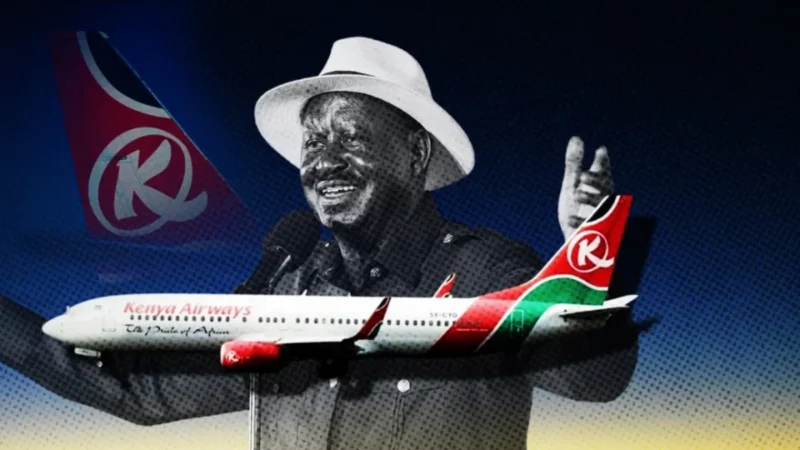


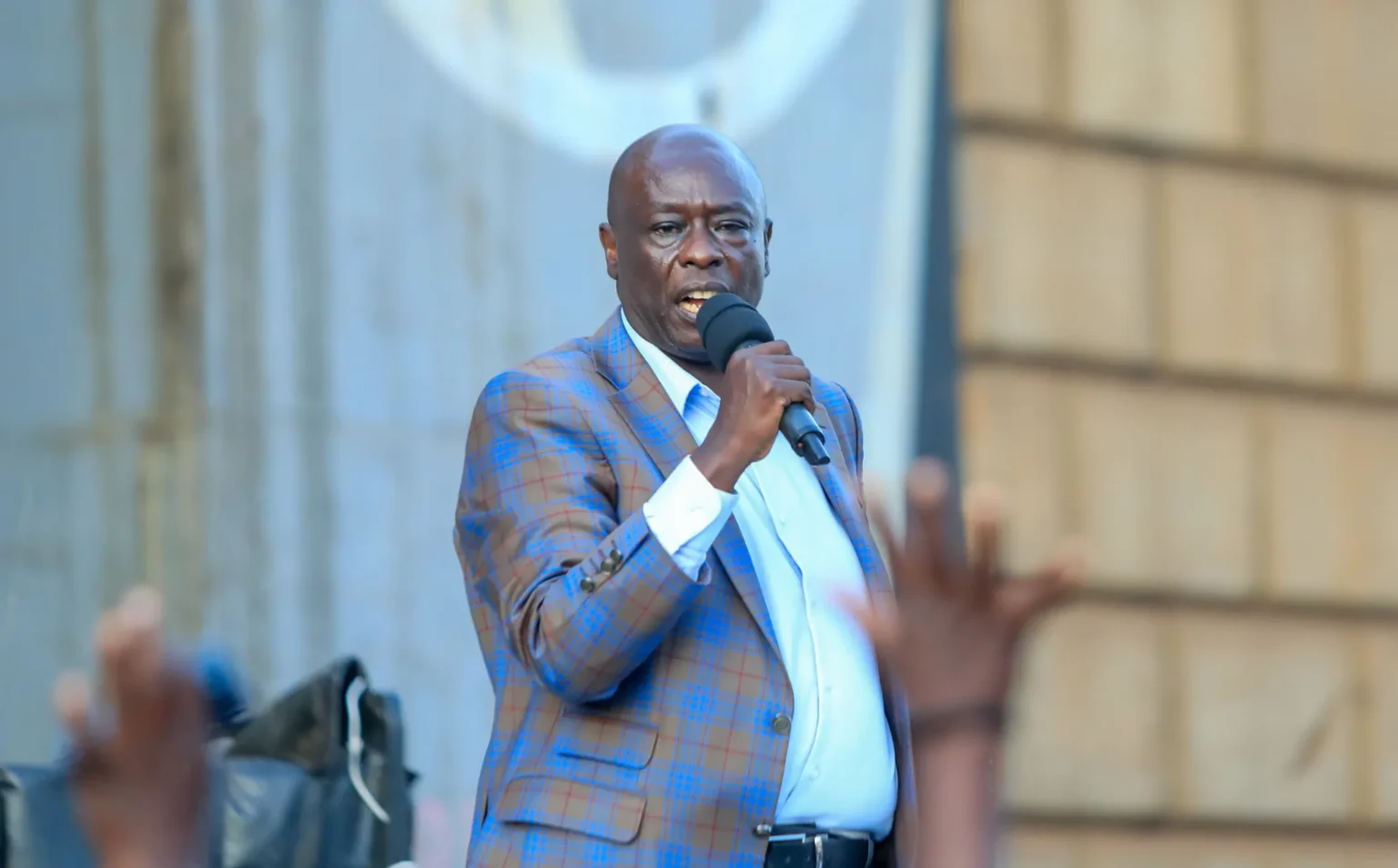
SIAYA, Kenya — Former Deputy President Rigathi Gachagua has accused leaders within the Orange Democratic Movement (ODM) of undermining the political legacy of the late Raila Odinga, arguing that the party has lost its former strength barely a year after the death of its long-time leader.
In a statement issued on Thursday, October 15, 2026, as Kenya marked the first anniversary of Raila’s death, Gachagua questioned the sincerity of politicians who have recently praised the former prime minister despite previously using derogatory language against him.
The Democracy for Citizens Party (DCP) leader also criticised what he described as the erosion of ODM’s political machinery, placing the party’s internal disagreements under fresh scrutiny as political formations position themselves ahead of the 2027 General Election.
His remarks came against the backdrop of a memorial in Bondo, Siaya County, where competing political camps exposed divisions over ODM’s future and the direction of Raila’s legacy.
Rival groups clashed over the party’s relationship with President William Ruto’s administration, turning a commemoration intended to honour the late opposition leader into a demonstration of the political contest surrounding his succession.
Gachagua explains absence from Bondo memorial
Gachagua said he was unable to attend the anniversary because he was in the United States on a previously scheduled programme. He thanked Raila’s widow, Ida Odinga, for inviting him to the main commemoration at Migwena Cultural Grounds in Bondo.
Despite his absence, the former deputy president paid tribute to Raila, describing him as “the father of our democracy and defender of the rights of Kenyans.”
He recalled previously praising Raila and Ida during the late leader’s inauguration as a candidate for the African Union Commission chairperson position, insisting that his remarks had been sincere.
“Those words about Raila and Mama Ida came from my heart, and I meant each and every word,” he wrote.
Gachagua argued that political leaders should acknowledge the contributions of their rivals while they are alive, rather than waiting until their deaths to offer praise. His criticism was directed at politicians he accused of publicly celebrating Raila despite having previously disparaged him.
‘Crocodile tears’ and the politics of political memory
Gachagua’s sharpest criticism concerned what he characterised as hypocrisy among leaders who have recently invoked Raila’s name.
He cited derogatory labels allegedly used against the former prime minister, including “mchawi, mganga, mtu ya Kung’oa reli” and “the lord of poverty”, arguing that some of those now paying tribute to Raila had previously portrayed him in those terms.
The accusations raise a question that has become increasingly prominent since Raila’s death: whether political tributes reflect a genuine reassessment of his contribution or an attempt to benefit from the enduring loyalty he commands among supporters.
However, political criticism must be distinguished from proof of insincerity. Politicians can revise their assessments of opponents, acknowledge past mistakes or recognise a rival’s contribution after years of disagreement.
Establishing hypocrisy requires examining what particular leaders said in the past, what they are saying now and whether they have explained the apparent change.
Gachagua’s remarks therefore add to the debate over Raila’s legacy, but they do not, on their own, establish that every leader now praising him is acting in bad faith.
Why Gachagua says ODM has lost its strength
The former deputy president argued that ODM’s condition following Raila’s death reflected a failure by some of its current leaders to protect the political organisation he built over decades.
“It is a pity, just one year after his death, that his greatest legacy, the ODM party, is now a pale shadow of its former self,” he said.
He also accused politicians he believes had compromised Raila’s political legacy of contributing to the party’s decline, using the phrase “sold ODM to Baba’s traitor” to describe what he views as a betrayal.
These are serious political allegations and should be treated as Gachagua’s assessment, rather than an independently established verdict on ODM’s electoral strength.
Nevertheless, the divisions visible at the anniversary point to a substantive challenge for the party. ODM is confronting disagreements over its cooperation with Ruto’s administration, the role of its opposition-leaning faction and the leadership arrangements that will guide it into the next election.
The competing camps are struggling over whether ODM should continue cooperating with the government or maintain a more confrontational opposition position. The dispute is significant because it concerns not only personalities but also the party’s political identity and electoral strategy.
The real test: Can ODM survive without Raila?
Raila was more than a prominent party leader. For years, his political standing helped bind together a broad coalition of supporters, elected representatives and regional interests. His death removed the figure who had been central to ODM’s national identity and its repeated presidential campaigns.
The party must now demonstrate that its structures, political message and electoral networks can function without depending on his personal authority.
That challenge should not be confused with an automatic collapse. A party can experience factional disputes and still retain a significant electoral base. Equally, a large following built around a charismatic leader does not necessarily translate into a durable institution after that leader’s departure.
ODM’s future will depend on whether its leaders can manage succession, resolve disagreements through credible party processes, maintain grassroots organisation and present voters with a coherent political programme. Its performance in the 2027 elections will offer a more concrete test of its strength than competing claims made during memorial speeches.
Gachagua’s criticism also serves his own political interests
Gachagua’s intervention should also be assessed in the context of his own political ambitions. By presenting Raila as a model of party-building and criticising ODM’s current leadership, he is advancing an argument that DCP can learn from the late opposition leader’s organisational approach.
Gachagua said he was pursuing a similar strategy through DCP, which he wants to build into a formidable political movement. He also urged party members and Kenyans to reject “tugeges” and elect competent lawmakers.
Also Read: Raila Odinga’s first anniversary exposes grief, ODM tensions and 2027 ambitions
The comparison is politically significant. Gachagua is not simply defending Raila’s reputation; he is using the debate about the former prime minister’s legacy to articulate his own vision of political organisation and leadership.
There is a distinction, however, between aspiring to build a strong political party and demonstrating that such a party can sustain national support. DCP will have to establish effective structures, attract credible candidates, articulate policies and show that its support extends beyond the political constituencies most closely associated with its leader.
The same standard applies to ODM: neither its critics’ predictions of decline nor its supporters’ assurances of continued dominance should substitute for evidence of organisation, voter confidence and electoral performance.
Raila’s legacy is becoming a contest over Kenya’s political future
The events surrounding the anniversary demonstrated that Raila’s influence remains important to Kenya’s political debate, even after his death. Leaders across different political camps continue to invoke his name, but they do not necessarily agree on what his legacy requires them to do.
For some, preserving that legacy means maintaining an independent opposition and continuing to challenge the government. For others, cooperation with the administration may be defended as a pragmatic way to influence policy and secure development outcomes. The disagreement reflects a wider contest over political strategy, alliances and the meaning of loyalty to the late leader.
Gachagua’s criticism adds another dimension by questioning the credibility of those claiming to honour Raila while supporting political arrangements he considers a betrayal of the former prime minister’s legacy.
Ultimately, the question is not simply whether ODM has become a “pale shadow” of its former self. It is whether the political movement Raila helped build can establish a credible direction without him, maintain internal cohesion and persuade voters that it remains relevant to their concerns.
For Gachagua, the debate also offers an opportunity to position DCP as an alternative political vehicle. For ODM, it presents a test of institutional resilience.
And for Raila’s supporters, it raises a more personal question: whether a legacy associated with decades of political struggle can be preserved through institutions and ideas rather than competing claims of ownership.
The 2027 General Election will provide a clearer measure of the consequences. Until then, Gachagua’s remarks are best understood as both a critique of ODM’s succession challenge and an intervention in the wider political contest now unfolding around Raila Odinga’s legacy.
“Rest Well, Jakom!”